Evaluate plastic sorting test results by comparing the purity of the accepted product, recovery of the target material, contaminant removal, and net throughput under consistent test conditions. Then check whether the measured feed and output streams form a complete material balance.
These measurements explain more than a photograph of clean flakes. A sorter may produce an attractive accepted fraction while losing valuable plastic, leaving a critical contaminant behind, or operating below your required production rate.
For recycling plants comparing equipment, the useful question is whether the proposed configuration can deliver the required product quality at an acceptable recovery rate and sustainable capacity. This guide explains how to read a trial report and connect its findings to that purchasing decision.
Define the Feed and Finished Product Before the Trial
Start by defining exactly what counts as acceptable material.
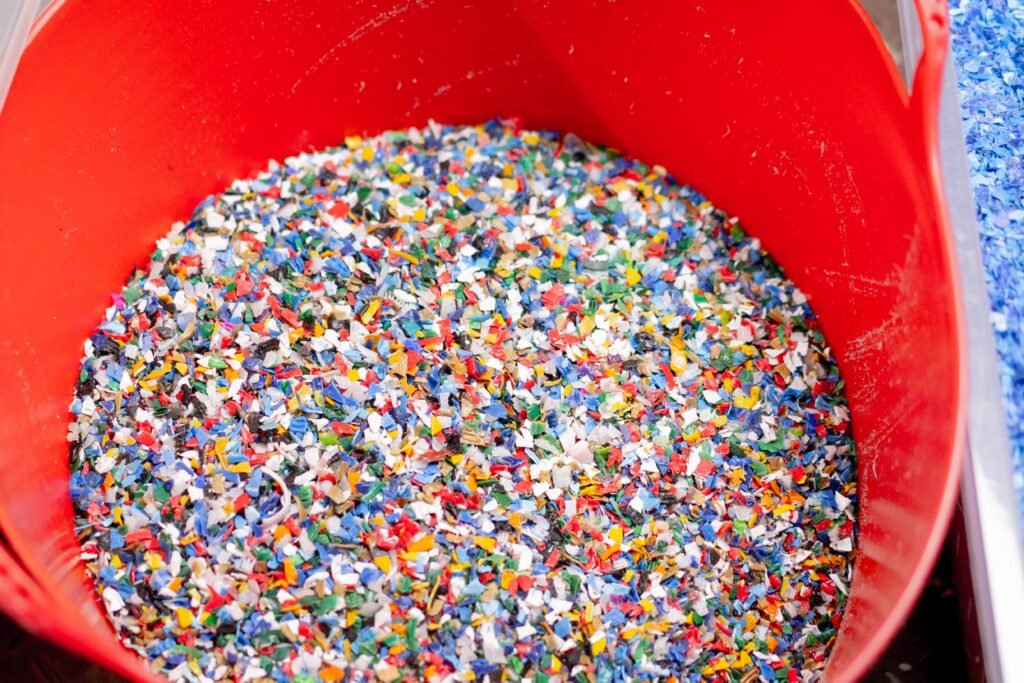
Separating PET from other polymers and producing clear PET flakes are different tasks. Colored PET may belong in the accepted fraction of a polymer separation process but become unwanted material when the finished product requires a clear appearance.
Record the target polymer, acceptable colors, material form, particle size distribution, and contaminants that affect your finished-product specification. If customers set separate limits for different contaminants, retain those distinctions throughout the evaluation.
For example, an overall purity percentage can conceal an important difference between unwanted colored PET and a foreign polymer. A trial report should identify the contaminants relevant to your application rather than combining every unwanted piece into an unexplained total.
The test material should also represent the proposed installation point. Washed and dried flakes suit the evaluation of a sorter installed after washing and drying. A machine intended for upstream bottle separation needs material reflecting the condition of those incoming bottles.
Document any screening, label removal, washing, drying, or manual preparation performed before testing. These steps can change the material presented to the sensors and the separation task the machine must perform.
Collect samples across normal production where practical. Include routine variations in contamination, particle size, and material condition. Keep unusually difficult batches identifiable so their results can be assessed separately.
Adding known contaminants can help investigate whether particular pieces are detectable. Record this as a challenge test and distinguish it from a trial using naturally occurring contamination.
For the broader equipment selection process, PolySorter’s guide to choosing a plastic sorting machine for a recycling plant explains how material characteristics influence the recommended configuration.
Read Plastic Sorting Test Results Through a Material Balance
A material balance accounts for what enters the sorter and what leaves every outlet.
Weigh the feed, accepted product, and rejected material. Record dust, spillages, retained material, and any additional outputs. An unexplained difference between incoming and outgoing mass makes recovery calculations less dependable.
Use the same moisture basis throughout the comparison. Otherwise, a change in water content can appear as a material gain or loss.
The hypothetical example below uses a closed system with two outlets. It illustrates the calculations and does not represent actual equipment performance. “Target plastic” means material meeting the agreed polymer and appearance requirements.
| Material Stream | Target Plastic | Contaminants | Total Mass |
| Feed | 950 kg | 50 kg | 1,000 kg |
| Accepted output | 900 kg | 10 kg | 910 kg |
| Rejected output | 50 kg | 40 kg | 90 kg |
The accepted and rejected outputs total 1,000 kg, matching the feed. Their target-plastic and contaminant quantities also reconcile with the incoming composition.
All percentages below use mass measurements.
Accepted Product Purity
Purity describes how much of the accepted output meets the target specification.
Purity (%) = Target plastic mass in accepted output ÷ Total accepted output mass × 100
In this example:
900 ÷ 910 × 100 = 98.90%
This measures output composition. It does not show how much acceptable plastic the process retained.
The definition of the target also matters. A polymer-only assessment may classify colored PET as acceptable PET, even when those colors fall outside the finished-product specification.
Target Material Recovery
Recovery measures the proportion of incoming target plastic retained in the accepted output.
Recovery (%) = Target plastic mass in accepted output ÷ Target plastic mass in feed × 100
Here:
900 ÷ 950 × 100 = 94.74%
The remaining 50 kg of target plastic entered the reject stream. Examining this material helps determine whether the loss comes from borderline classification, neighboring pieces displaced during ejection, or another process issue.
Contaminant Removal
Contaminant removal (%) = Contaminant mass in reject ÷ Contaminant mass in feed × 100
Here:
40 ÷ 50 × 100 = 80%
This formula follows the closed two-outlet balance shown above. If a process has additional outlets, account for their contaminant flows when evaluating the complete separation.
Contaminant removal measures how much incoming contamination the sorter diverted into the reject stream.
Calculate removal separately for critical contaminants where sufficient analytical data is available. Effective removal of colored flakes does not establish equivalent removal of a particular foreign polymer.
Accepted Mass Yield
Accepted mass yield (%) = Total accepted output mass ÷ Total feed mass × 100
Here:
910 ÷ 1,000 × 100 = 91%
Accepted mass yield measures the proportion of the total feed leaving through the accepted outlet.
Mass yield includes both target plastic and residual contamination in the accepted output. Its denominator differs from target material recovery, so the two figures should remain separate in the report.
Check How Material Composition Was Verified
The calculations depend on the quality of the composition measurements.
Ask how the feed, accepted output, and reject samples were classified. Visual inspection can assess color differences and some foreign objects. Polymer purity requires a method capable of distinguishing the relevant materials, such as suitable spectroscopic analysis.
The distinction between plastic flake color sorting and polymer sorting matters here. Visible-light cameras evaluate appearance, while suitable NIR systems help identify polymers through spectral information. Recognition software interprets the available sensor data.
Record the analysis method and explain how uncertain or unidentified pieces were treated. Automatically counting unidentified material as acceptable can overstate the reported purity.
Check the measurement basis as well. Composition reported by item count is not directly comparable with composition reported by mass. This becomes particularly important when the sample contains fragments of different sizes and weights.
Sampling should cover the measured run. A handful of flakes selected for a photograph provides little information about the full output. Agree on how samples will be collected, record their quantities, and retain material for follow-up checks where practical.
For low residual contamination, request the sample quantity and relevant detection or reporting limits alongside the result. These details determine how confidently a small measured sample can describe the wider output.
Inspect the reject stream with the same care. Its composition reveals whether improved product quality carries an acceptable loss of valuable material. It can also help distinguish classification errors from unnecessary carryover during physical ejection.
Compare Results at the Required Production Conditions
A fair comparison uses a consistent separation task, target specification, and measurement procedure.
Where possible, use equivalent portions of the same representative feed batch. Record the sensor configuration and settings for each measured run, and separate initial adjustment from the operating interval used to calculate performance.
Measure Sustainable Throughput
Evaluate purity and recovery at the rate your line needs to process.
Record the material mass, actual running time, feed consistency, and interruptions. A brief demonstration with a thin feed can help establish feasibility, but sustained operation provides stronger evidence of production capacity.
Check whether the reported throughput means new material entering the process or total material passing through the machine. When material recirculates, the sorter handles some pieces more than once.
This distinction affects usable capacity. A high gross flow through the machine can coexist with a lower rate of fresh feed entering the complete sorting process.
Account for Every Sorting Pass
For trials involving several passes, identify which stream was reprocessed and why.
A second pass through the accepted product aims to improve its quality. Sorting the first reject stream may recover valuable plastic. These arrangements have different effects on final purity, overall recovery, and equipment loading.
Evaluate the final combined outputs against the original feed. Include the additional processing time and recirculated mass when comparing configurations.
Request a Comparable Trial Record
A useful report should contain:
- Feed composition, particle size, and preparation.
- Finished-product requirements and composition analysis methods.
- Sensor configuration, operating settings, and number of passes.
- Accepted-product purity and target material recovery.
- Removal of each critical contaminant.
- Net throughput, interruptions, and material balance.
- Resource consumption where measured.
Include electricity, compressed air, and cleaning requirements when assessing operating cost. For air consumption, check the units and reference conditions. The compressor’s energy demand also forms part of the installation’s operating requirements.
The preferred operating point should satisfy the finished-product specification while protecting recovery and usable capacity. Comparing several relevant settings can reveal that balance more clearly than reporting only the highest purity achieved.
FAQs About Plastic Sorting Trials
How Much Material Is Needed for a Useful Trial?
The required quantity depends on material form, contamination, target throughput, and the planned measurements. A small sample can help establish whether specific pieces are detectable. Evaluating sustained feeding, low residual contamination, or several operating conditions generally requires more material. Agree on the scope and sample requirements before arranging shipment.
Can a Sorting Video Replace a Written Report?
A video helps show material presentation and visible separation. A written report supplies the quantities, composition measurements, and operating conditions needed to interpret that demonstration. Pair footage with the corresponding trial record so the video, sample analysis, throughput, and number of passes describe the same measured run.
What Does “No Contamination Detected” Mean?
It means the selected analysis method found no relevant contamination in the tested sample. Interpret that statement alongside the sample quantity, collection procedure, and detection or reporting limits. It does not establish that every part of a larger batch contains zero contamination.
Should Suppliers Test More Than One Operating Condition?
Yes, where the results would influence equipment selection. Selected feed rates or rejection settings can show how purity, recovery, and throughput change together. Keep the feed and analysis procedure comparable, and retain the results from each measured condition so the operating tradeoffs remain visible.
Use Verified Performance to Select the Right Configuration
A useful trial report connects finished-product quality with recovery, net throughput, and operating requirements. Clear definitions and a complete material balance make those results easier to compare and turn into practical equipment requirements.
For an application review, contact PolySorter with your material type, particle size, contaminants, target capacity, finished-product specification, and any available plastic sorting test results. These details help define a suitable evaluation and sorting configuration for your recycling line.