
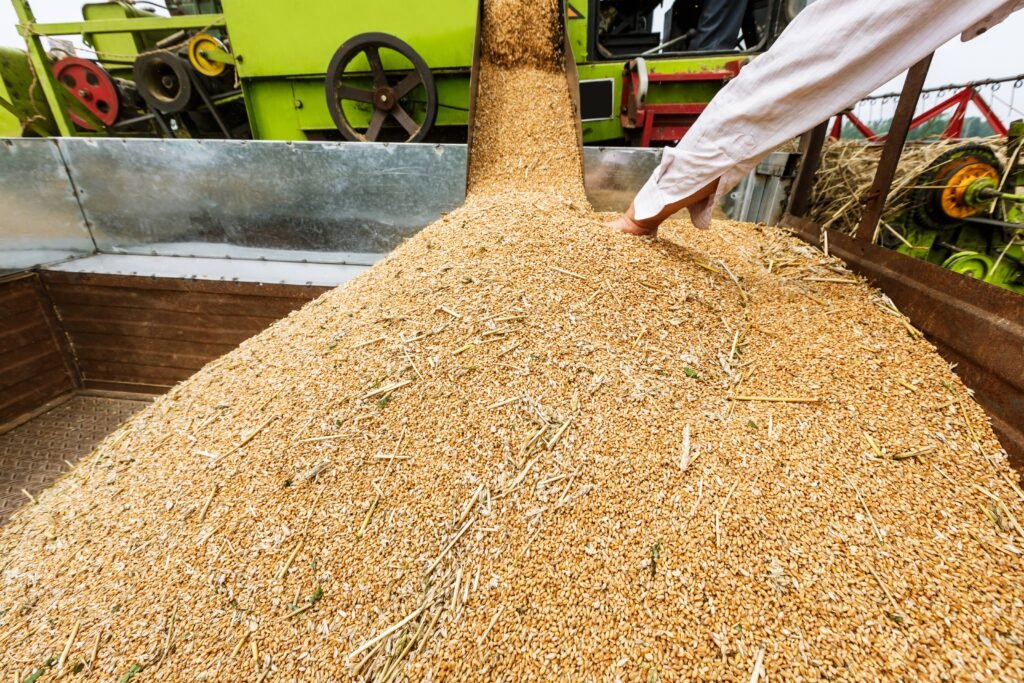
Wheat quality is not determined only after flour leaves the mill. It begins with the grain entering the processing line. Wheat arriving from farms, storage facilities, and collection centers may contain discolored kernels, black-spot kernels, visible sprouted grain, ergot bodies, foreign seeds, broken kernels, and other impurities. If these defects remain in the wheat stream, they can make milling control more difficult and affect the appearance and consistency of the finished product.
This is where optical sorting improves wheat quality before milling. Instead of relying only on screens, aspiration, destoners, and other mechanical cleaning equipment, modern wheat-processing lines can use optical sorting to inspect individual kernels. The system identifies unwanted material according to detectable differences in color, shape, size, and surface appearance.
For flour mills and commercial grain processors, the goal is not simply to make wheat look cleaner. The broader objective is to create a more uniform and controlled raw material stream before conditioning and milling begin.
Optical sorting therefore serves as a precision quality-control stage between conventional wheat cleaning and downstream processing.
Why Wheat Quality Before Milling Matters
A flour mill can only work with the raw material it receives.
Even when incoming wheat meets general purchasing specifications, individual lots are rarely uniform. Growing conditions, harvesting practices, transportation, storage, insects, fungal pressure, and mechanical handling can all affect kernel quality.
A typical wheat lot may contain:
- discolored or stained kernels;
- black-spot kernels with darkened embryo areas;
- shriveled or malformed wheat;
- visibly sprouted kernels;
- broken and mechanically damaged grain;
- ergot bodies or ergot-affected material;
- foreign seeds with dimensions similar to wheat;
- husks and remaining field material;
- stones and mineral impurities;
- kernels showing visible signs of fungal damage or deterioration.
Traditional cleaning equipment removes a large proportion of these impurities by exploiting bulk physical properties. Screens separate materials by size, aspiration removes lighter matter according to aerodynamic behavior, while destoners and gravity separators isolate heavier impurities through density differences.
These processes remain essential. Optical sorting does not replace conventional wheat cleaning.
The challenge arises when unwanted material has a similar size, weight, or aerodynamic behavior to acceptable wheat. A black point kernel may pass through the same screen as healthy wheat, while a foreign seed or ergot fragment may remain because its physical properties overlap with those of the grain.
Optical sorting adds another selection criterion: the visible and measurable appearance of each kernel.
This extra inspection stage is especially valuable after major mechanical cleaning, when the remaining defects are more difficult to separate by size or density alone.
How Optical Sorting Improves Wheat Quality Before Milling
A grain color sorter begins by distributing wheat into a controlled and relatively uniform flow. As individual kernels pass through the inspection zone, cameras capture images under stable lighting conditions. The control system then compares the detected characteristics with the programmed sorting criteria.
Depending on the machine configuration, it may evaluate several features.
Color Differences
Healthy wheat generally falls within an expected color range. The optical system can identify kernels that appear unusually dark, pale, pinkish, blackened, stained, or otherwise discolored.
This capability is useful for separating black point kernels, weather-damaged wheat, visibly mold-affected kernels, and other grains with abnormal coloration.
Shape and Size Abnormalities
Image-processing algorithms can help distinguish shriveled, broken, malformed, or visibly sprouted kernels from acceptable wheat.
Shape recognition can also support the identification of foreign seeds and ergot bodies when their profiles differ from normal wheat kernels.
Surface Defects
Spots, lesions, darkened embryo areas, fungal discoloration, and other visible surface abnormalities provide additional information for classification.
The effectiveness of this process depends on how clearly the defect differs from sound wheat and whether the cameras can see it during inspection.
Foreign Material
Non-wheat material may remain after mechanical cleaning, particularly when it resembles wheat in size or density. Optical differences offer another way to remove foreign seeds, dark impurities, husk fragments, and other visually distinguishable contaminants.
Once the system identifies an unwanted kernel, it calculates its position in the product stream. High-speed pneumatic ejectors then remove it, while acceptable wheat continues through the machine.
Modern sorting systems can also use intelligent algorithms to evaluate several characteristics at the same time. Rather than making a simple light-or-dark decision, the system can combine information about color, shape, size, and surface appearance.
The result is kernel-by-kernel quality control at commercial processing speeds.
However, an optical sorter detects only the characteristics its sensing system can measure. It cannot automatically identify every internal, chemical, or microbiological problem.
It does not directly measure DON concentration, alpha-amylase activity, protein content, moisture, or flour ash. These parameters still require suitable sampling and analytical methods.
Which Wheat Defects Can Optical Sorting Remove?
The performance of optical sorting depends on the defects in the incoming wheat and how clearly those defects differ from acceptable kernels.
For milling applications, the technology can target several important defect categories.
Discolored and Black Point Kernels
Black point is associated with dark discoloration around the embryo end of the kernel. When the affected area is sufficiently visible, a color sorter can distinguish these kernels from wheat within the accepted color range.
Removing heavily discolored or black point kernels before milling can reduce the amount of dark material entering the grinding process. This may help limit visible black specks in flour or semolina.
The result will depend on the severity of the defect, the wheat variety, kernel orientation, machine settings, and required recovery rate.
Ergot-Infected Kernels and Ergot Bodies
Ergot is a serious wheat-quality concern. Its dark fungal structures can sometimes resemble grain in size and may not be completely removed by basic screening.
Optical sorting adds color and shape information to the separation process. Dark purple, brown, or black ergot bodies can often be distinguished from normal wheat when their visible features are sufficiently clear.
The sorter should still operate as part of a complete ergot-control strategy. Representative sampling, regulatory compliance, and analytical verification remain necessary.
Visibly Sprouted Kernels
Pre-harvest sprouting can affect wheat quality and increase alpha-amylase activity. This may reduce the Falling Number and create processing problems for millers and bakers.
Optical sorting may remove part of the affected material when sprouted kernels show visible shoots, abnormal shape, discoloration, or other detectable surface changes.
However, not every kernel with increased enzyme activity has a clear visual difference. A color sorter therefore cannot measure alpha-amylase activity or replace a Falling Number test.
Its role is limited to removing visibly identifiable sprouted or damaged kernels.
Fusarium-Damaged and Other Diseased Kernels
Fusarium-damaged kernels may appear pale, shriveled, chalky, pinkish, or otherwise abnormal. Optical sorting can remove a portion of these kernels when the infection produces detectable visual characteristics.
This can support a broader wheat-quality and mycotoxin-management program. However, the relationship between visible damage and toxin concentration is not exact.
Optical sorting should never be described as direct DON detection. Processors must use appropriate sampling and laboratory analysis to verify mycotoxin levels.
Foreign Seeds, Broken Kernels, and Other Impurities
Foreign seeds can be difficult to remove mechanically when their size and weight resemble those of wheat.
Color and shape differences provide additional separation criteria. Depending on the material and machine configuration, optical sorting may remove:
- dark or differently colored foreign seeds;
- broken and malformed wheat;
- remaining husk fragments;
- insect-damaged kernels;
- visibly moldy grain;
- mineral or field impurities with detectable optical differences.
This is why wheat processors should select a sorter according to their actual defect profile, rather than relying only on camera quantity, chute number, or nominal capacity.
Where Should an Optical Sorter Be Installed Before Milling?
Optical sorting works best as one stage in a complete wheat-cleaning process.
A simplified production flow may look like this:
Raw Wheat → Preliminary Cleaning → Screening → Aspiration and Density Separation → Optical Sorting → Quality Verification → Conditioning → Milling
The exact arrangement varies between flour mills, but the underlying principle remains the same.
Early cleaning equipment should remove impurities that are easy and economical to separate mechanically. Dust, straw, oversized material, and large quantities of light impurities should not be left for an advanced optical sorter to handle.
After preliminary cleaning, the optical sorter can focus on difficult kernel-level defects. Positioning it near the end of the dry-cleaning section, before tempering or conditioning, allows visually detectable diseased, sprouted, ergot-affected, and discolored kernels to be removed before the wheat absorbs water and enters the milling process.
This arrangement provides several advantages.
First, the optical system receives a cleaner and more stable feed, allowing its detection capacity to focus on meaningful defects instead of obvious impurities.
Second, earlier cleaning reduces unnecessary ejector activity. The machine does not need to spend sorting capacity rejecting material that screens or aspiration equipment could remove more efficiently.
Third, each machine performs the task for which it is best suited. Mechanical equipment separates according to size, weight, density, and airflow behavior, while optical sorting handles detectable appearance differences that remain afterward.
Finally, the sorter can provide a precision-control stage before wheat conditioning. This helps prevent selected defective kernels from entering the milling process.
The key question is therefore not simply:
“Does my flour mill need a wheat color sorter?”
A more useful question is:
“Which defects remain after my existing cleaning process, and can optical sorting reliably separate them before milling?”
This approach leads to better equipment selection and more realistic performance expectations.
How Better Wheat Sorting Supports Flour Quality and Milling Efficiency
Cleaner wheat is the most visible result of optical sorting, but its value extends beyond the appearance of the raw grain.
More Consistent Wheat Before Conditioning
Flour milling depends on stable process conditions. When the wheat entering preparation contains fewer abnormal kernels and foreign materials, the mill receives a more consistent raw material stream.
Optical sorting therefore acts as a final precision layer after conventional cleaning.
Fewer Visible Specks in Flour or Semolina
Dark foreign material, black point kernels, ergot fragments, and heavily discolored grain can contribute to undesirable visible particles in milled products.
Removing these materials before grinding can reduce the amount of dark matter entering the milling system. This may help lower the occurrence of visible black specks in flour or semolina and support a cleaner finished-product appearance.
However, flour specks can have several causes, including bran contamination, equipment condition, process settings, and the original wheat quality. Optical sorting addresses only the defects it can remove before milling.
Better Finished-Product Consistency
Removing visibly defective kernels reduces the variation carried into downstream processing.
A color sorter does not control every flour parameter. Wheat variety, protein content, moisture, conditioning, blending, extraction rate, and mill settings remain important.
Instead, optical sorting improves one critical variable: the physical quality and uniformity of wheat entering the milling process.
Support for Raw-Material Cleanliness
Removing stones, mineral particles, dark impurities, and damaged kernels can support the overall cleanliness of the wheat stream.
This should not be turned into a direct promise to reduce or stabilize flour ash content. Ash is strongly influenced by wheat anatomy, bran separation, extraction rate, tempering, and milling control.
Optical sorting may contribute indirectly by removing certain foreign materials, but it does not measure ash and cannot independently determine the final ash level.
Better Balance Between Purity and Recovery
Rejecting more material does not automatically mean better sorting. An overly aggressive sensitivity setting may produce very clean accepted wheat while discarding too much usable grain.
For commercial processors, purity and recovery must be evaluated together.
The best setting is not necessarily the one that creates the largest reject stream. It is the setting that achieves the required accepted-product quality while keeping unnecessary good-grain loss under control.
How to Choose a Grain Color Sorter for Wheat Before Milling
Selecting a wheat color sorter according to nominal capacity or camera quantity alone can be misleading.
Two flour mills processing the same tonnage may require different sorting configurations because their raw materials, defect profiles, and finished-product standards are different.
Before purchasing equipment, evaluate the following factors.
Define the Target Defects
Determine whether your main concern is black point, ergot, visible sprouting, Fusarium damage, foreign seeds, broken kernels, general discoloration, or a combination of defects.
The machine configuration and test criteria should reflect these actual problems.
Confirm the Required Throughput
The sorter must handle the required production rate without losing the accuracy needed for the target defects.
Capacity should be assessed under representative operating conditions. Raw-material quality, impurity level, defect difficulty, and required recovery can all influence practical throughput.
Match the Detection Technology to the Application
Visible-light sorting is effective for many color differences and surface abnormalities. Shape-recognition functions can support the removal of malformed kernels, ergot bodies, and certain foreign seeds.
When target defects cannot be separated reliably by visible color alone, additional spectral sensing may provide more information. The appropriate sensor configuration should be selected according to representative sample tests and the characteristics of the target material.
Evaluate the Feeding System
Even advanced cameras cannot fully compensate for poor material presentation.
Stable feeding and proper kernel distribution are essential. Excessive overlap or an uneven flow can hide defects and reduce ejection accuracy.
Measure Both Purity and Good-Product Loss
Inspect both the accepted and rejected fractions.
A proper test should determine whether the system:
- removes the targeted wheat defects;
- achieves the required accepted-product quality;
- concentrates unwanted material in the reject stream;
- minimizes the loss of acceptable wheat;
- maintains the required processing capacity;
- performs consistently over a realistic production period.
Use Representative Wheat Samples
A demonstration with carefully selected material may not reflect real production conditions.
Send samples that represent your normal suppliers, harvest seasons, impurity levels, and quality problems. If several defect types occur, include them in the evaluation.
For food-safety concerns such as ergot alkaloids or mycotoxins, compare the raw, accepted, and reject fractions with appropriate analytical tests. Visual inspection alone is not sufficient.
PolySorter can evaluate representative wheat samples and processing requirements to help determine a suitable Grain Color Sorter configuration for a new or upgraded milling line.
FAQ About Optical Sorting Wheat Before Milling
Is Optical Sorting Necessary Before Wheat Milling?
Not every flour mill requires the same cleaning configuration. However, optical sorting can provide an additional quality-control stage when conventional equipment leaves discolored kernels, black-point wheat, ergot bodies, foreign seeds, visibly sprouted grain, or other detectable defects.
Can a Wheat Color Sorter Remove Ergot?
It can remove many ergot bodies when they have detectable differences in color, shape, or size compared with acceptable wheat. Performance depends on the raw material, ergot characteristics, machine configuration, settings, and feed presentation. Analytical verification may still be required.
Can Optical Sorting Remove Black Point Kernels?
Yes, when the darkened embryo area or surface discoloration is sufficiently visible to the optical system. Results may vary with defect severity, kernel orientation, wheat variety, and sorting settings.
Can a Color Sorter Detect Sprouted Wheat?
It can identify some visibly sprouted kernels based on shoots, color changes, or abnormal shape. It cannot directly measure alpha-amylase activity or replace the Falling Number test.
Can Optical Sorting Reduce Black Specks in Flour?
Removing dark foreign material, black point kernels, ergot fragments, and visibly damaged wheat before milling may reduce the amount of dark matter entering the flour stream. However, black specks may also come from bran contamination, equipment, or milling conditions.
Does Optical Sorting Reduce Flour Ash Content?
Not directly. Optical sorting may remove certain mineral impurities and unwanted material, but it does not measure ash. Final flour ash is also influenced by wheat structure, conditioning, bran separation, extraction rate, and mill settings.
Can a Grain Color Sorter Detect DON?
No. A sorter may remove some Fusarium-damaged kernels when they show visible abnormalities, but it does not directly measure DON concentration. Representative sampling and laboratory testing remain necessary.
Can Optical Sorting Replace Other Wheat-Cleaning Equipment?
No. Screening, aspiration, destoning, gravity separation, and optical sorting perform different functions. They work best as complementary stages within a complete wheat-cleaning line.
What Should I Test Before Purchasing a Wheat Color Sorter?
Use representative production samples and evaluate target-defect removal, accepted-product quality, reject concentration, good-grain loss, throughput, and operating stability. Laboratory testing should also be included when chemical or food-safety limits are involved.
Improve Wheat Quality Before It Reaches the Mill
The milling process cannot completely compensate for poor incoming wheat quality.
Mechanical cleaning removes many obvious impurities. However, black-pointed kernels, ergot bodies, foreign seeds, visibly sprouted wheat, and other defects may remain when their physical characteristics resemble acceptable grain.
Optical sorting improves wheat quality before milling by adding kernel-level inspection based on detectable differences in color, shape, size, and surface appearance.
When installed in the correct position, it becomes a precision quality-control stage rather than simply another cleaning machine.
For flour mills, this can mean a more uniform wheat stream, fewer visible defects entering the grinding process, better control of finished-product appearance, and a stronger balance between purity and usable yield.
The key is choosing the sorter around the wheat and the target defects—not choosing the material around the sorter.
If you are planning a new wheat-processing line or upgrading an existing cleaning section, contact a PolySorter expert with your wheat samples, target defects, required capacity, and expected finished quality. We can help evaluate an appropriate grain-sorting solution for your actual milling application.