Recycled PET can look clean after bottles have been crushed, washed, and dried, yet appearance alone does not determine material quality. PET flake purity depends on polymer composition, color consistency, residual foreign materials, moisture, degradation, and the overall stability of the recycling process.
This matters because contaminants behave differently during extrusion, pelletizing, and downstream manufacturing. PVC, PE, PP, colored PET, metals, labels, adhesives, and degraded flakes can affect recycled PET in very different ways. At the same time, simply rejecting more material is not the answer. Excessive rejection may improve the apparent purity of the accepted fraction while reducing valuable PET recovery.
For recycling plants, the key is therefore not just choosing a plastic sorting machine with an impressive specification. It is understanding what is lowering recycled PET quality, whether that problem can be detected optically, and which sorting technology is appropriate for the material.
What Does PET Flake Purity Really Mean?
PET flake purity describes how consistently recycled PET meets the quality requirements of its intended downstream application. However, purity should not be treated as a single number or visual characteristic.
A batch of clear rPET flakes may look excellent while still containing small quantities of PVC, PE, PP, or other unwanted polymers. Another batch may have very high PET content but fail a customer’s requirements because of excessive color variation, moisture, degraded material, or inconsistent processing characteristics.
It helps to separate PET flake quality into two groups.
Material purity factors include:
- PET versus non-PET polymer composition
- PVC contamination
- PE and PP contamination
- Colored or opaque flakes
- Labels and foreign particles
- Metal contamination
Process and quality factors include:
- Moisture content
- Flake size and size distribution
- Intrinsic viscosity (IV)
- Thermal or material degradation
- Yellowing and other quality changes
This distinction is important when evaluating PET purification equipment. A sorting machine may improve a particular purity parameter, but it cannot automatically correct every factor affecting recycled PET quality.
For example, visible-light sorting can identify many color differences in PET flakes. However, transparent PET and transparent PVC may appear similar despite being different polymers. Solving those two problems requires different detection approaches.
In other words, high PET flake purity comes from controlling several quality variables rather than relying on a single sorting step.
What Contaminants Affect Recycled PET Flake Quality?
The first step toward higher PET flake purity is identifying what is actually contaminating the material. Different contaminants create different downstream problems, and they should not automatically be treated with the same separation technology.
PVC and Other Non-PET Polymers
PVC is a particularly important contaminant in PET recycling because it behaves differently under PET processing conditions. Even relatively small amounts can contribute to discoloration, degradation, and processing problems.
PE and PP can enter the stream through caps, closures, labels, or incorrectly sorted packaging. Depending on the incoming material, other non-PET polymers may also remain after preliminary separation.
The difficult part is that polymer contamination is not always visible. A clean transparent PVC fragment can resemble a transparent PET flake. Visual inspection alone therefore cannot reliably confirm polymer purity.
Colored and Discolored PET Flakes
Color contamination creates a different challenge.
Clear PET is commonly separated from green, blue, brown, yellow, opaque, and strongly discolored material when the final recycled product requires consistent appearance.
These differences are often suitable for visible-light optical detection because the target characteristic is actually visible. High-resolution imaging can analyze color, brightness, transparency, and other surface characteristics as flakes move through the sorting zone.
Labels, Adhesives, Metals and Foreign Materials
Labels, glue residues, paper, metals, dirt, and other foreign materials may enter the PET recycling process at several stages.
Some can be removed effectively through washing, screening, density separation, or dedicated metal separation. Others may require additional inspection or sensor-based sorting.
This highlights an important principle: the contaminant should determine the separation method—not the other way around.
How Feedstock and Washing Affect PET Flake Purity
High-quality recycled PET starts before the flakes reach the final sorting machine.
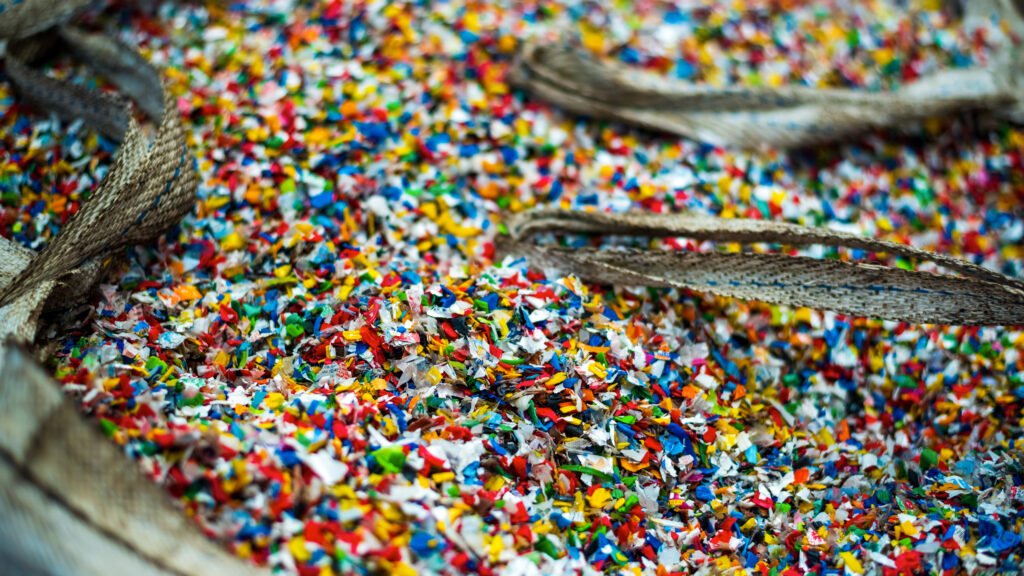
A relatively clean stream of properly sorted PET bottles presents a very different purification challenge from mixed post-consumer packaging containing caps, labels, colored bottles, multilayer packaging, foreign plastics, dirt, and other contaminants.
This means incoming feedstock quality directly affects the difficulty of producing high-purity rPET.
Sorting technology can improve a PET stream, but it cannot make poor feedstock quality irrelevant.
After initial bottle sorting, the material generally moves through size reduction and cleaning stages. Crushing converts bottles into flakes, while washing helps remove dirt, glue, labels, organic residues, and other surface contamination. Density-based separation may also help separate materials with different physical characteristics.
However, washing has a fundamental limitation:
It cleans material; it does not necessarily identify what the material is.
A clean PVC flake remains PVC.
A clean green PET flake remains green.
A washed PE fragment does not become PET.
That is why washing and sensor-based sorting perform different jobs within a PET recycling line.
Material condition after washing also matters. Excessive moisture, dust, overlapping flakes, unstable feeding, or a very broad particle-size distribution can make consistent detection and ejection more difficult. Proper material preparation therefore contributes directly to stable sorting performance.
How Plastic Sorting Machines Improve PET Flake Purity
Once PET flakes have been cleaned and properly prepared, sensor-based sorting can target contaminants that remain in the material stream.
The important question is not simply whether a sorter uses an advanced sensor. It is whether that sensor can detect the property that distinguishes the acceptable PET from the unwanted material.
Visible-Light Sorting for PET Flake Color Purity
Visible-light optical systems analyze characteristics such as color, brightness, transparency, and surface appearance.
For a clear PET recycling line, this type of system may be used to identify and reject:
- Green PET
- Blue PET
- Brown or yellow PET
- Black or opaque flakes
- Strongly discolored flakes
- Visually distinguishable foreign particles
This makes optical color sorting useful when the main objective is improving color consistency and visible PET flake quality.
However, visible appearance should not be confused with polymer composition. Two flakes can look similar while being made from different plastics.
NIR Sorting for PET Polymer Purity
Near-infrared sorting addresses polymer identification from a different angle.
Different polymers interact with near-infrared radiation according to their molecular characteristics. By analyzing these spectral responses, an appropriately configured NIR system can classify selected plastics according to polymer type.
Depending on the sensor configuration and material condition, NIR sorting can help distinguish PET from selected non-PET polymers such as PVC, PE, and PP.
The distinction between the two approaches can therefore be summarized clearly:
| PET Flake Quality Problem | Suitable Detection or Process Approach |
| Clear PET mixed with colored PET | Visible-light color sorting |
| Off-color or visibly abnormal flakes | Visible-light optical sorting |
| PET mixed with PVC | Polymer-sensitive sorting such as NIR |
| PET mixed with PE or PP | Polymer-sensitive sorting such as NIR |
| Polymer and color contamination together | Combined or multi-stage sorting |
| Surface dirt and removable residues | Washing and process control |
| Metal contamination | Metal detection/separation |
| Excessive moisture | Drying and process control |
| Inconsistent flake size | Screening and material preparation |
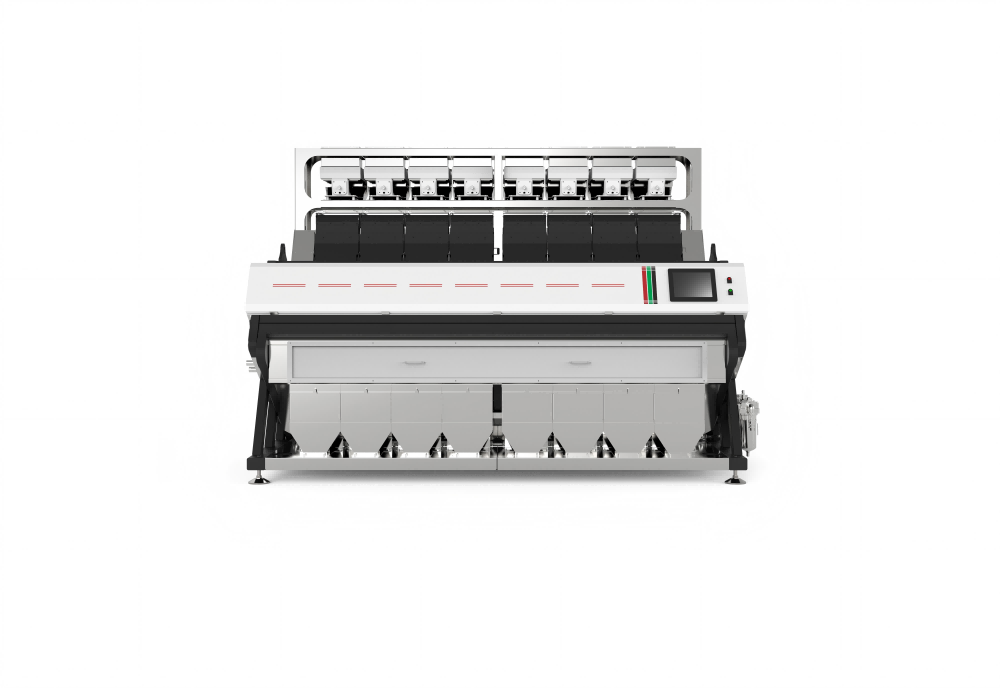
This separation of functions is also reflected in industrial PET sorting equipment, where color sorting, PET polymer-and-color purification, NIR polymer sorting, and aged-flake sorting are treated as different application tasks rather than one universal sorting process.
How to Choose a Sorting Solution for Higher PET Flake Purity
When comparing plastic sorting machines, start with the contamination problem rather than the machine specification.
A practical selection process follows a simple sequence:
Identify the contaminant → determine how it differs from acceptable PET → select the appropriate detection technology → verify performance with representative material.
Consider two recycling plants.
Plant A already has effective upstream polymer separation. Its main problem is green, blue, yellow, and other off-color flakes remaining in a nominally clear PET stream. The primary challenge is therefore visible color purification.
Plant B produces flakes that appear clean, but quality testing still detects unwanted polymers. Adding more conventional color sorting may not address the actual problem because the contaminants may have a similar visible appearance to PET. Polymer-sensitive identification becomes more relevant.
A more complex PET recycling line may need both approaches.
PET Flake Purity vs. PET Recovery
There is another factor buyers should consider: higher rejection does not automatically mean better sorting performance.
A sorter could theoretically increase the purity of the accepted PET fraction by rejecting aggressively. But if large quantities of good PET are ejected together with contaminants, valuable material is lost.
The real objective is therefore to find an operating balance between:
Purity + Recovery + Throughput + Stability
High purity matters, but so does retaining as much usable PET as reasonably possible while maintaining the required production capacity.
This is why a single headline accuracy figure provides limited information when comparing equipment. Actual performance depends on the feedstock, contamination level, target specification, material presentation, machine configuration, and operating conditions.
Representative sample testing can provide much more useful information.
Before a sorting test, recyclers should ideally provide the supplier with the actual PET flakes, typical contaminants, approximate contamination level, flake size range, required throughput, and desired output quality. Testing the real material makes it easier to determine whether the proposed detection technology matches the actual separation task.
FAQ About PET Flake Purity
What is considered high-purity PET flake?
There is no single specification suitable for every recycled PET application. Requirements depend on the buyer, downstream manufacturing process, intended product, and applicable quality standards. Polymer contamination, PVC, polyolefins, color, moisture, IV, and visible contaminants may all be relevant.
Why is PVC contamination a problem in recycled PET?
PVC has different thermal characteristics from PET. During PET processing, PVC contamination can contribute to degradation, discoloration, and processing difficulties. This is why PVC is closely controlled in many PET recycling applications.
Can washing remove all contamination from PET flakes?
No. Washing can remove many surface contaminants, including dirt, residues, and certain adhesives. However, washing cannot turn a non-PET polymer into PET or correct unwanted PET color. Additional separation and sorting may still be required.
Can a plastic color sorter separate PET from PVC?
Visible-light color sorting should not be relied upon to distinguish polymers that have similar visible appearances. When PET and PVC need to be separated according to polymer composition, polymer-sensitive technology such as NIR is generally more appropriate.
Is NIR sorting always necessary for PET recycling?
No. The appropriate technology depends on the contamination problem. If polymer purity has already been sufficiently controlled and the remaining issue is mainly color, visible-light sorting may be more relevant. If unwanted polymers remain in the PET stream, polymer-sensitive sorting may be required.
What information should I provide when testing a PET flake sorting machine?
Provide a representative sample whenever possible. Useful information includes the PET flake size range, target contaminants, approximate contamination level, required throughput, current process conditions, and desired output quality. Clearly identifying acceptable and rejected material also makes the sorting test more meaningful.
Improving PET Flake Purity Starts with Identifying the Real Problem
Producing high-quality recycled PET requires more than washing bottles and removing visibly dirty flakes. PET flake purity is influenced by feedstock quality, polymer contamination, color variation, foreign materials, moisture, degradation, material preparation, and the performance of each separation stage.
The most important step is identifying what prevents the current PET flakes from meeting the required quality target. Visible-light sorting can address color and other visually detectable differences, while NIR-based technology can help identify selected polymer contamination that cannot be reliably distinguished by appearance alone. Washing, drying, screening, metal removal, and process control remain equally important parts of the overall recycling system.
Instead of choosing a plastic sorting machine from specifications alone, evaluate the actual material first. Determine the contaminants, define the target output, and then select the sensor configuration around that separation task.
For PET recyclers looking to improve flake purity while maintaining practical recovery and throughput, PolySorter can evaluate representative PET flake samples and help determine a sorting configuration based on the actual contamination and required output quality.