Aged and yellowed PET flakes are a common challenge in plastic recycling. Even after washing, some PET flakes retain a yellowish or brownish appearance that can affect the color consistency and market value of recycled PET (rPET). For recycling facilities producing clear flakes, this discoloration can make it difficult to meet downstream quality requirements.
Understanding how to sort aged and yellowed PET flakes is essential for improving recycled material quality while minimizing the loss of usable plastic. However, not all discolored PET requires the same separation method. Some flakes have visible yellowing, while others exhibit aging-related optical differences that are difficult to identify under normal lighting.
Modern optical sorting technologies can help recyclers separate unwanted flakes according to their detectable characteristics. This guide explains the causes of PET yellowing, how different sorting technologies work, and how to choose suitable equipment for an efficient recycling operation.
Why Do PET Flakes Turn Yellow During Recycling?
PET, or polyethylene terephthalate, is widely used in beverage bottles, food packaging, and polyester products. During recycling, collected PET is sorted, crushed, washed, and processed into flakes for further purification or reprocessing.
Although washing removes many surface contaminants, it cannot reverse chemical changes that have already occurred within the polymer.
Common Causes of PET Yellowing
Thermal degradation
PET can undergo chemical changes when exposed to excessive heat, particularly under unsuitable processing conditions. High temperatures, prolonged residence times, and the presence of moisture or oxygen may contribute to degradation and discoloration.
UV exposure and long-term aging
PET bottles stored outdoors may experience photo-oxidative aging caused by sunlight. Over time, certain materials develop changes in color and other physical properties. The extent of these changes depends on exposure conditions and the original material composition.
Repeated processing
PET that has undergone multiple processing cycles may have a different thermal history from newly manufactured material. Poor drying or excessive processing temperatures can increase degradation risks. However, properly controlled recycling does not necessarily cause significant yellowing.
Residual contamination
Not every yellow-looking flake has undergone polymer degradation. Adhesives, surface residues, pigments, and other contaminants can also change the apparent color of PET.
This distinction is important because removable surface contamination and permanent discoloration require different treatment methods.
How Yellowed PET Affects Recycled Material Quality
Yellowed flakes can create unwanted color variation in clear or lightly colored rPET products. Depending on the application, this may reduce transparency, complicate color control, or limit the material’s commercial value.
However, yellowing is not a direct measurement of PET degradation.
A visibly yellow flake may still retain useful material properties, while a clear-looking flake may have experienced molecular degradation.
Therefore, optical sorting should be used to control detectable material differences, while laboratory testing remains necessary when intrinsic viscosity, molecular properties, or other performance characteristics must be verified.
How Does Optical Sorting Identify Aged and Yellowed PET Flakes?
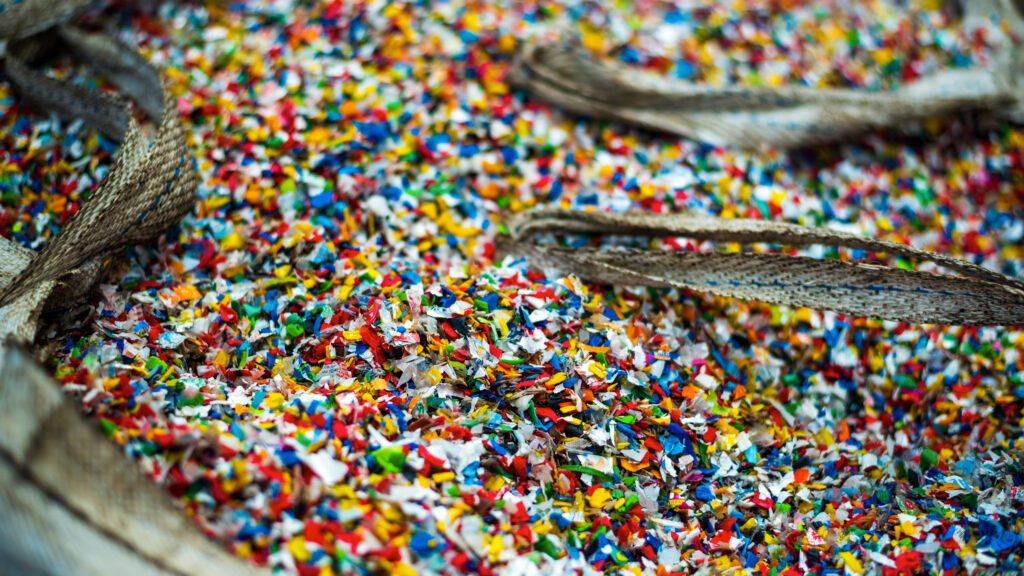
Different sorting technologies identify different material characteristics. Understanding these differences helps recycling operators avoid purchasing equipment that does not match their separation requirements.
Visible-Light Sorting for Yellowed PET Flakes
Conventional optical color sorting uses cameras and controlled lighting to inspect individual PET flakes.
As the material passes through the detection area, the system analyzes visible characteristics such as color, brightness, and contrast.
Flakes that fall outside the selected acceptance range are identified for rejection.
A typical process includes:
- Feeding: PET flakes enter the sorting system at a controlled rate.
- Inspection: Optical sensors capture information about individual flakes.
- Classification: The system identifies unwanted color variations.
- Rejection: High-speed air ejectors separate the targeted material.
- Collection: Accepted and rejected flakes enter different outlets.
For example, a recycling facility processing clear PET may configure its sorter to remove visibly yellow, brown, or otherwise discolored flakes.
This approach works well when unwanted material has sufficient visible contrast.
However, slight yellowing can be more challenging to detect, particularly when flake thickness, transparency, and surface conditions vary.
UV-Based Detection for Aged PET Flakes
Some specialized aged-flake sorting systems use ultraviolet illumination and optical sensors to identify differences associated with certain aged PET materials.
Under suitable UV excitation, some PET flakes exhibit fluorescence or other optical responses that differ from acceptable material.
A properly configured system can use these detectable differences to separate specific aged fractions.
This capability can be useful when visible-light inspection cannot reliably distinguish the target flakes.
However, UV-based sorting does not directly measure the overall degree of polymer degradation. Not every aged PET flake produces a distinctive UV response, and fluorescence behavior may vary with material composition and processing history.
Consequently, the suitability of UV detection must be confirmed through representative sample testing.
NIR Sorting for Polymer Contamination
Near-infrared (NIR) sorting primarily identifies differences in polymer composition.
It can help separate PET from targeted non-PET materials, including certain PVC, PE, and PP contaminants.
This is particularly useful when different plastic types have similar visible appearances.
However, conventional NIR polymer identification should not be confused with dedicated aged-PET detection.
A system designed to distinguish PET from other polymers does not automatically identify yellowing or material aging within PET itself.
Which PET Flake Sorting Technology Should You Choose?
| Technology | Main detection target | Typical application |
| Visible-light sorting | Visible color differences | Removing yellowed and off-color PET flakes |
| UV-based aged-flake detection | Specific UV-induced optical responses | Separating certain aged PET fractions |
| NIR polymer sorting | Polymer composition differences | Removing targeted non-PET contaminants |
| Combined sensor sorting | Multiple detectable characteristics | Complex PET purification requirements |
For recycling plants handling mainly visible yellowing, color sorting may be sufficient.
Facilities dealing with subtle aging-related differences or mixed-polymer contamination may require additional detection capabilities.
The appropriate choice depends on actual material characteristics rather than the number of sensors installed.
How to Prepare PET Flakes for Accurate Yellowing Separation
Even advanced optical sorting equipment depends on consistent incoming material conditions.
Excessive dirt, moisture, or uneven feeding can interfere with inspection and increase unnecessary material rejection.
Clean and Dry PET Flakes Before Sorting
Washing removes many surface contaminants that could otherwise be mistaken for permanent discoloration.
For example, adhesive residues or dirt may make otherwise acceptable PET appear yellow or brown.
After washing, the material should be sufficiently dried for the intended optical sorting process.
Excessive surface moisture can cause flakes to stick together, change their optical appearance, or move inconsistently through the feeding system.
Clean and dry material helps the sorter distinguish actual color differences more reliably.
However, washing cannot restore PET that has already undergone permanent chemical discoloration.
Maintain Uniform Flake Feeding
PET flakes vary in thickness, shape, and particle size.
When material overlaps in the detection area, unwanted flakes may become partially hidden. Closely grouped particles can also increase the risk of ejecting acceptable PET together with rejected material.
Controlled feeding and appropriate size classification help reduce these problems.
A stable, evenly distributed material stream improves the opportunity to inspect individual flakes and maintain consistent rejection performance.
Choose the Appropriate Sorting Position
In many PET recycling operations, final flake purification takes place after crushing, washing, and drying.
A typical arrangement is:
Bottle Sorting → Crushing → Washing → Drying → Flake Sorting → Quality Inspection → Further Processing
Depending on contamination levels, polymer purification, color sorting, and aged-flake separation may be arranged in different stages or integrated into compatible equipment.
The objective is to ensure that each sorting stage receives material suitable for its detection technology.
How to Choose an Aged PET Flake Sorting Machine
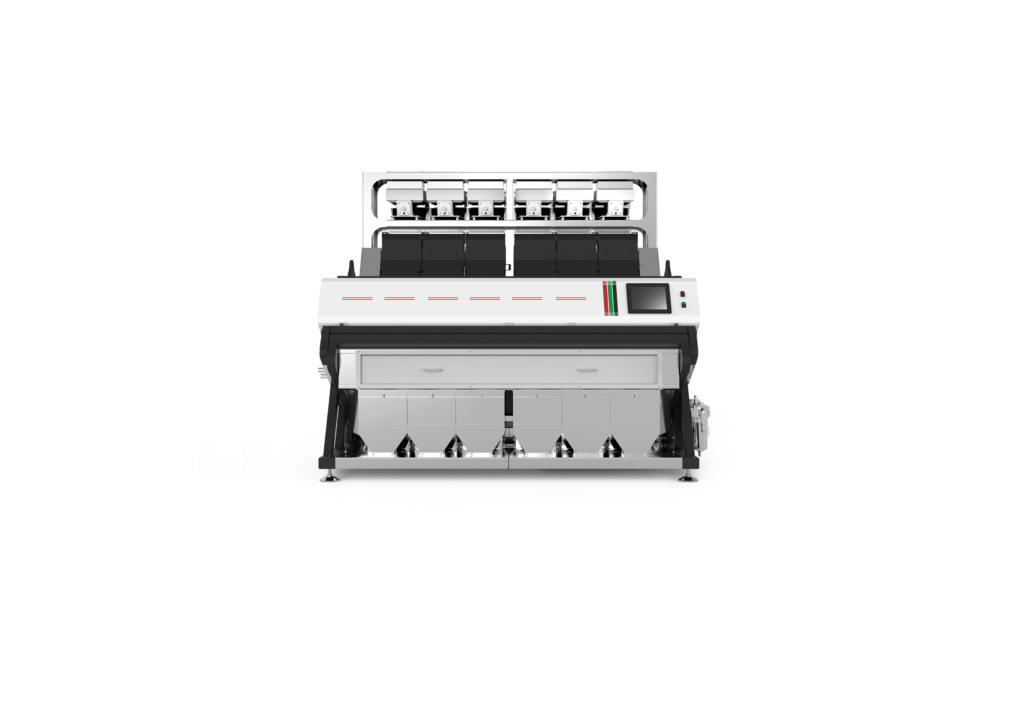
Choosing a PET flake sorting machine should begin with a clear understanding of the incoming material and the required finished-product quality.
A facility removing strongly yellowed flakes may have different equipment requirements from a plant targeting slight discoloration in high-quality clear PET.
Define Your Sorting Requirements
Before selecting equipment, identify the main separation objective.
Is the priority to remove visibly yellowed PET, detect specific aged fractions, eliminate non-PET contamination, or address several problems simultaneously?
The answer determines which detection technology deserves consideration.
Buyers should also establish their acceptable color range, target throughput, incoming contamination level, and intended application for the recovered material.
These requirements provide a practical basis for comparing different machines.
Test the Machine With Representative PET Samples
A sorting demonstration should use material that reflects normal production conditions.
For yellowed PET applications, a useful sample includes clear PET, slightly yellowed flakes, strongly discolored material, and any other relevant contaminants.
The testing process should follow five steps:
- Prepare representative samples: Include the actual range of material quality found in production.
- Set acceptance standards: Define acceptable color variation and required output quality.
- Run sorting trials: Test the equipment under realistic feeding and throughput conditions.
- Inspect both output streams: Measure unwanted material remaining in the accepted fraction and usable PET entering the reject fraction.
- Evaluate operating performance: Compare product quality, recovery, throughput, and resource consumption.
This approach provides more useful information than judging equipment solely by advertised specifications.
Compare Purity, Rejection Efficiency, and Recovery
Three performance indicators deserve particular attention.
Accepted-product quality measures how much unwanted material remains in the accepted stream.
Target rejection efficiency indicates the proportion of unwanted flakes successfully removed.
Good-material recovery measures how much acceptable PET remains available for further processing.
These indicators must be considered together.
A machine that removes nearly all yellowed flakes but rejects excessive quantities of usable PET may create unnecessary financial losses.
Likewise, a machine with excellent recovery may be unsuitable if too much discoloration remains in the finished product.
The most suitable equipment maintains an acceptable balance under realistic production conditions.
Evaluate Practical Operating Requirements
Processing capacity is important, but nominal throughput alone does not determine machine suitability.
Actual performance depends on material size, feeding uniformity, contamination level, and sorting sensitivity.
Buyers should also consider compressed-air demand, power consumption, maintenance access, installation space, and operator requirements.
For facilities handling subtle yellowing, performance should be verified at the intended production rate.
Stricter sorting settings may influence both recovery and accepted-product quality.
How to Improve Yellowed PET Sorting Efficiency and Material Recovery
Once suitable equipment is installed, consistent operation becomes essential.
The objective is not to reject every flake that looks slightly different. It is to produce material that meets the required quality standard while preserving as much usable PET as possible.
Establish Clear Color Acceptance Standards
Different recycled PET applications may tolerate different levels of discoloration.
Clear packaging and transparent sheet production may require tighter color consistency than certain colored fiber or industrial applications.
Recycling facilities should establish reference samples or measurable color requirements before adjusting sorting settings.
Where appropriate, laboratory color measurements such as CIELAB coordinates or yellowness index can support quality control.
These measurements help operators evaluate the accepted product against defined requirements rather than relying entirely on subjective visual inspection.
Adjust Sorting Settings Based on Actual Results
Sorting sensitivity should be adjusted according to the material and required output quality.
If excessive yellowed material remains in the accepted stream, detection or rejection settings may need refinement.
If too much acceptable PET enters the reject stream, the system may be rejecting material too aggressively.
Both fractions should be examined during optimization.
Operators should also monitor feeding conditions because overlapping flakes can affect rejection performance even when the detection settings are appropriate.
Consider Reject Re-Sorting
Some recycling facilities use an additional sorting pass to recover acceptable PET from the initial reject fraction.
This can be useful when good flakes are unintentionally removed together with targeted yellowed material.
However, an additional sorting stage increases equipment and operating costs.
Its economic value depends on the quantity of recoverable PET, the achievable recovery rate, and the value of the recovered material.
Monitor Changes in Incoming Material
PET feedstock quality can vary between suppliers and production batches.
Changes in bottle storage conditions, contamination levels, or previous processing history may affect the proportion of yellowed flakes.
Regular monitoring of accepted-product color, reject composition, throughput, and recovery helps maintain stable performance.
Consistent quality control is often more valuable than repeatedly increasing sorting sensitivity without evaluating the results.
Frequently Asked Questions About Aged and Yellowed PET Flake Sorting
Can yellowed PET flakes still be recycled?
Yes. Yellowed PET flakes may still be recyclable, depending on their material properties and intended application. However, discoloration can limit their suitability for products requiring high transparency or consistent color.
Can washing remove yellowing from PET flakes?
Washing can remove certain surface stains, adhesives, and residues. However, it cannot reverse permanent discoloration caused by chemical changes within the PET polymer. Such flakes may require sorting or use in applications with different color requirements.
Can a normal color sorter remove aged PET flakes?
A conventional color sorter can remove aged PET flakes when they have detectable visible differences. It may not reliably identify aged material that looks similar to acceptable PET. Specialized optical detection may be required for certain aging-related characteristics.
Is UV sorting better than NIR sorting for aged PET?
Neither technology is universally better. UV-based detection may distinguish certain aged PET fractions through specific optical responses, while NIR primarily identifies polymer composition. Equipment selection should depend on the actual separation target and verified sample-testing results.
Can sorting restore the quality of degraded PET flakes?
No. Optical sorting separates material according to detectable characteristics; it does not repair polymer degradation. Removing selected fractions may change the average properties of the remaining material, but any improvement must be verified through appropriate laboratory testing.
How can recycling plants reduce good PET loss during sorting?
Plants can improve feeding uniformity, establish realistic acceptance standards, optimize rejection settings, and consider reject re-sorting when economically justified. Testing both accepted and rejected material helps balance finished-product quality with usable PET recovery.
Conclusion
Effective separation of aged and yellowed PET flakes requires a clear understanding of material discoloration, optical detection capabilities, and recycling quality requirements.
Visible-light sorting can remove many discolored flakes, while specialized UV-based detection may help identify certain aged PET fractions. NIR polymer sorting provides a complementary solution when unwanted plastic types are also present.
For recycling facilities, the best approach combines suitable material preparation, carefully selected detection technology, representative sorting trials, and consistent quality control.
PolySorter offers optical sorting solutions for PET recycling applications, including color purification and specialized aged-flake separation. Explore our plastic sorting equipment or contact the PolySorter team to discuss your material samples, production capacity, and sorting requirements.