
Foreign seeds are a persistent challenge in wheat processing. During harvesting, transportation, and storage, wheat may become mixed with weed seeds, other crop seeds, and unwanted plant materials. Some contaminants are easy to separate, while others closely resemble wheat kernels in size, weight, or appearance.
Understanding how to remove foreign seeds from wheat using optical sorting helps grain processors improve product purity, reduce contamination, and select appropriate cleaning equipment. Traditional mechanical systems remove many impurities effectively, but they may struggle when unwanted seeds share similar physical characteristics with wheat.
Optical sorting adds another level of separation. By analyzing detectable differences in color, shape, and surface appearance, grain sorting machines can identify and reject certain foreign seeds that remain after conventional cleaning.
However, not every contaminant is equally detectable. Successful separation depends on seed characteristics, imaging technology, machine configuration, and processing conditions. This guide explains how optical sorting works, where it fits into wheat cleaning, and how buyers can evaluate equipment before investing.
Why Foreign Seeds Are Difficult to Remove from Wheat
Foreign seed contamination often begins in agricultural fields. Weed seeds growing alongside wheat may enter harvesting equipment, while mixed storage or insufficiently cleaned handling systems can introduce additional materials.
Common contaminants include wild oats, ryegrass seeds, mustard seeds, vetch seeds, and seeds from other crops. Their presence varies according to growing region, crop rotation, and harvesting conditions.
How Foreign Seeds Affect Wheat Quality
Unwanted seeds can create several processing problems:
- Reduced grain purity: Foreign materials decrease the proportion of acceptable wheat and may cause products to fall outside buyer specifications.
- Inconsistent processing: Seeds with different physical characteristics may behave differently during cleaning and milling.
- Food safety concerns: Certain weed seeds contain naturally occurring toxic compounds and require appropriate contamination controls.
- Commercial losses: Excessive impurities may increase cleaning costs, reduce product value, or lead to rejected shipments.
For seed processing facilities, foreign seeds can also affect physical seed lot purity and compliance with certification requirements.
Vetch and Ergot: Two Important Wheat Contamination Examples
Vetch seeds are a practical example of difficult foreign seed contamination. Depending on the species and maturity, their color and dimensions may overlap with those of wheat. Their different shape can provide a useful separation characteristic, although actual detectability depends on material presentation and imaging capabilities.
Ergot presents a different challenge. It is not a foreign seed but a fungal sclerotium that can contaminate cereal grains and may contain toxic ergot alkaloids.
Optical sorting may help remove ergot sclerotia when they exhibit detectable visual or spectral differences. However, sorting alone cannot guarantee toxin removal or replace appropriate food safety testing.
These examples demonstrate why contaminant identification should precede equipment selection.
Why Mechanical Cleaning Cannot Remove Every Seed
Traditional wheat cleaning equipment separates materials according to physical properties.
Screens remove oversized or undersized particles. Aspirators separate lightweight materials, while gravity separators and indented cylinders target differences in density-related behavior and particle length.
These technologies remain essential for efficient bulk cleaning. However, when foreign seeds have dimensions and physical behavior similar to wheat, mechanical separation becomes less effective.
Optical sorting addresses a different characteristic: detectable visual or spectral differences between acceptable wheat and unwanted materials.
Which Foreign Seeds Are Easier to Detect?
| Foreign Seed Characteristics | Relative Sorting Difficulty | Suitable Evaluation Approach |
| Clearly different color | Often lower | RGB or visible-light color recognition |
| Different shape or outline | Moderate, depending on presentation | Shape-sensitive imaging |
| Similar color but different spectral response | Application-dependent | Evaluate NIR or SWIR sensing |
| Similar color, shape, and spectral response | High | Combine mechanical separation with validated optical methods |
These categories describe general detection challenges, not guaranteed results.
The key is identifying which measurable differences exist between the target contaminant and acceptable wheat.
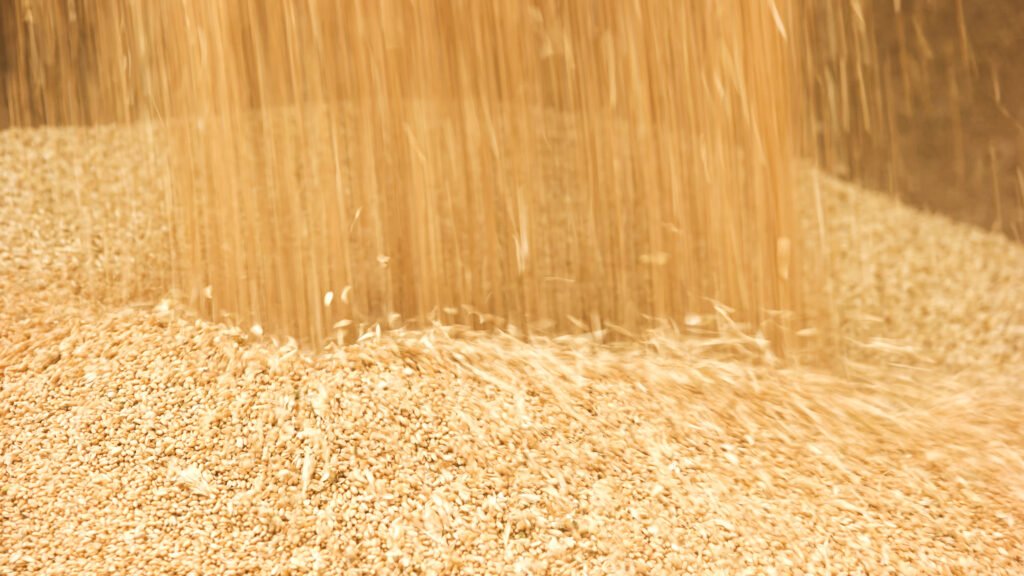
How Optical Sorting Helps Remove Foreign Seeds from Wheat
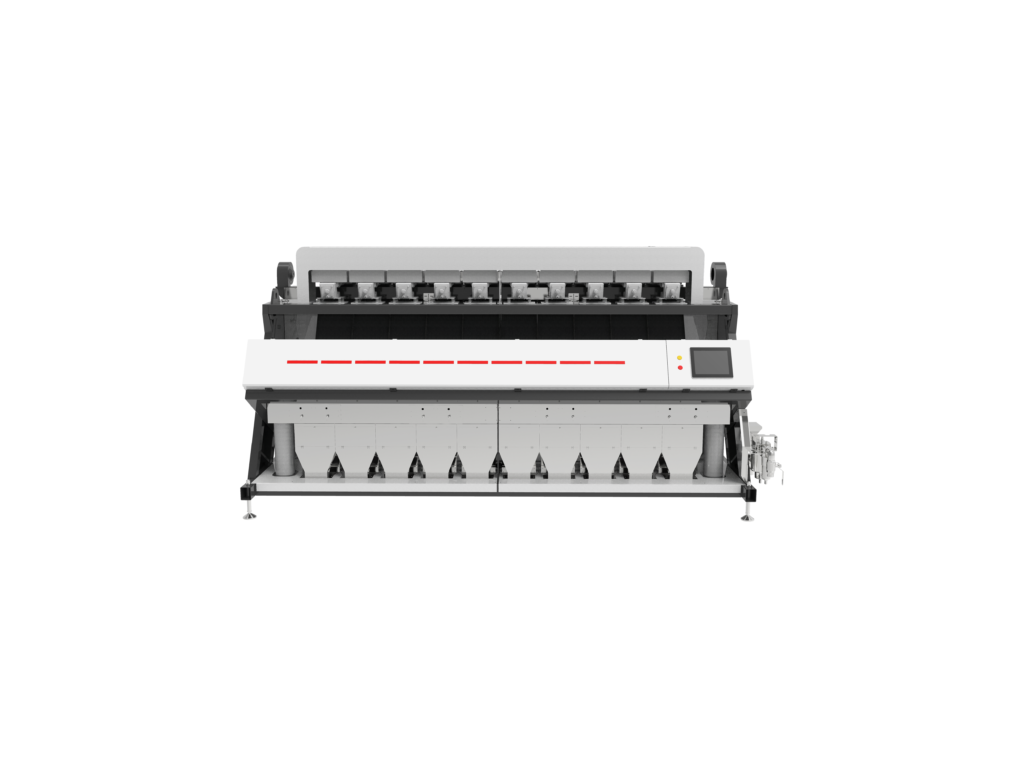
An optical grain sorter combines controlled feeding, imaging technology, classification software, and precision ejection to separate unwanted materials.
The process typically involves four stages.
Step 1: Uniform Material Feeding
Wheat enters the machine through a feeding system that distributes kernels across the sorting area.
Depending on the configuration, vibrating feeders and chutes guide the material into the inspection zone.
Even distribution reduces particle overlap and improves visibility. Excessive feeding can obscure contaminants and reduce separation accuracy.
Step 2: Optical Detection
As kernels pass through the inspection area, cameras capture information about their appearance.
Depending on the installed sensors, the machine may evaluate color differences, surface discoloration, particle outlines, and reflectance characteristics.
Visible-light cameras are useful when foreign seeds differ noticeably in appearance from wheat.
Additional spectral technologies may provide information that conventional color imaging cannot capture. However, their usefulness must be verified for the specific material.
Step 3: Image Classification
The processing system evaluates captured information against configured sorting criteria.
Acceptable wheat continues through the normal product path, while particles identified as unwanted materials are assigned for rejection.
Advanced recognition algorithms, including appropriately trained deep learning models, may improve classification of complex visual patterns. Nevertheless, performance depends on image quality, material presentation, training data, and machine settings.
Step 4: Precision Ejection
When a detected contaminant reaches the rejection position, a corresponding ejector releases a short burst of compressed air.
This redirects the unwanted particle into a separate collection channel.
Accurate timing is essential. Poor adjustment may allow contaminants to remain in the accepted product or cause excessive rejection of good wheat.
For difficult contamination problems, additional sorting passes may improve purity, although they can increase operating costs and acceptable grain losses.
Optical sorting is therefore most effective when detection capability, feeding conditions, and rejection settings are properly matched to the application.
A Practical Wheat Cleaning and Optical Sorting Process
Optical sorting generally works best as part of an integrated cleaning line rather than as a replacement for conventional equipment.
A practical process includes four stages.
Preliminary Cleaning
Incoming wheat first passes through equipment designed to remove large debris, straw, dust, and other easily separable materials.
This reduces the contamination load and improves conditions for downstream processing.
Mechanical Separation
Screens, aspirators, gravity separators, or length graders remove contaminants according to their physical characteristics.
The equipment combination depends on wheat quality and the impurities present.
Removing suitable contaminants mechanically before optical inspection can reduce unnecessary ejection and improve overall process efficiency.
Optical Sorting
The pre-cleaned wheat enters the optical sorter, where remaining foreign seeds are evaluated according to detectable differences.
Stable feeding and suitable sorting sensitivity are particularly important.
The machine should target contaminants that previous cleaning stages could not adequately remove.
Reject Recovery and Final Inspection
The rejected fraction may contain both unwanted seeds and acceptable wheat.
Where appropriate, a secondary sorting pass can recover usable kernels. Recovered material must still satisfy applicable quality requirements before returning to the finished product.
Finally, representative samples of accepted wheat should be inspected to verify the remaining contamination level.
This combined approach allows each cleaning technology to perform the separation task for which it is best suited.
How to Choose the Right Optical Sorter for Wheat Cleaning
Choosing a grain sorting machine requires more than comparing equipment prices, camera counts, or advertised throughput.
Buyers should evaluate whether a machine can remove their specific contaminants while maintaining acceptable wheat recovery and production capacity.
Match Detection Technology to the Contaminants
Different optical sorting technologies provide different types of information.
RGB / Visible-Light Imaging: Detects color differences and visible surface characteristics. It is suitable for contaminants with distinguishable appearances.
NIR (Near-Infrared): Uses reflectance differences in the near-infrared region. Depending on wavelength coverage and material properties, it may reveal distinctions that are less apparent in visible images.
SWIR (Short-Wave Infrared): Provides spectral information in the short-wave infrared region. It may support discrimination between certain materials with similar visible colors.
InGaAs Sensors: Indium gallium arsenide detectors are commonly used in near-infrared and short-wave infrared imaging systems. InGaAs describes a detector technology rather than an independent sorting principle.
Deep Learning Shape Recognition: Appropriately trained algorithms can analyze shape, outline, texture, and other image features. Their effectiveness depends on representative training data and reliable imaging conditions.
These technologies should not be treated as interchangeable. NIR and SWIR wavelength ranges may overlap depending on the definitions and equipment used.
More importantly, the presence of advanced sensors or AI algorithms does not automatically guarantee superior foreign seed removal.
Buyers should verify which technologies are actually installed and whether they improve separation of their specific contaminants.
Compare Effective Throughput, Not Just Rated Capacity
Advertised machine capacity usually represents performance under particular operating conditions.
Actual throughput depends on wheat variety, contamination level, required purity, feed uniformity, and sorting settings.
A machine may process relatively clean wheat at a higher feed rate but require slower operation when separating difficult foreign seeds.
Buyers should compare the effective throughput achieved at the required final quality, rather than nominal capacity alone.
Compare Equipment and Operating Requirements
| Equipment | Main Separation Principle | Primary Strength | Main Limitation |
| Screen cleaner | Particle dimensions | Efficient bulk size separation | Similar-sized seeds may remain |
| Gravity separator | Density-related behavior | Separates suitable density differences | Overlapping physical properties reduce effectiveness |
| Indented cylinder | Particle length | Separates short or long particles | Similar-length materials remain difficult |
| Optical sorter | Detects visual or spectral differences | Targets distinguishable contaminants | Similar-looking seeds may be difficult to identify |
Buyers should also consider compressed air consumption, maintenance accessibility, spare parts availability, and technical support.
Three Questions to Ask Before Purchasing
Can the machine identify my specific foreign seeds?
Request a demonstration using representative wheat samples rather than relying exclusively on standard promotional videos.
What throughput can it maintain at my required purity?
Ask for test results showing actual feed rate and final contamination under the same operating conditions.
How much acceptable wheat enters the reject stream?
Compare wheat recovery alongside contaminant removal. Both directly affect operating economics.
The most suitable equipment is not necessarily the machine with the highest advertised capacity or most complex sensor configuration. It is the solution that consistently meets the facility’s processing requirements.
How to Test Foreign Seed Removal Performance
Before investing in an optical sorting system, processors should verify performance through controlled material testing.
Representative samples should include the wheat varieties, contaminant types, and approximate contamination levels encountered during normal production.
Measure Four Key Performance Indicators
1. Foreign Seed Removal Efficiency
For a controlled batch, mass-based removal efficiency can be calculated as:
Removal Efficiency (%) = [(Incoming Target Foreign Seed Mass − Target Foreign Seed Mass Remaining in Accepted Wheat) ÷ Incoming Target Foreign Seed Mass] × 100
This measures the proportion of incoming target contaminants removed from the accepted product stream.
2. Final Contamination Level
Final Contamination (%) = (Foreign Seed Mass in Accepted Wheat ÷ Total Accepted Product Mass) × 100
This indicates whether the cleaned wheat meets the buyer’s required quality specification.
3. Good Grain Loss
Good Grain Loss (%) = (Acceptable Wheat Mass in Reject Stream ÷ Acceptable Wheat Mass in Incoming Feed) × 100
This measures how much acceptable wheat is lost through rejection.
4. Reject Concentration
Reject Concentration (%) = (Target Foreign Seed Mass in Reject Stream ÷ Total Reject Stream Mass) × 100
This indicates how concentrated the target contaminants are within the rejected material.
A low reject concentration may indicate that substantial acceptable wheat is being rejected alongside contaminants, although interpretation also depends on incoming contamination levels and sorting objectives.
Some facilities also use terms such as carry-over ratio. Because definitions vary between processes, any such metric should be accompanied by a clear calculation method.
Verify Results Under Realistic Conditions
Testing should be conducted at the intended operating feed rate, not only at a reduced demonstration speed.
Buyers should record sorting performance, throughput, and reject composition under comparable conditions.
Repeated tests can help assess consistency and identify whether additional passes or different settings are necessary.
The goal is to achieve the required final purity while maintaining practical throughput and minimizing unnecessary wheat losses.
Frequently Asked Questions
1. Can optical sorting remove all foreign seeds from wheat?
No. Optical sorting can remove foreign seeds with detectable differences from acceptable wheat. Seeds with nearly identical visual or spectral characteristics may remain difficult to separate. Actual performance depends on the contaminants, sensors, and operating conditions.
2. Can optical sorting remove seeds that have the same color as wheat?
Sometimes. If the seeds differ in shape, surface characteristics, or detectable spectral response, suitable equipment may distinguish them. However, identical color alone does not establish whether separation is possible. Material testing is necessary.
3. Can optical sorting help remove ergot from wheat?
Yes. Optical sorting may help remove ergot sclerotia when they have detectable differences from wheat kernels. However, ergot is a fungal contaminant rather than a foreign seed, and sorting cannot guarantee toxin elimination or replace appropriate safety testing.
4. Is optical sorting better than mechanical wheat cleaning?
The technologies are complementary. Mechanical systems efficiently remove materials based on physical properties, while optical sorters target detectable appearance differences. Combining them is often more effective than relying on either method alone.
5. Where should an optical sorter be installed?
Optical sorters are commonly positioned after preliminary cleaning and suitable mechanical separation. This helps reduce contamination load and provides a more uniform material flow for optical inspection.
6. Does higher sorting sensitivity increase wheat losses?
It can. More aggressive rejection settings may remove additional contaminants but also reject acceptable wheat. Settings should balance final purity, removal efficiency, and good grain recovery.
7. How should buyers compare different grain sorting machines?
Buyers should compare results from representative material tests, including contaminant removal, final purity, good grain loss, reject concentration, actual throughput, and operating requirements.
8. Can optical sorting improve wheat seed purity?
Yes. Optical sorting can improve physical seed lot purity by removing distinguishable foreign materials. However, it does not replace germination testing, varietal purity assessment, or other requirements associated with seed certification.
Conclusion
Foreign seed contamination can reduce wheat quality, increase processing costs, and create difficulties for grain processors and seed cleaning facilities. Mechanical cleaning remains essential, but optical sorting provides an additional method for separating contaminants with detectable visual or spectral differences.
Understanding how to remove foreign seeds from wheat using optical sorting helps buyers evaluate detection technology, processing capacity, wheat recovery, and overall equipment suitability.
The most effective solution depends on the contaminants present, the required final purity, and the operating conditions of the cleaning line. Representative material testing remains the most reliable way to determine whether a sorting machine can meet these requirements.
At PolySorter, we provide grain optical sorting solutions for wheat cleaning and agricultural processing applications. Contact PolySorter to discuss your wheat samples, foreign seed separation requirements, and suitable optical sorting solutions for your production line.