High-density polyethylene (HDPE) is one of the most widely recycled plastics, commonly found in milk bottles, detergent containers, household packaging, and industrial products. However, recycled HDPE is rarely uniform. Natural, white, blue, green, black, and other colored materials often enter recycling facilities together, making it difficult to produce consistent recycled resin.
Understanding how to sort natural and colored HDPE is essential for recycling plants seeking better material quality, improved recovery, and greater flexibility in downstream applications.
Natural HDPE is particularly desirable because its relatively neutral appearance allows manufacturers to produce a wider range of colors. Colored HDPE is also recyclable, but mixing different pigments can limit the appearance and potential applications of the resulting material.
Modern optical sorting systems help separate these fractions using visible-light cameras, polymer identification sensors, or a combination of technologies. However, effective separation depends on feedstock composition, material preparation, sorting accuracy, and the desired output.
This guide explains the differences between natural and colored HDPE, outlines the industrial sorting process, and helps recycling businesses choose suitable equipment for their production lines.
Understanding Natural and Colored HDPE in Plastic Recycling
Natural and colored HDPE belong to the same polymer family, but their appearance and pigment content influence their recycling applications.
What Is Natural HDPE?
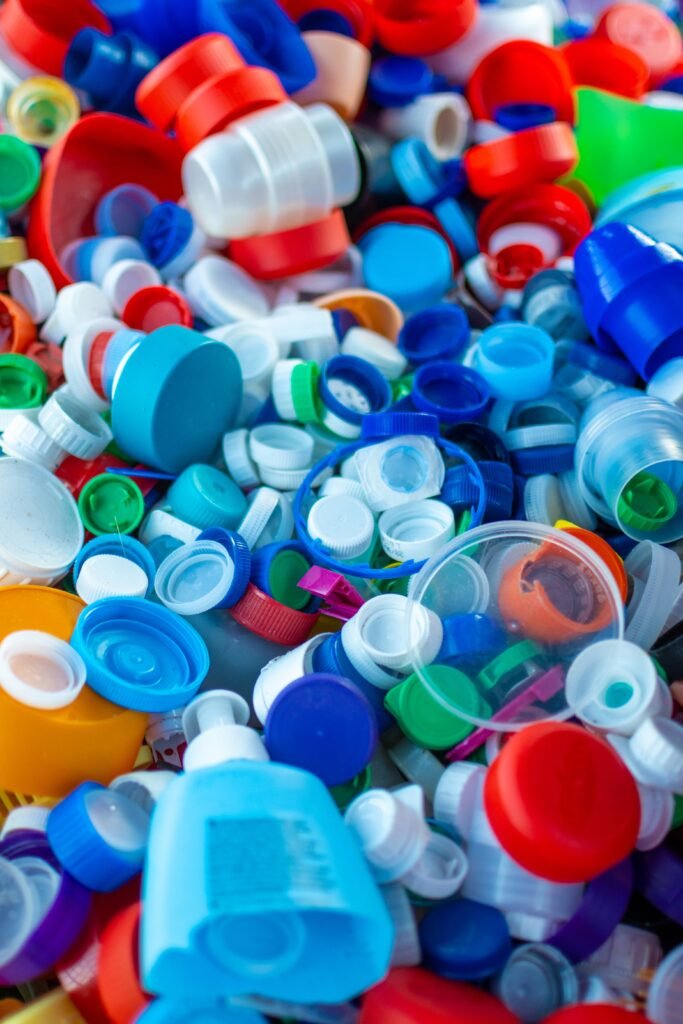
Natural HDPE generally refers to polyethylene without significant intentionally added coloring pigments. Depending on thickness, formulation, and processing history, it may appear translucent, milky white, or slightly opaque.
Common examples include natural-colored milk containers and certain industrial packaging products.
Because natural HDPE contains little or no intentional pigmentation, recycled material from this fraction generally offers greater flexibility for recoloring.
However, natural HDPE does not always look completely transparent. Aging, additives, and previous processing can affect its appearance.
What Is Colored HDPE?
Colored HDPE contains pigments that create specific appearances. Common examples include blue detergent bottles, green cleaning-product containers, white packaging, and black industrial components.
These materials can be recycled into suitable products, but mixed pigments may create inconsistent coloration.
For facilities supplying recycled resin to manufacturers with specific appearance requirements, separating colors helps maintain more predictable output quality.
Natural HDPE vs. Colored HDPE
| Feature | Natural HDPE | Colored HDPE |
| Appearance | Translucent, milky, or naturally opaque | White, blue, green, black, or other colors |
| Pigments | Generally unpigmented | Contains coloring pigments |
| Recoloring flexibility | Usually greater | Depends on existing coloration |
| Main sorting objective | Remove colored contamination | Separate target colors |
| Recycling applications | Containers, molded parts, industrial products | Pipes, containers, molded components |
| Main quality concern | Discoloration and unwanted pigments | Color consistency and contamination |
One important distinction involves natural and white HDPE.
White HDPE frequently contains pigments such as titanium dioxide, while natural HDPE generally does not contain significant added coloring pigments.
Although these materials may look similar, they are not necessarily interchangeable.
The ability to distinguish natural HDPE from pigmented white HDPE depends on their optical characteristics and must be verified through representative material testing.
For recyclers, these differences directly influence the selection of sorting technology and the quality requirements of the recovered material.
How to Sort Natural and Colored HDPE Step by Step
The most effective way to separate natural and colored HDPE is to prepare the incoming material, remove unwanted polymers where necessary, and use optical color sorting to separate the desired fractions.
A typical recycling process may include preliminary sorting, shredding, washing, drying, optical separation, and final quality inspection. However, the arrangement varies according to material condition and plant requirements.
Step 1: Inspect Incoming Plastic Waste
Before processing begins, recycling operators should understand their feedstock.
Post-consumer HDPE may contain PP caps, PET containers, labels, metal fragments, dirt, and residual contents.
The first question is whether the material is already predominantly HDPE or consists of mixed polymers.
If HDPE is mixed with PP or PET, polymer identification may be necessary before final color purification.
This distinction matters because conventional visible-light color sorting cannot reliably identify plastic chemistry from appearance alone.
Step 2: Separate Containers Before Shredding
Some recycling plants use automated sorting equipment to separate whole containers before size reduction.
Depending on the detection system, equipment may identify materials according to polymer characteristics and visible appearance.
Pre-sorting can remove unwanted containers early, reducing unnecessary material entering washing and shredding equipment.
However, labels, full-body sleeves, and overlapping containers can interfere with recognition.
Therefore, early separation does not always eliminate the need for further sorting after shredding.
Step 3: Shred, Wash, and Dry the HDPE
Accepted HDPE containers are typically reduced into flakes.
Washing removes surface dirt, product residues, and certain adhesive or label contaminants. Additional processes may remove metals and lightweight impurities.
Float-sink separation can help separate many denser plastics from floating polyolefins.
However, HDPE and PP generally both float in water. Conventional water-based density separation therefore cannot reliably distinguish them.
After washing, material should be adequately dried and prepared for optical inspection.
Clean, consistently distributed flakes provide more favorable conditions for accurate recognition than heavily contaminated or overlapping material.
Step 4: Separate Natural and Colored HDPE with Optical Sorting
Optical color sorting is a key stage when the material is already sufficiently purified by polymer type.
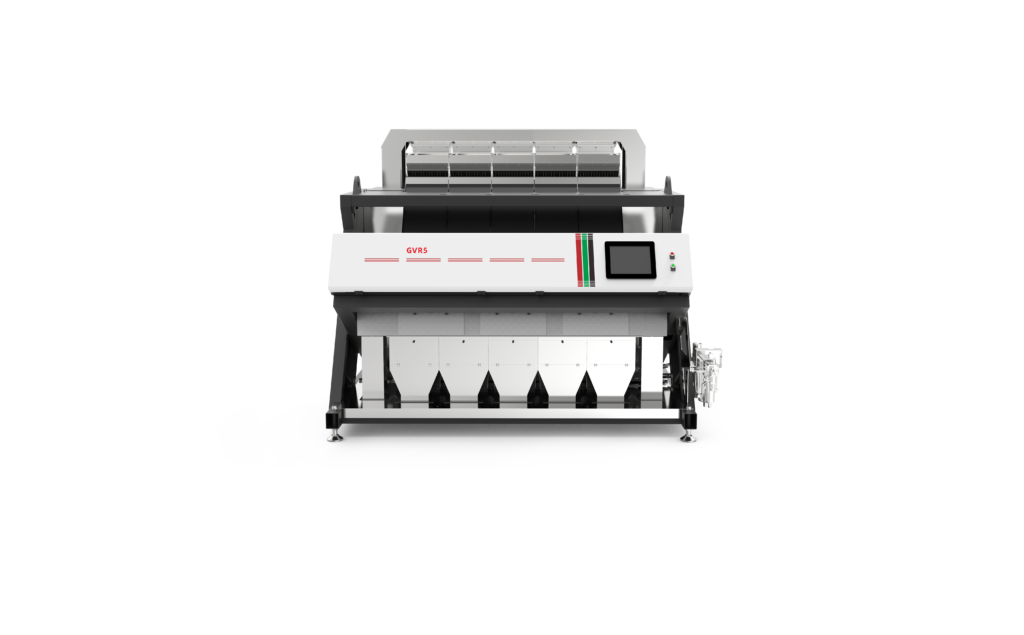
A suitable system uses cameras and controlled illumination to examine individual flakes.
Image-processing software evaluates visible characteristics such as color, brightness, and contrast. The system then identifies particles that meet the selected acceptance or rejection criteria.
For natural HDPE production, the sorting program may retain acceptable natural-colored flakes while rejecting visibly colored contaminants.
For colored HDPE recycling, the process may separate a target color, such as blue or green, from other fractions.
The actual separation performance depends on the material’s optical differences, particle presentation, and machine configuration.
Some plants may require additional passes to achieve their target quality.
Step 5: Inspect the Sorted HDPE
After separation, operators should assess both the accepted material and the rejected fraction.
Important indicators include:
- Output purity and remaining unwanted colors
- Residual polymer contamination
- Recovery of acceptable HDPE
- Effective processing throughput
- Material losses during sorting
The accepted flakes may proceed to extrusion and pelletizing once they satisfy downstream requirements.
Optical sorting improves feedstock consistency, but it cannot replace appropriate washing, filtration, extrusion control, or material-quality testing.
Choosing the Best Technology for Natural and Colored HDPE Sorting
Different sorting technologies address different problems.
Selecting suitable equipment requires understanding whether the primary challenge involves visible color differences, polymer composition, or both.
Visible-Light Optical Sorting
Visible-light sorting uses cameras to recognize differences in color, brightness, and surface appearance.
It is particularly useful for separating natural and colored HDPE when the incoming material is already sufficiently pure.
For example, a facility processing washed HDPE flakes may use color sorting to remove blue, green, yellow, or red particles from a natural-colored fraction.
However, conventional color recognition cannot reliably distinguish two plastics with similar appearances but different polymer structures.
Near-Infrared (NIR) Polymer Sorting
NIR sorting identifies plastics through differences in their near-infrared spectral responses.
It can help distinguish HDPE from materials such as PP, PET, and other polymers when the sensor configuration and material characteristics permit.
This technology is useful for mixed plastic streams where color recognition alone cannot determine material composition.
Nevertheless, NIR performance has limitations.
Certain carbon-black-filled plastics strongly absorb near-infrared radiation, creating identification challenges for conventional systems.
Dirt, overlapping particles, and surface conditions can also influence detection.
Combined Polymer and Color Sorting
Facilities processing mixed plastic waste may benefit from combining polymer identification and visible-light color sorting.
Polymer-sensitive detection helps separate unwanted resin types, while color recognition helps produce more consistent natural or colored fractions.
Depending on the equipment, these tasks may be performed in a multi-sensor system or across separate processing stages.
HDPE Sorting Technology Comparison
| Sorting Requirement | Recommended Technology Approach |
| Natural vs. colored HDPE | Visible-light color sorting |
| Blue vs. green HDPE | Visible-light color sorting |
| HDPE vs. PP | Polymer-sensitive identification, such as suitable NIR |
| HDPE vs. PET | Polymer identification |
| Mixed polymers and colors | Combined polymer and color sorting |
| Black HDPE polymer identification | Specialized detection and testing |
| Final purification of known HDPE flakes | Optical flake color sorting |
The most advanced technology is not automatically the most economical option.
For relatively clean HDPE flakes requiring only color separation, a dedicated optical color sorting approach may be sufficient.
For mixed polymers, additional identification capability may justify the investment.
The correct choice should always be based on representative feedstock and measurable separation requirements.
Common Challenges in Natural and Colored HDPE Recycling
Even modern sorting equipment faces challenges when material characteristics vary significantly.
Understanding these issues helps recyclers improve process stability and avoid unrealistic equipment expectations.
Natural and White HDPE May Look Similar
One of the most difficult situations involves separating natural HDPE from pigmented white material.
Both may appear light-colored, particularly when flakes have similar thicknesses.
Advanced illumination and image-processing techniques can improve differentiation where detectable optical contrast exists, but ordinary color recognition cannot guarantee reliable separation in every case.
Material testing is therefore important when customers require a strictly defined natural fraction.
Aged HDPE Can Change Appearance
Natural HDPE may become yellowish or grayish through aging, contamination, or previous processing.
As a result, some acceptable material may appear different from newly produced natural HDPE.
Sorting criteria should reflect the required product specification rather than assuming every acceptable particle has identical brightness.
Black HDPE Presents Identification Difficulties
Visible-light cameras may recognize black particles as a color category.
However, identifying whether those particles are HDPE, PP, or another polymer requires suitable material-sensitive detection.
Certain pigments can interfere with conventional NIR identification, so black-plastic applications should be evaluated individually.
Excessive Feeding Can Reduce Sorting Accuracy
Optical systems need an adequate view of individual particles.
When flakes overlap or feed distribution becomes uneven, some particles may be obscured, reducing recognition and ejection reliability.
Appropriate feeding conditions and consistent material preparation help maintain sorting performance.
Purity and Recovery Must Be Balanced
Strict rejection settings may improve the purity of the accepted fraction but also remove usable HDPE.
Less restrictive settings may increase recovery while allowing additional contaminants to remain.
The optimum balance depends on customer specifications, material value, acceptable losses, and operating costs.
An effective HDPE sorting process should deliver commercially useful output at a sustainable recovery rate, not simply maximize rejection or nominal throughput.
How to Choose the Right HDPE Sorting Machine for Your Recycling Plant
Choosing a plastic sorting machine involves more than comparing equipment capacity or camera specifications.
Recycling businesses should evaluate their actual materials, target output quality, and production requirements before purchasing.
Identify the Material Form and Composition
Start by determining whether the equipment will process whole containers, crushed plastics, washed flakes, or pellets.
Each material form requires an appropriate feeding and detection arrangement.
Next, identify the main contaminants. A relatively pure HDPE stream may require primarily color separation, while mixed HDPE and PP may need polymer identification.
Define Your Target Output
Different plants have different objectives.
One facility may want a natural HDPE fraction separated from all visibly colored material. Another may require individual blue or green fractions.
The required number of output streams influences the sorting configuration and potentially the number of processing stages.
Evaluate Actual Throughput and Recovery
Nominal capacity alone cannot describe sorting performance.
Actual throughput varies according to particle size, contamination, feed distribution, and target purity.
Buyers should request performance evaluations under conditions representative of their own production.
Both purity and recovery should be considered, since rejecting excessive amounts of usable HDPE can increase material losses.
HDPE Sorting Machine Selection Checklist
Before making a purchasing decision, consider the following requirements:
| Evaluation Factor | Questions to Ask |
| Material type | Are we sorting containers, flakes, or pellets? |
| Polymer composition | Is the feedstock primarily HDPE or mixed plastics? |
| Color requirements | Do we need natural HDPE, mixed colors, or individual color fractions? |
| Contamination | Are PP, PET, labels, or other impurities present? |
| Capacity | What effective throughput is required? |
| Output quality | What purity and recovery targets must be achieved? |
| Production layout | Where should the sorting equipment be installed? |
| Material testing | Can representative samples be evaluated? |
Verify Performance Through Material Testing
Representative sample testing is one of the most valuable steps before equipment selection.
Testing can help determine whether color sorting alone is sufficient, whether polymer identification is necessary, and what separation performance may be achievable.
It can also reveal challenges involving natural and white HDPE, heavily pigmented material, or irregular flakes.
Rather than relying only on published equipment specifications, recycling businesses should compare solutions according to their own materials and production objectives.
The right investment is the sorting approach that consistently supports required output quality, practical throughput, and acceptable material recovery.
Frequently Asked Questions About Natural and Colored HDPE Sorting
1. Can natural and colored HDPE be recycled together?
Yes. Both materials can be recycled together in suitable applications. However, mixing colors reduces flexibility when producing recycled resin for specific appearance requirements.
2. Can optical sorting separate natural HDPE from white HDPE?
It may be possible when sufficient optical differences exist. However, similar-looking natural and pigmented white flakes can be difficult to distinguish, so representative testing is necessary.
3. Is NIR technology necessary for HDPE color sorting?
Not always. Visible-light sorting may be sufficient when the material is already predominantly HDPE. NIR is particularly useful when different polymer types must also be identified.
4. Can HDPE and PP be separated using water?
Not reliably through conventional water-based float-sink separation because both generally float. Suitable polymer-identification technology may be required.
5. Should HDPE be sorted before or after washing?
Both approaches have advantages. Pre-sorting can remove unwanted containers early, while sorting cleaned and dried flakes can support more precise final color purification.
6. Can one machine separate multiple HDPE colors?
Suitable optical systems can identify several visible color categories. However, collecting multiple separate fractions may require additional output arrangements or sorting stages.
7. Can black HDPE be separated automatically?
Black particles can be recognized by visible appearance, but reliable polymer identification may require specialized technology, particularly for carbon-black-filled materials.
8. What should buyers prepare before requesting an HDPE sorting solution?
Provide representative samples, material photos, particle-size information, contamination details, target throughput, and desired output fractions. These details help evaluate the appropriate equipment configuration.
Conclusion: Improve HDPE Recycling with the Right Sorting Technology
Separating natural and colored HDPE is an important step toward producing consistent recycled materials and improving their suitability for downstream applications.
Understanding how to sort natural and colored HDPE helps recycling businesses identify the right processing stages and choose between color sorting, polymer identification, or combined technologies.
Visible-light sorting is valuable for separating different appearances within known HDPE streams, while NIR and other suitable identification technologies can address mixed-polymer contamination. The best results depend on feedstock preparation, equipment selection, and realistic quality requirements.
At PolySorter, we provide plastic sorting solutions designed to address different recycling applications and material-separation requirements.
Contact PolySorter to discuss your HDPE recycling project. Share your material characteristics, target capacity, and desired output quality, and our team can help evaluate a suitable sorting solution for your production line.