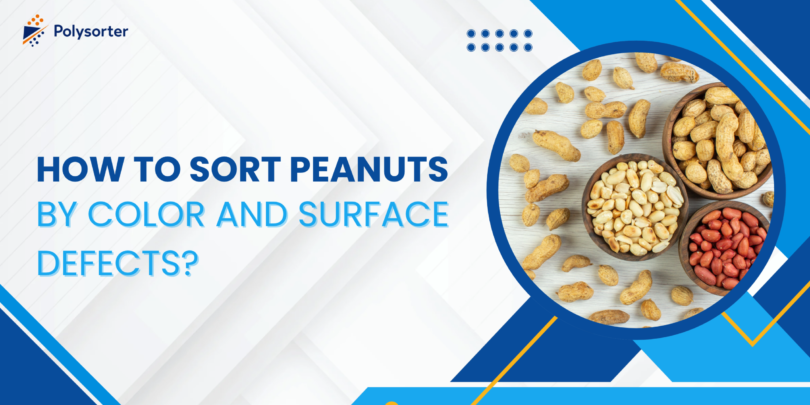
Peanuts may appear similar after harvesting and shelling, but their quality can vary considerably. A single batch may contain discolored kernels, dark spots, damaged skins, shriveled peanuts, broken pieces, and foreign materials. These differences can affect product appearance, processing efficiency, and commercial value.
Understanding how to sort peanuts by color and surface defects is essential for processors who need consistent quality without sacrificing too much acceptable material.
Manual inspection can identify obvious problems, but maintaining consistent results becomes difficult as production volumes increase. Automated optical sorting offers a practical alternative by examining individual peanuts and separating unwanted material according to defined quality standards.
However, not every peanut sorting machine offers the same capabilities. Basic color sorters primarily recognize visible color differences, while advanced vision systems can also analyze shapes and surface patterns.
This guide explains which peanut defects can be identified, how optical sorting works, and how to select suitable equipment for commercial peanut processing.
Why Peanut Color and Surface Defect Sorting Matters
Peanut quality depends on more than kernel size and moisture content. Color consistency, surface condition, physical integrity, and the presence of foreign materials also influence whether peanuts meet the requirements of food manufacturers, exporters, and commercial buyers.
Different applications require different quality standards.
For example, peanuts intended for direct consumption often need uniform appearance and minimal visible damage. Peanuts used for peanut butter may tolerate greater natural color variation, although contamination control remains essential.
Common Color Defects in Peanuts
Color defects are among the most recognizable problems during peanut processing.
Typical examples include:
- Darkened kernels: Peanuts showing abnormal brown or black discoloration.
- Black spots: Localized dark patches that differ from normal skin pigmentation.
- Abnormal pale coloration: Kernels that fall outside the desired color range.
- Uneven roasting colors: Over-roasted, under-roasted, or inconsistently colored peanuts.
- Visible mold-related discoloration: Surface changes that may indicate deterioration.
Importantly, natural peanut coloration varies between varieties. Red-skinned, pink-skinned, and blanched peanuts should not be evaluated using identical sorting settings.
Common Surface and Shape Defects
Other quality problems involve visible physical characteristics rather than color alone.
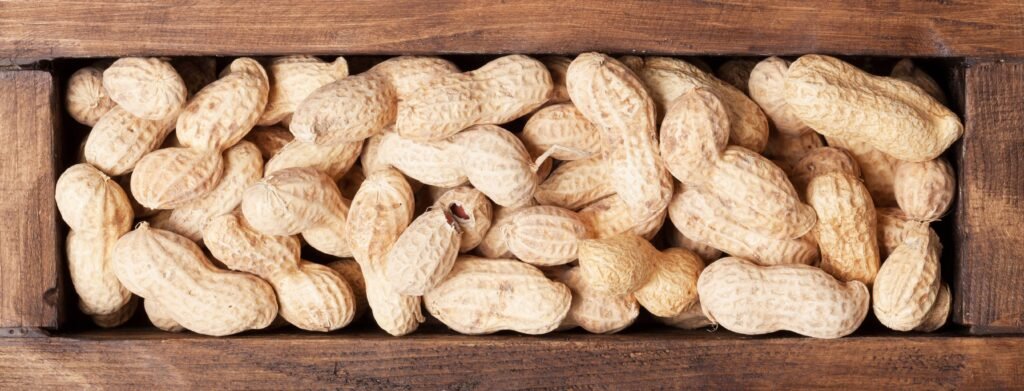
These include cracked surfaces, wrinkled kernels, insect-damage marks, broken peanuts, and irregular shapes.
Some defects are relatively easy to recognize. Others closely resemble natural skin patterns or normal variations in kernel shape.
Therefore, effective peanut sorting requires clear acceptance standards. The objective is not to reject every unusual-looking peanut, but to remove targeted defects while preserving acceptable product.
How Does a Peanut Color Sorter Detect Defects?
A peanut color sorting machine combines controlled feeding, optical inspection, image processing, and automatic rejection.
The typical operating sequence is:
Feeding → Material Distribution → Image Capture → Defect Recognition → Air Ejection → Product Collection
Optical Inspection and Color Recognition
Peanuts first enter a feeding system that distributes them into the inspection area.
Uniform feeding is important because overlapping kernels can conceal defects and reduce sorting consistency.
As peanuts pass through the inspection zone, cameras capture images under controlled illumination.
Conventional RGB color sorting identifies differences in visible color and brightness. This makes it suitable for detecting many discolored kernels, dark spots, and abnormal roasting colors.
However, a color difference must be sufficiently visible to the sensor. Defects hidden beneath the skin or inside the kernel may remain undetected.
Surface Defect Recognition
Surface defect detection requires more detailed image analysis.
High-resolution cameras and suitable lighting can help identify localized spots, irregular surface patterns, and visible damage.
Advanced image-processing software may distinguish these defects from normal peanut skin characteristics.
For example, a small dark patch may be classified differently from the natural red pigmentation of a healthy peanut.
Detection performance depends on image resolution, defect contrast, kernel orientation, and the classification software.
Shape Recognition and AI-Assisted Sorting
Shape recognition evaluates physical characteristics such as length, width, outline, and visible structural irregularities.
This can help separate broken, shriveled, or misshapen peanuts when those differences are detectable.
AI-assisted image recognition can provide additional flexibility when defects involve combinations of color, shape, and surface appearance.
Nevertheless, AI does not automatically reveal hidden damage. Its effectiveness depends on suitable sensors, representative training data, and proper machine configuration.
Automatic Rejection
Once the system identifies an unwanted peanut, precisely timed compressed-air jets redirect it into a reject channel.
Acceptable peanuts continue toward the finished-product outlet.
Accurate rejection is important because excessive air ejection may remove good kernels together with defective material.
As a result, sorting performance should be evaluated through both defect removal and acceptable-product recovery.
Which Peanut Defects Can Optical Sorting Machines Remove?
Different peanut defects require different inspection capabilities. Understanding these distinctions helps processors avoid selecting equipment based on general claims of sorting accuracy.
Peanut Defect Detection Comparison
| Defect Category | Typical Examples | Suitable Recognition Method | Main Limitation |
| Color defects | Darkened kernels, abnormal colors | RGB color recognition | Requires visible contrast |
| Surface defects | Black spots, visible damage marks | High-resolution imaging and pattern analysis | Small or hidden defects may be missed |
| Shape defects | Broken, shriveled, irregular kernels | Shape and size recognition | Similar outlines can be difficult to distinguish |
| Visible mold damage | Discolored or visibly deteriorated kernels | Optical inspection | Cannot establish toxin concentration |
| Foreign materials | Shell fragments, stems, selected impurities | Color, shape, or additional sensing | Similar-looking materials may require other sensors |
Color Sorting vs. Surface Defect Detection
A conventional color sorter is often suitable when unwanted peanuts have clear differences in color.
However, surface defect detection becomes more challenging when damage appears as a small mark or subtle texture variation.
In these situations, higher-resolution imaging and more advanced classification may improve recognition.
Multi-view inspection can also increase visible surface coverage, although it cannot guarantee detection of every defect.
Can Peanut Sorting Machines Detect Aflatoxin?
Aflatoxin contamination is an important concern in peanut processing.
Certain fungi can produce aflatoxins, but contaminated peanuts do not always display visible discoloration or mold growth.
Optical sorting can help remove some visibly deteriorated kernels associated with higher contamination risk. However, a conventional visible-light color sorter cannot directly measure aflatoxin concentration or guarantee that all contaminated peanuts are removed.
Specialized spectral inspection technologies may identify additional contamination-related characteristics, depending on their design and validated performance.
Even when advanced inspection is used, appropriate sampling, laboratory testing, moisture control, and storage management remain necessary.
For food processors, optical sorting should therefore be treated as one part of a broader quality and food safety management system.
How to Sort Peanuts by Color and Surface Defects Step by Step
Successful optical sorting depends on both machine capabilities and proper preparation of the incoming material.
A well-organized processing line helps maintain stable feeding and reduces unnecessary loading on the sorting equipment.
Step 1: Clean the Incoming Peanuts
Raw peanuts may contain soil, dust, loose shells, stones, stems, and other impurities.
Pre-cleaning equipment such as screens, aspiration systems, and destoners can remove many unwanted materials before optical inspection.
This improves feeding conditions and reduces interference from dust and oversized contaminants.
Mechanical cleaning and optical sorting perform different functions, so they generally work best as complementary processes.
Step 2: Grade Peanuts When Necessary
Large variations in kernel size can affect feeding stability and inspection consistency.
Separating whole kernels, halves, and small fragments may improve material presentation and simplify defect classification.
However, size grading is not mandatory for every application. Its value depends on incoming material variation and the required finished-product grade.
Step 3: Define the Sorting Standard
Operators should establish clear examples of acceptable and defective peanuts before configuring the equipment.
For red-skinned peanuts, natural color variation may be acceptable while blackened kernels must be rejected.
For blanched peanuts, dark marks and remaining skin fragments may receive greater attention.
These standards should reflect actual customer requirements rather than arbitrary sensitivity settings.
Step 4: Adjust Feeding and Sorting Sensitivity
The sorter must receive a stable, sufficiently separated material flow.
Excessive feeding can cause overlapping kernels, while overly aggressive rejection settings may increase acceptable-product loss.
Operators should adjust feeding speed and defect sensitivity together, using representative samples.
The objective is to maintain the required finished-product quality at a practical production rate.
Step 5: Inspect Accepted and Rejected Material
After sorting, both output streams should be evaluated.
Three performance indicators are particularly useful:
- Defect removal rate: The percentage of targeted defects successfully rejected.
- Accepted-product quality: The amount of unwanted material remaining in the accepted stream.
- Good-product loss: The amount of acceptable material incorrectly rejected.
These measurements should be assessed together.
Where appropriate, an additional sorting pass may recover acceptable peanuts from the reject stream. However, material suspected of hazardous contamination must remain segregated and follow the applicable food safety procedures.
How to Choose the Right Peanut Color Sorting Machine
Selecting a peanut sorting machine requires more than comparing camera specifications or advertised capacity.
The right equipment must match the raw material, target defects, production volume, and finished-product requirements.
Choose the Technology Based on Defect Type
Different sorting objectives call for different technical capabilities.
| Processing Requirement | Recommended Capability | Purchasing Consideration |
| Remove obvious discoloration | RGB optical color sorting | Suitable for clearly visible color differences |
| Detect small surface spots | High-resolution imaging | Verify recognition using actual defective samples |
| Separate broken or shriveled kernels | Shape recognition | Compare results with mechanical grading |
| Identify complex visible defects | AI-assisted image classification | Confirm performance through material testing |
| Detect difficult foreign materials | Additional sensing where appropriate | Match sensor selection to contaminant characteristics |
| Reduce good-product loss | Precise rejection and adjustable settings | Evaluate recovery alongside defect removal |
A basic optical sorter may be sufficient for straightforward color separation.
However, processors dealing with subtle surface damage or multiple defect categories may benefit from more advanced imaging and classification.
The most expensive configuration is not necessarily the most appropriate.
Match Equipment to Peanut Type
Raw, blanched, roasted, and in-shell peanuts present different inspection challenges.
Raw peanuts may require careful differentiation between natural skin pigmentation and discoloration.
Blanched peanuts often make certain surface marks easier to see, while roasted peanuts require sorting standards that account for normal roasting variation.
In-shell peanuts introduce additional challenges because internal kernel defects cannot be evaluated through ordinary external imaging.
Therefore, buyers should confirm that the proposed equipment supports their actual peanut material and intended application.
Evaluate Capacity and Product Recovery
Advertised throughput should never be considered independently of sorting quality.
Actual capacity depends on kernel size, defect concentration, feeding stability, and the required acceptance standard.
A useful equipment trial should measure processing throughput, residual defects, and acceptable-product loss under the same operating conditions.
This provides a more meaningful comparison than relying on maximum capacity figures alone.
Consider Maintenance and Operating Costs
Peanut processing environments can generate dust and loose skins.
Equipment should therefore provide practical access for cleaning, optical maintenance, and routine inspection.
Buyers should also evaluate compressed-air consumption, operator training, spare-parts availability, and technical support.
Reliable daily operation can have a substantial influence on long-term processing costs.
Request a Representative Sorting Test
Before purchasing, provide samples that reflect normal production conditions, including typical defects and natural material variation.
A representative trial helps determine whether the proposed system can meet the required quality standard without excessive rejection.
PolySorter offers versatile multipurpose grain and seed optical sorting solutions for peanuts, beans, and other agricultural commodities. Suitable sorting configurations can be evaluated according to material characteristics, target defects, and processing requirements.
Frequently Asked Questions About Peanut Color Sorting
1. Can a peanut color sorter remove black spots and damaged kernels?
Yes. Optical sorting machines can identify many peanuts with visible black spots, abnormal discoloration, and surface damage. However, performance depends on defect size, image contrast, lighting, and equipment configuration. Small or hidden defects may require additional inspection methods, so representative sample testing is recommended.
2. Can optical sorting remove aflatoxin-contaminated peanuts?
Optical sorting can remove some visibly deteriorated peanuts associated with contamination risk. However, conventional color cameras cannot directly measure aflatoxin levels, and contaminated kernels may appear normal. Specialized inspection may provide additional detection capabilities, but laboratory testing remains essential for verifying food safety requirements.
3. Can one machine sort raw, roasted, and blanched peanuts?
Some peanut sorting systems can handle multiple product types with suitable feeding arrangements and adjustable inspection settings. However, each material has different color and surface characteristics. Buyers should confirm compatibility through practical trials rather than assuming identical sorting performance across all peanut products.
4. Is AI better than conventional peanut color sorting?
AI-assisted recognition may offer advantages when defects involve complex combinations of color, shape, and surface patterns. Conventional RGB sorting can still be effective for obvious discoloration. The better choice depends on the target defects, required output quality, available inspection hardware, and verified test results.
5. Should peanuts be cleaned before optical sorting?
Yes. Preliminary cleaning removes dust, loose shells, stones, and other materials that can interfere with feeding and inspection. Depending on the incoming material, screening, aspiration, or destoning may be appropriate. Cleaner and more uniform material generally helps the optical sorter operate more consistently.
6. How can processors reduce good peanut loss during sorting?
Good-product loss can be reduced through stable feeding, suitable sensitivity settings, precise rejection timing, and regular inspection of rejected material. Operators should balance defect removal against acceptable-product recovery. Additional sorting stages may improve recovery when they are technically suitable and economically justified.
Conclusion: Improving Peanut Quality Through Accurate Optical Sorting
Understanding how to sort peanuts by color and surface defects requires more than selecting a machine with high-resolution cameras.
Effective sorting begins with clean, well-presented material and clearly defined quality standards. It also depends on matching color recognition, surface inspection, and shape analysis to the defects that actually occur in production.
For commercial peanut processors, the most reliable purchasing approach is to compare equipment using representative samples, measurable sorting results, and realistic operating conditions.
By combining suitable optical sorting technology with proper process management, businesses can improve product consistency, reduce unnecessary material loss, and maintain more dependable quality control.
Explore PolySorter’s multipurpose grain color sorting solutions or contact our team to discuss your peanut processing requirements and arrange a material evaluation.