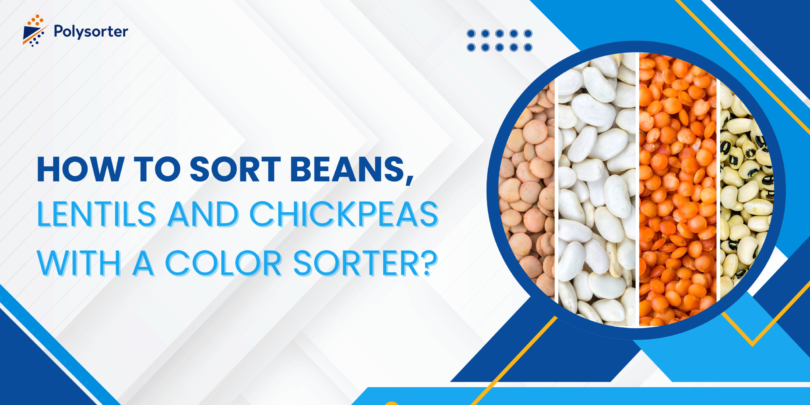
Beans, lentils, and chickpeas may appear relatively easy to sort, but commercial pulse processing is more complicated. A single batch can contain discolored grains, broken pieces, immature pulses, foreign seeds, husks, stones, and other unwanted material. Even a small percentage of these defects can affect the appearance, grade, and market value of the finished product.
A color sorter for beans and other pulses provides an automated way to identify and separate many of these visible defects. Instead of relying mainly on manual inspection, the machine examines material as it passes through an optical inspection zone. Particles that match the selected rejection criteria are then separated from the accepted product stream.
However, good sorting is not simply a matter of increasing sensitivity. Beans, lentils, and chickpeas differ in particle size, shape, natural color variation, and surface appearance. A sorting setup that works well for one pulse may therefore need different feeding conditions and detection parameters for another.
For processors choosing a grain color sorter, the important question is not simply whether a machine can “sort beans.” The real question is whether it can identify the required defects at the target throughput while maintaining acceptable product recovery.
How Does a Color Sorter for Beans and Pulses Work?
A color sorter separates pulses through a continuous process:
Feeding → Material Distribution → Optical Inspection → Classification → Air Ejection → Collection
Beans, lentils, or chickpeas first enter the feeding system and are distributed across the sorting channels. Stable material flow is important because excessive overlap can make individual particles more difficult to inspect.
As the pulses pass through the inspection area, cameras and controlled lighting capture their visible characteristics. The system compares detectable differences in color, brightness, shape, size, and surface appearance with the selected sorting criteria.
When a targeted defect is identified, the corresponding high-speed air ejector redirects it into the reject stream. Acceptable material continues into the product stream.
However, a conventional visible-light color sorter can only classify differences its optical system can detect. Obvious discoloration and visually different foreign material may be suitable sorting targets, while internal defects or same-color contaminants can be more difficult. In these cases, additional sensing technologies or upstream separation may be required.
What Defects Can a Pulse Color Sorter Remove?
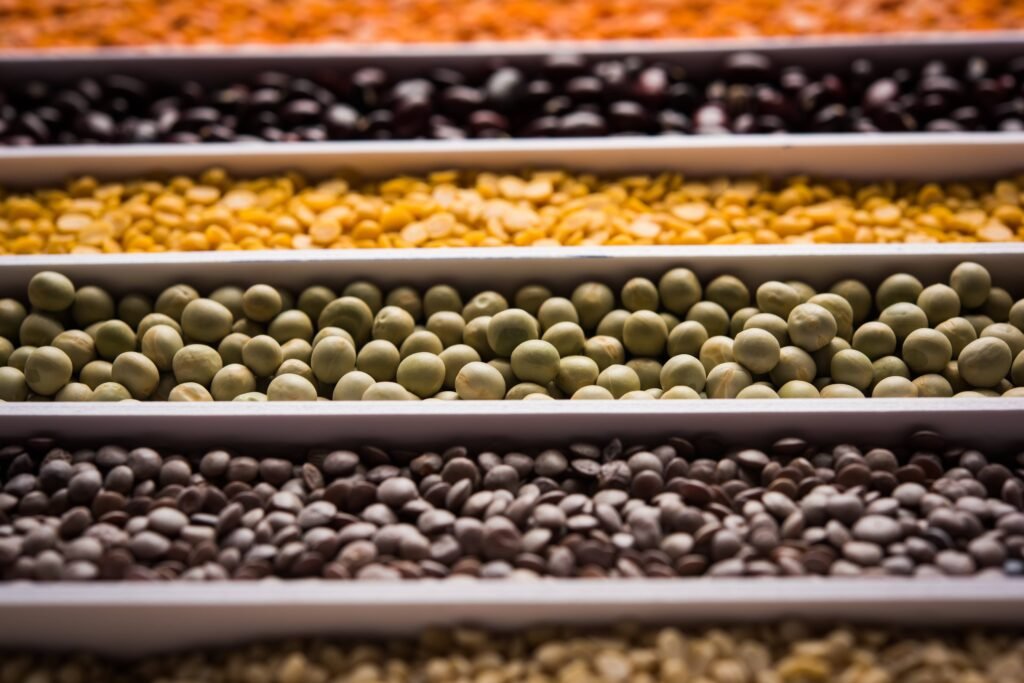
The defects found in pulses vary with crop variety, harvesting conditions, storage, cleaning, and the quality specification of the finished product.
A properly configured pulse color sorter may help separate several common types of unwanted material:
| Sorting Target | Typical Examples | Main Detection Basis |
| Color defects | Dark, pale, yellowed or abnormal-color pulses | Color and brightness |
| Surface defects | Visible spots, stains or surface damage | Visible appearance |
| Broken material | Splits, fragments and damaged pieces | Shape and size |
| Immature material | Visibly green or underdeveloped pulses | Color and shape |
| Foreign seeds | Seeds visually different from the target crop | Color and morphology |
| Foreign material | Selected stones, husks, sticks and other visible impurities | Color, shape and visible appearance |
| Variety contamination | Visually different beans or pulses | Color and morphology |
The key phrase here is visually distinguishable.
Consider stones in chickpeas. A dark stone surrounded by pale chickpeas provides strong optical contrast and may be relatively straightforward to identify. A stone with similar color and appearance presents a more difficult task for visible-light sorting.
This does not necessarily mean increasing color sensitivity will solve the problem. In some processing lines, difficult foreign material may first be removed through mechanical cleaning or density-based separation. Additional sensor technologies can also be considered when the target cannot be reliably differentiated by visible appearance.
The same principle applies to damaged pulses. Severe discoloration is usually easier to distinguish than a small defect appearing on only part of the surface.
For this reason, buyers should be cautious with sorting-accuracy figures presented without information about the raw material, defect type, throughput, and acceptable good-product loss. A meaningful evaluation should use representative production samples and clearly defined acceptance standards.
Color Sorting for Beans, Lentils and Chickpeas
Although beans, lentils, and chickpeas are all pulses, they create different challenges for optical sorting.
| Material | Typical Sorting Challenge | What Processors Should Watch |
| Beans | Natural differences in color and pattern | Avoid confusing normal markings with defects |
| Lentils | Small particle size and dense material flow | Maintain stable feeding and minimize overlap |
| Chickpeas | Larger, three-dimensional shape | Maintain consistent presentation and sufficient surface visibility |
Bean Color Sorting
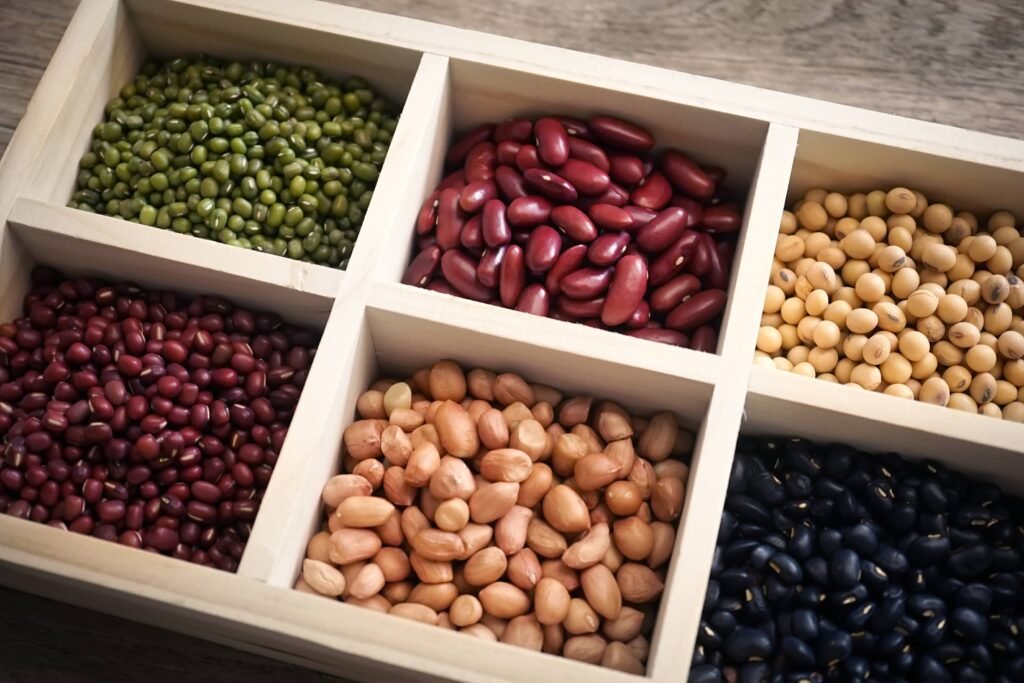
Beans can vary considerably in color, pattern, size, and shape. White beans, red beans, black beans, mung beans, and patterned varieties cannot all be evaluated with the same visual criteria.
For relatively uniform beans, the sorting target may include discoloration, dark spots, foreign seeds, broken material, and visibly damaged pieces. Patterned varieties can be more challenging because natural markings must be distinguished from actual defects.
Therefore, a bean color sorter needs more than high sensitivity. The sorting recipe must tolerate acceptable natural variation while still identifying the defects that reduce finished-product quality.
Lentil Color Sorting
Lentils are smaller than many beans and chickpeas, making material presentation particularly important.
If too much material enters the inspection zone at once, individual lentils can overlap. Hidden particles are harder to inspect, while tightly grouped material can also increase collateral rejection when an air ejector removes a targeted defect.
Stable feeding and appropriate material density are therefore important for lentil color sorting. Typical sorting targets can include discolored lentils, foreign seeds, broken pieces, dark impurities, and other visually distinguishable foreign material.
Chickpea Color Sorting
Chickpeas are larger and more three-dimensional. Common sorting targets may include dark or green chickpeas, visibly damaged pieces, broken material, foreign seeds, and contrasting foreign matter.
Their shape introduces another consideration: a defect may appear on only one part of the surface. Consistent material presentation and sufficient viewing coverage therefore become important when sorting chickpeas.
Material-handling design should also reflect these physical differences. Small, relatively flat lentils and larger, more rounded beans or chickpeas do not necessarily behave in the same way during feeding and acceleration.
As a result, chute geometry, feeding parameters, and material distribution should be selected according to particle size, shape, rolling behavior, and required throughput rather than assuming that one configuration is ideal for every pulse.
These differences explain why buyers should not judge a machine simply by asking whether it can process pulses. A better question is whether the system can present the material consistently and identify the required defects in the specific beans, lentils, or chickpeas being processed.
How to Improve Bean, Lentil and Chickpea Sorting Results
Optical sorting performance depends heavily on the condition of the material before it reaches the inspection zone.
Pre-cleaning is usually the first step. Dust, oversized debris, and impurities that can be removed efficiently by conventional cleaning equipment should not unnecessarily occupy the optical sorter. Depending on the processing line, screens, aspiration, destoning, or other mechanical cleaning methods may be used before optical inspection.
Size grading can also improve consistency when the incoming batch contains large variations in particle dimensions. A more uniform feed makes material presentation easier to control.
This becomes particularly important with lentils. Because the particles are small, excessive feed density can quickly increase overlap. Reducing overlap gives the optical system a better opportunity to inspect individual pieces.
For beans and chickpeas, particle presentation remains important for a different reason. Their larger size and three-dimensional shape mean some surface areas may be less visible during inspection. Stable feeding helps maintain more consistent sorting conditions.
Throughput also needs to be considered carefully. Maximum machine capacity is not automatically the same as optimum sorting capacity. As material density increases, particle overlap and collateral rejection may also increase.
For this reason, a sorter should not be judged by finished purity alone. Buyers should evaluate three results together:
Throughput + Final Purity + Good-Product Recovery
A very clean accept stream is not necessarily an efficient result if too much saleable product is being rejected.
Depending on the incoming quality and final specification, processors may also use more than one sorting pass. A first pass can remove the main defects, while a secondary pass or re-sorting the rejected material may help improve good-product recovery.
The appropriate arrangement depends on the raw material, reject concentration, production capacity, and required finished-product quality.
How to Choose a Color Sorter for Beans and Other Pulses
When choosing a color sorter, start with the actual material and sorting target rather than comparing specifications alone. Beans, lentils, and chickpeas differ in size, shape, color variation, and common defects, so the machine should be evaluated under conditions that reflect your real production line.
First, define what needs to be removed. Obvious discoloration, broken pieces, foreign seeds, and contrasting impurities may be suitable targets for optical color sorting. If the unwanted material has little visible difference from the accepted product, additional sensing or upstream separation may need to be considered.
Capacity should also be evaluated together with sorting quality. Instead of looking only at maximum throughput or a general accuracy figure, compare final purity, good-product recovery, and throughput under the same test conditions.
Before purchasing, ask the supplier to test a representative sample from your normal production. Clearly identify the acceptable product, target defects, required capacity, and finished-product standard. A real sample test provides a much better basis for equipment selection than specifications alone.
FAQ About Color Sorting Beans, Lentils and Chickpeas
Can one color sorter process beans, lentils and chickpeas?
Yes. A multi-purpose grain color sorter can process beans, lentils, and chickpeas when its feeding system, optical configuration, and sorting recipes are suitable for these materials. However, each pulse normally requires its own parameters because particle size, shape, natural color variation, and target defects differ.
Can a color sorter remove broken beans and lentils?
Yes, when broken pieces can be distinguished from acceptable material through detectable differences such as shape, size, or visible appearance. Actual performance depends on the material, sensor configuration, feeding conditions, and sorting parameters.
Can a color sorter remove stones from chickpeas?
It can remove stones that provide sufficient detectable contrast from the chickpeas. Similar-looking stones can be more difficult for conventional visible-light sorting. Depending on the application, mechanical separation or additional sensing technology may be needed.
Can NIR or X-ray replace a conventional color sorter?
Not necessarily. These technologies detect different material characteristics and should be selected according to the target contaminant. Visible-light sorting remains highly effective for many color, shape, and surface-related defects, while other sensors can provide additional information when visible contrast is insufficient.
Does higher sorting sensitivity always produce better results?
No. Excessively aggressive settings can increase false rejection and send acceptable pulses into the reject stream. The goal is to achieve the required final purity while maintaining good-product recovery and production capacity.
Should beans and lentils be cleaned before color sorting?
Generally, yes. Pre-cleaning can remove dust, oversized debris, and other easily separated impurities. This creates more stable feeding conditions and allows optical sorting to focus on defects that require image-based classification.
How should I test a pulse color sorter before purchasing?
Use a representative sample from normal production and clearly identify the acceptable product and targeted defects. The test should evaluate final purity, good-product recovery, and throughput together rather than relying only on a general sorting-accuracy percentage.
Conclusion
Sorting beans, lentils, and chickpeas effectively requires more than choosing a machine labeled as a grain color sorter. Each pulse presents different optical and material-handling challenges.
Beans may require the system to distinguish genuine defects from normal color or pattern variation. Small lentils place greater demands on stable feeding and particle separation. Chickpeas introduce different challenges because of their larger, three-dimensional shape and surface visibility.
For buyers, this means equipment selection should begin with the material itself. Define the target defects, required capacity, finished-product standard, and acceptable product loss first. Then determine which sensing and material-handling configuration is appropriate and verify the result using representative samples.
PolySorter provides optical sorting solutions for beans, lentils, chickpeas, and other grain and pulse processing applications. If you are evaluating a new pulse sorting line or upgrading an existing process, contact PolySorter with your material, target defects, and capacity requirements to discuss a sorting solution based on your actual production needs.