Black spots, discolored granules, and visible impurities are common quality concerns in plastic recycling and pellet production. Even a small amount of contamination can affect the appearance of finished products, especially when manufacturers process transparent, white, or light-colored plastics. For recycling facilities and plastic compounders, these defects may lead to rejected batches, additional processing costs, and inconsistent material quality.
Understanding how to remove black spots from plastic pellets requires looking beyond the finished granules. Some defects originate from contaminated plastic bottles or flakes before extrusion, while others develop during melting and pelletizing. Effective quality control therefore involves both preventing contamination at earlier processing stages and removing defective pellets when necessary.
This guide explains the causes of black spots, practical removal methods, the role of optical sorting in plastic recycling, and how manufacturers can choose suitable sorting solutions for their production requirements.
What Causes Black Spots and Defects in Plastic Pellets?
Black spots in plastic pellets do not always indicate the same problem. They may result from contaminated raw materials, thermal degradation, insufficient filtration, or cross-contamination during processing.
Identifying the source is the first step toward selecting an effective treatment method.
Contamination in Recycled Plastic Materials
Recycled plastics often come from different collection sources and may contain materials with varying colors, compositions, and contamination levels.
Plastic bottles, packaging materials, and industrial scrap can contain unwanted components such as labels, dirt, pigments, degraded plastics, and foreign particles.
Although washing removes many surface contaminants, some unwanted materials may remain mixed with the plastic flakes.
When these materials enter the extrusion process, they can contribute to discoloration, visible inclusions, or other quality problems in the finished pellets.
This is particularly important in recycled PET production, where the consistency of incoming flakes directly affects the quality of the recycled material.
Thermal Degradation During Extrusion
Another common source of black spots is polymer degradation.
When plastic remains at excessive temperatures or experiences prolonged residence time inside an extruder, portions of the material may degrade and darken.
Degraded residues can accumulate around screws, barrels, dies, and other areas where material flow is restricted.
Over time, these deposits may detach and enter the molten polymer, creating dark inclusions in the finished pellets.
Common contributing factors include excessive processing temperatures, unstable material flow, insufficient equipment cleaning, and prolonged residence time.
Unlike external contamination, these defects originate during processing and cannot be prevented by improving raw material washing alone.
Incomplete Filtration and Material Mixing
Melt filtration helps remove solid contaminants before pelletizing. However, filtration performance depends on screen size, contaminant characteristics, processing conditions, and equipment maintenance.
Some small particles may pass through the filtration system, while degradation products formed downstream may still enter the finished material.
Cross-contamination from previous production batches can also introduce unexpected colors or foreign particles.
Other Common Plastic Pellet Defects
In addition to black spots, manufacturers may encounter yellowed pellets, unexpected colored granules, opaque particles, and irregularly shaped pellets.
These defects require different solutions.
For example, yellowing may indicate thermal degradation, while mixed-color contamination may originate from insufficient material separation before extrusion.
Understanding the defect type helps manufacturers determine whether they should improve raw material preparation, adjust processing conditions, or introduce additional sorting equipment.
How to Remove Black Spots from Plastic Pellets: Effective Processing Methods
There is no universal method that removes every type of pellet defect. The most effective approach combines contamination prevention, stable processing conditions, and appropriate separation technology.
Improve Raw Material Cleaning and Preparation
For recycled plastics, quality control should begin before extrusion.
Washing systems help remove surface dirt, labels, and other loose contaminants. Mechanical screening can separate materials according to size, while suitable drying equipment prepares moisture-sensitive polymers for further processing.
However, washing alone cannot reliably remove different plastic materials that have similar physical characteristics.
It also cannot eliminate black spots already embedded inside finished pellets.
This is why washing should be combined with suitable material separation and downstream inspection.
Separate Contaminated Plastics Before Extrusion
Optical sorting provides an important opportunity to reduce contamination before plastic materials enter the melting process.
In bottle recycling, automated sorting systems can identify and separate unwanted bottles according to detectable material or appearance characteristics, depending on the sensor configuration.
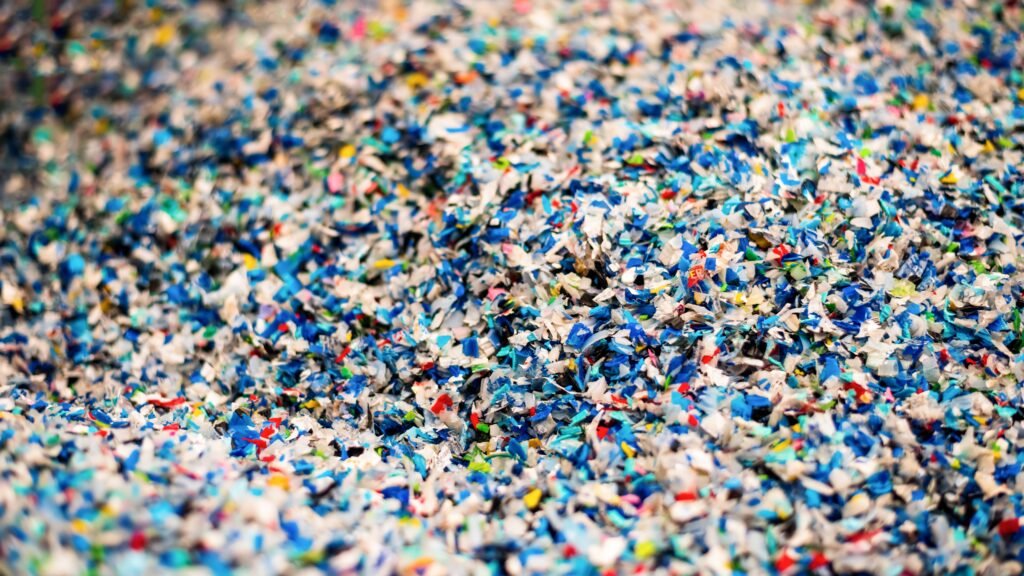
After crushing and washing, plastic flakes can undergo additional sorting to remove unwanted colors and, where suitable polymer-identification technology is installed, different plastic materials.
For example, recycled PET flakes may contain colored fragments or other polymers that should be separated before further processing.
Color sorting systems help identify visibly different flakes, while suitable near-infrared sorting technology can distinguish certain polymer types based on their spectral characteristics.
These technologies perform different functions. A visible-light color sorter should not be treated as a substitute for polymer-identification equipment when visually similar materials need to be separated.
By reducing unwanted materials before extrusion, recycling facilities can improve feedstock consistency and reduce some contamination-related defects in the finished pellets.
Nevertheless, upstream sorting cannot prevent black spots caused by thermal degradation inside the extruder.
Optimize Extrusion and Melt Filtration
When black spots originate during extrusion, manufacturers should examine temperature settings, material residence time, equipment cleanliness, and melt filtration performance.
Regular cleaning helps reduce the accumulation of degraded material, while stable operating conditions can limit additional polymer damage.
Appropriate melt filtration also removes many solid contaminants before pellet formation.
However, finer filtration does not automatically guarantee better results. Excessive pressure or unsuitable filtration settings may affect processing stability.
The correct configuration depends on the polymer, contamination characteristics, and production requirements.
Remove Defective Pellets After Production
When finished pellets already contain visible black spots or discoloration, downstream optical inspection and sorting may provide an additional solution.
Dedicated pellet sorting systems can identify granules with detectable visual defects and separate them from acceptable material.
Instead of attempting to remove individual inclusions, the process rejects the affected pellets.
However, pellet sorting equipment must be specifically designed and validated for the relevant granule size, appearance, and defect characteristics.
Systems intended for whole bottles or larger plastic flakes should not automatically be assumed suitable for inspecting small finished pellets.
For manufacturers facing recurring black spot problems, combining upstream contamination control with appropriate finished-pellet inspection is generally more effective than relying on either stage alone.
How Optical Sorting Helps Reduce Black Spots and Plastic Defects
Optical sorting is widely used in plastic recycling to separate materials according to detectable differences in color, appearance, and, with suitable sensors, polymer composition.
Its effectiveness depends on the sorting stage, material characteristics, and inspection technology.
Plastic Bottle Sorting Before Crushing
The first opportunity to reduce contamination often occurs before plastic bottles enter the crushing process.
Automated bottle sorting systems use sensors and recognition technology to identify selected material characteristics and direct unwanted bottles away from the target stream.
Depending on the equipment configuration, these systems can support separation by polymer type, color, or other detectable features.
Removing unsuitable bottles before crushing reduces the amount of unwanted material entering subsequent processing stages.
This is especially valuable when recycling facilities handle mixed post-consumer packaging.
However, bottle sorting does not directly inspect microscopic black spots inside finished plastic pellets. Its main contribution is improving the composition and consistency of the incoming recycling stream.
Plastic Flake Color Sorting After Washing
After crushing and washing, plastic flakes may still contain unwanted colors, visibly contaminated fragments, or other irregular material.
High-resolution optical sorting systems can inspect moving flakes and identify detectable differences in their appearance.
When the system recognizes an unwanted particle, a precisely timed separation mechanism directs it away from the accepted material stream.
This process can help remove discolored flakes, mixed-color fragments, and certain visible impurities.
For facilities producing transparent or light-colored recycled plastics, controlling color contamination at the flake stage is particularly important.
A small amount of strongly colored material may affect the appearance of the final recycled product.
Nevertheless, color sorting primarily addresses detectable optical differences. It cannot guarantee the removal of chemically contaminated flakes that appear identical to acceptable material.
Polymer Identification and Separation
Some plastic contamination problems involve different polymers rather than visible color differences.
For example, PET recycling streams may contain PE, PP, PVC, or other unwanted plastics.
When these materials have similar colors, conventional visible-light inspection may not distinguish them reliably.
Suitable near-infrared sensor technology can identify many polymers through differences in their spectral response.
This allows recycling facilities to separate certain unwanted materials before extrusion.
However, NIR performance depends on polymer characteristics, surface conditions, particle presentation, and sensor configuration. Dark or carbon-black-filled plastics can present additional identification challenges.
Polymer sorting and color sorting should therefore be viewed as complementary processes rather than interchangeable technologies.
Optical Inspection of Finished Pellets
Finished-pellet inspection addresses a different quality-control problem.
Instead of separating bottles or flakes, dedicated pellet sorting systems examine individual granules for detectable defects.
Depending on their design, these systems may identify black spots, color variations, visible inclusions, and certain abnormal particle characteristics.
Transparent, translucent, and opaque pellets can present different inspection challenges.
Transparent pellets may require suitable illumination to reveal small inclusions, while opaque pellets depend more heavily on surface contrast and accessible viewing angles.
Detection performance is influenced by defect size, optical contrast, pellet orientation, feeding stability, and inspection speed.
For this reason, manufacturers should evaluate actual sorting results using representative samples rather than assuming that every optical sorting machine offers the same defect-detection capability.
Choosing the Right Sorting Solution for Plastic Pellet Quality Control
Selecting suitable equipment begins with identifying where defects originate and which materials require separation.
A recycling facility handling mixed bottles has different requirements from a manufacturer processing washed PET flakes or inspecting finished plastic granules.
Identify the Most Effective Sorting Stage
The first question is whether contamination should be removed before or after extrusion.
If the main problem involves unwanted bottles, mixed polymers, or colored flakes, upstream optical sorting is often the more appropriate solution.
Removing unsuitable material before melting helps prevent some contaminants from becoming incorporated into the finished pellets.
If defects primarily result from thermal degradation inside the extruder, the priority should be improving processing conditions and equipment maintenance.
When finished pellets already contain visible defects, dedicated pellet inspection may be necessary.
Many production lines benefit from combining these approaches.
Match Sorting Technology to the Contamination Type
Different sorting technologies solve different problems.
| Sorting requirement | Suitable approach |
| Mixed or unwanted plastic bottles | Automated bottle sorting |
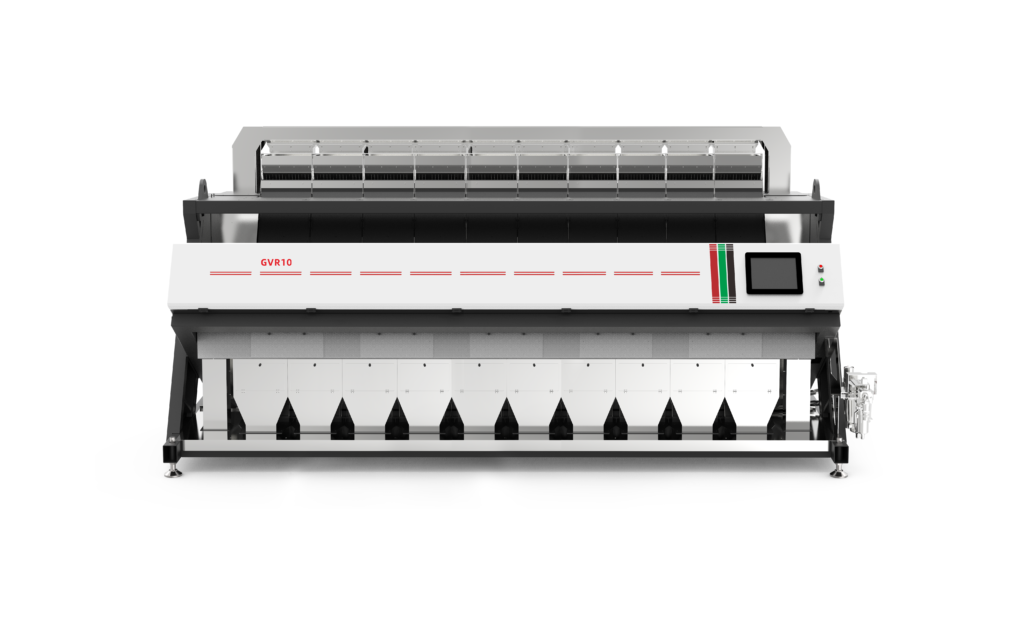
| Colored or visibly contaminated flakes | Optical flake color sorting |
| Different polymer types with similar colors | Suitable polymer-identification sorting |
| Black spots formed during extrusion | Process optimization and appropriate filtration |
| Visible defects in finished pellets | Dedicated pellet optical inspection and sorting |
This distinction is important because purchasing a machine based only on the term plastic sorter may lead to an unsuitable equipment choice.
The inspection technology must match the material presentation and the defect being targeted.
Evaluate Sorting Accuracy and Material Recovery
A successful sorting process should improve material quality without unnecessarily rejecting large quantities of acceptable plastic.
Buyers should evaluate both the amount of unwanted material removed and the amount of good material lost in the rejected stream.
Increasing detection sensitivity may help identify subtle defects, but it can also increase false rejection if the settings are not properly adjusted.
The appropriate balance depends on the customer’s quality requirements and the economic value of the recovered material.
Consider Production Capacity and Integration
Sorting capacity should match the expected material flow.
Actual throughput can vary according to particle size, material characteristics, contamination levels, and the required separation quality.
For bottle and flake sorting applications, feeding stability and material distribution are particularly important.
Buyers should also consider the equipment’s installation position, compressed-air requirements, maintenance access, and compatibility with existing conveyors or material-handling systems.
Test Equipment with Representative Materials
Before purchasing, manufacturers should request a sorting test using material that reflects normal production conditions.
The sample should contain typical contamination and should represent the expected range of colors, particle sizes, and material characteristics.
For upstream sorting, testing should measure improvements in bottle or flake purity and acceptable-material recovery.
For finished-pellet sorting, testing should focus on the actual defect types and the quality of the accepted granules.
A representative trial provides a more reliable basis for equipment selection than general performance claims alone.
Preventing Black Spots and Improving Plastic Pellet Quality
Long-term pellet quality depends on controlling contamination throughout the production process.
For recycling facilities, the first priority is maintaining consistent incoming material quality.
Automated bottle sorting can help reduce unwanted materials before crushing, while flake sorting provides another opportunity to remove visible contamination and, with suitable sensors, unwanted polymers before extrusion.
Washing, drying, and mechanical screening should support these separation processes.
During extrusion, stable temperature control, appropriate residence time, effective filtration, and regular cleaning help prevent additional defects.
After pelletizing, manufacturers can use suitable inspection methods to identify remaining quality problems.
When necessary, dedicated pellet sorting equipment can separate granules containing detectable visual defects.
Quality control should also include regular sampling and clearly defined acceptance criteria.
Manufacturers may monitor color consistency, visible contamination, pellet dimensions, and the proportion of defective granules in each production batch.
For demanding applications, additional laboratory testing may be required to verify polymer composition or other material properties that optical inspection cannot establish.
The objective is not simply to remove as many particles as possible. It is to achieve consistent product quality while maintaining a commercially reasonable recovery rate.
By combining upstream sorting, stable processing conditions, and appropriate final inspection, recycling facilities can reduce contamination-related losses and improve the consistency of their recycled plastic products.
Frequently Asked Questions About Removing Black Spots from Plastic Pellets
Can black spots be completely removed from plastic pellets?
Visible black spots can often be reduced through appropriate sorting and process control, but complete removal cannot be guaranteed. Detection depends on the size, location, and contrast of the defect, as well as the inspection technology.
Can washing remove black spots from plastic pellets?
Washing removes some external dirt and loose contamination. It cannot remove carbonized inclusions embedded inside pellets or reverse polymer degradation. These problems require process correction or separation of defective material.
Can optical sorting prevent black spots during plastic recycling?
Optical sorting can reduce certain contamination sources before extrusion by removing unwanted bottles, colored flakes, or different polymers. However, it cannot prevent defects caused by excessive temperatures, prolonged residence time, or degraded material inside processing equipment.
What is the difference between plastic flake sorting and pellet sorting?
Plastic flake sorting generally takes place before extrusion and focuses on separating unwanted colors, materials, or visible contaminants. Pellet sorting takes place after granulation and targets detectable defects in finished pellets. The two applications require equipment suited to different particle characteristics.
Can optical sorting separate PET from other plastics?
Suitable polymer-identification systems, including certain NIR-based technologies, can distinguish PET from many other polymers. Conventional visible-light color sorting alone cannot reliably identify different polymers when their appearance is similar.
How should buyers evaluate a plastic sorting machine?
Buyers should identify their material type, contamination characteristics, required throughput, and quality targets. Representative sample testing is essential for evaluating sorting effectiveness, acceptable-material recovery, and equipment suitability.
Conclusion
Understanding how to remove black spots and defects from plastic pellets begins with identifying where contamination occurs. Upstream bottle and flake sorting can reduce unwanted materials before extrusion, while stable processing conditions and appropriate filtration help prevent defects from forming during pellet production. When finished pellets already contain visible imperfections, dedicated optical inspection and sorting may provide an additional quality-control solution.
For recycling facilities seeking to improve feedstock purity and finished-material consistency, PolySorter offers optical sorting solutions for plastic bottles, flakes, and polymer separation applications. Explore our plastic sorting solutions or contact the PolySorter team to discuss your recycling process, material characteristics, and suitable sorting requirements.