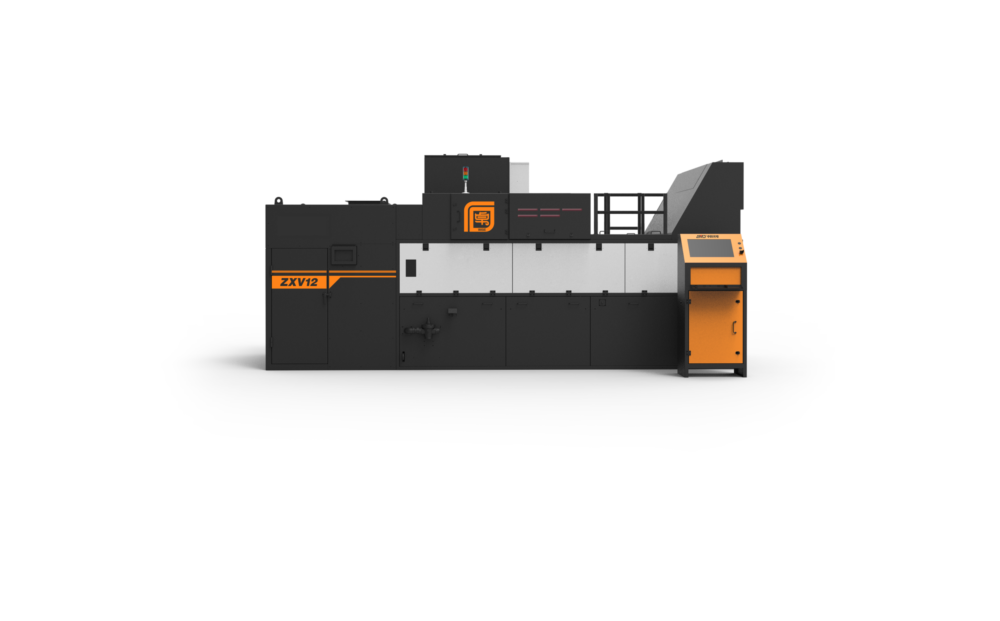
| Technical Parameter | ZXV12 |
|---|---|
| Sorting Technology | X-ray Transmission (XRT) |
| Intelligent Recognition | Dual-AI |
| Detection Width | 1200 mm |
| Processing Capacity | 20–40 t/h |
| Air Consumption | 10–13 m³/min |
| Ore Particle Size | 10–50 mm |
| Conveyor Belt Speed | 2–3 m/s |
| Machine Weight | 7500 kg |
| Dimensions (L × W × H) | 5530 × 2030 × 2483 mm |
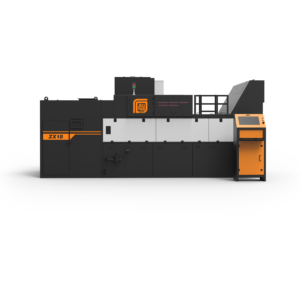
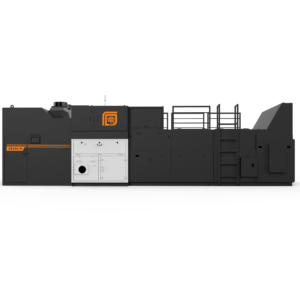
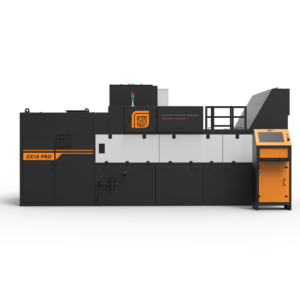
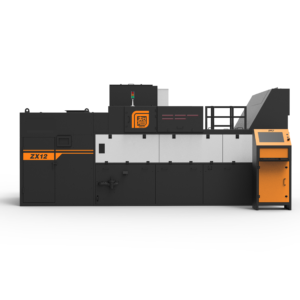
The ZXV12 XRT Sorting Machine combines X-ray Transmission (XRT) detection with Dual-AI intelligent recognition to support efficient ore pre-concentration and automated waste rock rejection. Designed for metallic and non-metallic mineral processing, the machine analyzes differences in X-ray attenuation between individual particles and uses intelligent classification algorithms to separate valuable mineral-bearing ore from unwanted gangue.
With a 1200 mm detection width and a nominal processing capacity of 20–40 t/h, the ZXV12 offers a practical sorting solution for mineral processing lines that require controlled throughput and adaptable classification. It processes ore particles within the 10–50 mm size range and is typically installed after medium and fine crushing, before grinding.
The ZXV12 XRT sorting machine goes beyond conventional visible-light sorting by evaluating X-ray transmission characteristics rather than relying solely on surface color. Its Dual-AI recognition technology supports classification decisions for materials with different mineral compositions and attenuation patterns, helping operators establish sorting strategies suited to their processing objectives.
For mining operations seeking to improve feed quality and reduce unnecessary downstream processing, the ZXV12 XRT sorting machine provides a flexible approach to intelligent ore separation.
The ZXV12 combines XRT detection with intelligent recognition algorithms to classify mineral-bearing particles according to measurable transmission characteristics. X-rays pass through individual particles, while detectors capture differences in attenuation caused by material composition, density, and thickness.
The system processes these signals to identify particles that match predefined separation criteria. Dual-AI recognition supports the analysis of complex ore characteristics and helps refine sorting decisions based on the material being processed.
Ore enters the machine through a controlled feeding system and moves across a conveyor belt toward the detection zone. As particles pass through the X-ray scanning area, detectors measure the transmitted signals and generate information about their attenuation characteristics.
Unlike conventional color sorting systems, XRT detection can distinguish certain materials even when they have similar visible appearances. This is useful for deposits where valuable mineral-bearing particles and waste rock differ internally but show limited surface contrast.
However, XRT performance depends on measurable attenuation differences. Materials with similar X-ray responses or insufficient particle-level differentiation may require alternative separation strategies.
The Dual-AI recognition system analyzes detection information and supports sorting decisions according to ore characteristics and processing objectives. It helps evaluate particle features and apply classification criteria suited to different mineral deposits.
For example, an operation processing lead-zinc ore may require different recognition settings from a plant handling fluorite or phosphate ore. The system allows classification parameters to be adjusted according to these differences.
By combining intelligent analysis with XRT detection, the ZXV12 XRT sorting machine supports flexible waste rejection and ore enrichment without relying on a single fixed sorting configuration. Its effectiveness remains dependent on the quality of detection signals and the characteristics of the feed material.
After classifying each particle, the control system tracks its position and coordinates the pneumatic ejection mechanism with conveyor movement. High-frequency air valves release timed bursts of compressed air to redirect selected particles into the reject stream, while accepted material continues toward downstream processing.
Stable feeding and consistent compressed air delivery are important for accurate separation. The coordinated detection, classification, and ejection process allows the ZXV12 to operate continuously within an integrated mineral processing line.
Raw ore often contains valuable mineral-bearing particles mixed with low-grade material and barren rock. Processing the entire material stream through grinding and beneficiation can increase energy consumption, equipment wear, and treatment costs.
The ZXV12 xrt sorting machine helps address this challenge by identifying suitable waste particles before they enter downstream processing. Early rejection reduces the quantity of unwanted material moving through the plant and can improve the average grade of the accepted ore.
Grinding is one of the more energy-intensive stages of mineral processing. When XRT sorting removes a meaningful proportion of barren rock before milling, less material requires further size reduction.
This may reduce the operating load on grinding equipment and lower associated energy consumption, wear, and treatment requirements. The scale of these benefits depends on the quantity of rejectable waste and the configuration of the processing plant.
Pre-concentration aims to increase the proportion of valuable minerals in the accepted material stream. By separating identifiable low-grade particles, the ZXV12 XRT sorting machine can improve feed quality for downstream beneficiation under suitable conditions.
However, concentrate grade and mineral recovery must be evaluated together. Aggressive waste rejection may increase the grade of accepted material while also discarding particles that contain recoverable minerals.
A suitable sorting strategy balances waste rejection, concentrate quality, and valuable mineral recovery rather than maximizing one indicator alone.
Some deposits contain useful minerals distributed among large quantities of low-grade material. Processing these resources through conventional methods alone may involve substantial energy and treatment costs.
Where sufficient particle-level differences exist, the ZXV12 can help separate mineral-rich particles from waste before further beneficiation. This approach may improve resource utilization and support the economic evaluation of selected low-grade deposits.
The machine functions as a pre-concentration system and does not replace grinding, flotation, or other mineral recovery processes.
The ZXV12 XRT sorting machine is designed for pre-concentration applications involving metallic and non-metallic ores. Its suitability depends on the relationship between valuable mineral content and the X-ray attenuation characteristics of individual particles.
Different deposits may require different classification settings, even when they contain the same principal mineral. Mineral distribution, particle size, and gangue composition influence the achievable separation.
Potential applications include lead-zinc, copper, tungsten, tin, and antimony ores.
In lead-zinc processing, XRT sorting may help separate mineral-bearing particles from low-grade waste before flotation or other concentration processes. This can reduce the amount of unwanted material entering downstream treatment.
Copper and tungsten deposits may also benefit from sensor-based pre-concentration when valuable minerals occur in distinguishable particles. However, finely disseminated mineralization can make separation more challenging because individual particles may contain both valuable minerals and gangue.
Iron and manganese ores are additional potential applications for the ZXV12.
Where mineral-bearing particles and waste rock exhibit distinguishable attenuation characteristics, XRT sorting can support preliminary waste rejection and improve the consistency of material entering downstream processing.
The achievable result depends on mineral composition, particle characteristics, and the selected separation criteria.
The ZXV12 xrt sorting machine can also be evaluated for fluorite, phosphate ore, barite, and selected industrial minerals.
These applications may involve removing gangue, enriching valuable mineral-bearing particles, or improving feed quality before further treatment.
Sorting suitability depends on X-ray attenuation contrast, particle size, and mineral distribution. Deposits with limited particle-level differentiation may present greater separation challenges, even when they contain the same principal mineral.
The ZXV12 xrt sorting machine is typically installed after medium and fine crushing and before grinding. This allows suitable waste rock to be removed before the remaining material enters energy-intensive downstream processing.
A typical process arrangement follows:
Raw Ore → Crushing → Screening → ZXV12 XRT Sorting → Grinding → Beneficiation
Effective integration requires stable feeding, suitable particle preparation, adequate compressed air supply, and coordinated material discharge.
The ZXV12 processes ore particles within the standard 10–50 mm range. Upstream crushing and screening should prepare material within the appropriate size distribution while limiting excessive fines and oversized particles.
Consistent feeding helps reduce particle overlap and supports reliable detection. Material should also be distributed across the 1200 mm detection width to make effective use of the sorting area.
The ZXV12 XRT sorting machine has a nominal processing capacity of 20–40 t/h. Actual throughput depends on ore density, particle size distribution, feeding conditions, and sorting requirements.
Operators should match the sorter to the capacity of upstream crushing equipment and downstream beneficiation processes. Selecting equipment based only on maximum nominal throughput may lead to unsuitable operating conditions when material characteristics vary.
The ZXV12 XRT sorting machine uses pneumatic ejection technology with a nominal air consumption of 10–13 m³/min. The compressed air system must provide adequate flow and stable operating conditions for reliable valve operation.
Plant designers should also consider conveyor integration, material transfer points, accepted and rejected material discharge, dust management, and maintenance access. These supporting systems help maintain stable material flow and reduce unnecessary interruptions.
The ZXV12 XRT sorting machine incorporates radiation protection measures designed for industrial XRT sorting operations. Its protective enclosure and shielding structure help limit radiation exposure during normal operation.
The XRT sorting system is designed to maintain a radiation dose rate below 1 μSv/h under specified measurement conditions. This is a radiation protection design target rather than a guarantee for every installation. Actual performance should be verified using applicable equipment test documentation and local radiation safety requirements.
Safety interlocks and intelligent monitoring functions support controlled operation. Routine maintenance includes inspection of the feeding system, conveyor, detection components, compressed air supply, and pneumatic ejection valves. Regular maintenance helps preserve sorting consistency and reduce unexpected downtime.
Choosing an XRT sorting machine requires more than comparing detection width and nominal processing capacity. The key consideration is whether the equipment can achieve useful separation between valuable mineral-bearing particles and waste rock under the project’s operating conditions.
For the ZXV12 XRT sorting machine, equipment evaluation should focus on ore characteristics, sorting objectives, processing requirements, and measurable separation results.
Mineral composition, particle thickness, density-related characteristics, and mineral distribution influence X-ray attenuation. These properties determine how effectively the detection system can distinguish different particles.
Particle liberation is particularly important. When valuable minerals are distributed throughout nearly every particle, rejecting waste without losing valuable material may be difficult.
Understanding these characteristics helps determine whether the deposit is suitable for particle-level XRT separation.
Different mining projects prioritize different outcomes. Some aim to remove as much barren rock as practical, while others focus on increasing concentrate grade without sacrificing valuable mineral recovery.
These objectives require different classification thresholds. A high waste rejection rate alone does not demonstrate successful sorting if the rejected stream contains excessive valuable minerals.
With a nominal capacity of 20–40 t/h, the ZXV12 XRT sorting machine is intended for processing lines whose feed conditions and production requirements fall within its operating range.
Operators should consider expected material flow, available operating hours, particle size distribution, and the capacity of supporting equipment. A coordinated production line helps maintain stable feeding and consistent sorting conditions.
Representative ore testing provides the most useful basis for evaluating whether the ZXV12 XRT sorting machine can meet a project’s separation objectives. Testing should compare the incoming feed with the accepted and rejected material streams under defined operating conditions.
The evaluation should focus on six key performance indicators:
These results help establish suitable sorting thresholds and clarify the relationship between waste rejection, concentrate quality, and mineral recovery. Combined with operating costs and downstream processing requirements, they provide a practical basis for assessing the potential economic value of the ZXV12.
The ZXV12 XRT sorting machine has a nominal processing capacity of 20–40 t/h. Actual throughput depends on ore characteristics, particle size distribution, feeding conditions, and sorting requirements.
The standard ore particle size range is 10–50 mm. Suitable crushing and screening help maintain consistent feeding and reliable particle detection.
Dual-AI recognition supports intelligent analysis of detection data and allows classification parameters to be adapted to different ore characteristics and sorting objectives. Actual separation performance depends on the material being processed.
Yes. Potential applications include lead-zinc, copper, iron, manganese, fluorite, and phosphate ores, provided that valuable material and gangue exhibit sufficient X-ray attenuation differences.
The ZXV12 is typically installed after medium and fine crushing and before grinding. This allows suitable waste particles to be removed before downstream beneficiation.
Yes. Its pneumatic ejection system has a nominal air consumption of 10–13 m³/min. Stable compressed air delivery is important for consistent sorting operation.
Ore suitability depends on mineral composition, X-ray attenuation contrast, particle size, and mineral distribution. A useful evaluation compares concentrate grade, reject grade, mass rejection, and valuable mineral recovery under representative operating conditions.
The ZXV12 XRT Sorting Machine combines X-ray Transmission detection, Dual-AI intelligent classification, and precision pneumatic separation to support efficient ore pre-concentration and automated waste rock rejection. With its 20–40 t/h nominal processing capacity and 10–50 mm particle size range, it provides a practical sorting solution for suitable metallic and non-metallic mineral processing applications. PolySorter helps mining companies evaluate ore characteristics, processing requirements, and equipment suitability to develop effective mineral sorting solutions. Contact our team to discuss your project or arrange ore sample testing to explore how the ZXV12 can support your mineral processing operation.