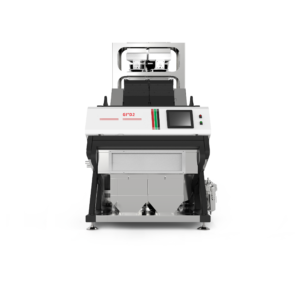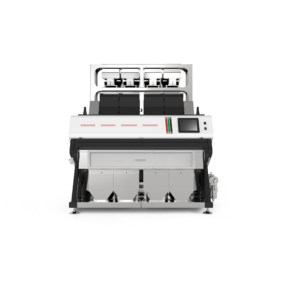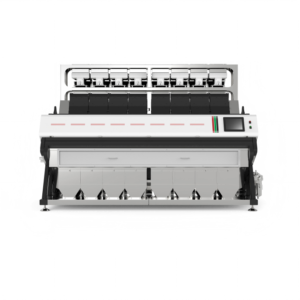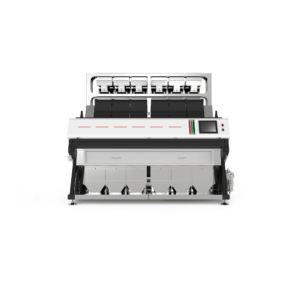
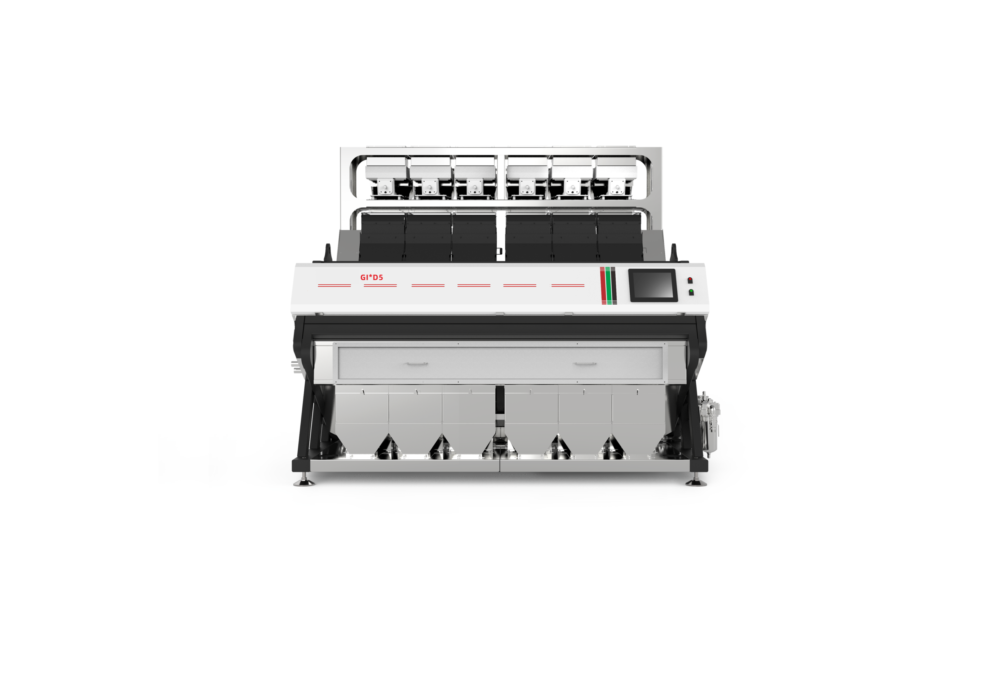
| Product Name | GI*D Pet Flake Polymer & Color Sorter |
| Model | GI*D5 |
| SENSOR TECHNOLOGY | 2D NIR (Near-Infrared) and color sensor technology |
| Throughput(T/h) | 0.8-3.3 |
| Air Consumption (m3/min) | <3.5 |
| Voltage (V/hz) | 220/50 |
| Power (kW) | 6.2 |
| Weight (kg) | 1750 |
| Dimension (mm) | 2825*1928*2385 |
| APPLICATION | Effectively detects and removes non-PET materials from PET flakes Optional HD version available for enhanced purification of PET powder The GI*D sorter combines near-infrared and color sensor to accurately separate flakes by polymer and color. |
The GI*D5 Plastic Sorting Machine is designed for PET recycling lines that need to control both polymer contamination and visible color variation. It combines NIR polymer identification with optical color sorting, allowing two different purification tasks to take place within one automated system.
Washed post-consumer PET flakes may still contain residual non-PET polymers and unwanted colored pieces. These contaminants can affect downstream processing, finished-material consistency, and the commercial value of recycled PET.
With a five-chute configuration and a processing capacity of approximately 0.8–3.3 T/H, the GI*D5 provides a wider processing path for continuous PET flake sorting. It is suitable for recycling plants that need a dedicated polymer-and-color purification stage matched to their material flow and production layout.
Polymer contamination and color variation are separate quality problems. A conventional plastic color sorter can identify visible differences, but it cannot always determine the polymer type.
For example, a transparent non-PET flake may look similar to an acceptable clear PET flake. When the sorting decision relies only on visible appearance, this type of contaminant may remain in the accepted stream.
The GI*D5 addresses this challenge through two complementary detection methods:
As prepared flakes pass through the detection area, the system evaluates their polymer and color characteristics. When it detects a targeted contaminant, the control system identifies its position. The corresponding high-speed ejector then uses a precise burst of compressed air to remove the unwanted flake.
This integrated approach provides broader quality control than a color-only sorter. It also allows recycling plants to manage polymer purity and color consistency without installing separate systems for each task.
Residual non-PET polymers can create problems during recycled PET production. Incompatible materials may behave differently from PET during heating, filtration, or pelletizing. As a result, they can affect appearance, processing stability, and final material quality.
The GI*D5 uses 2D near-infrared sensor technology to analyze the spectral response of flakes moving through the machine. Different polymers interact with near-infrared light in different ways. The system uses these differences to distinguish acceptable PET from configured reject materials.
Depending on the feed stream and selected sorting program, targeted contaminants may include:
This capability is especially useful when unwanted polymers resemble acceptable PET in color or appearance. In these situations, visible-light inspection alone may not provide enough information for separation.
The GI*D5 normally operates after the main cleaning and preliminary separation stages. At this point, NIR sorting focuses on the smaller residual polymer contaminants left in the prepared PET flake stream.
By controlling these visually similar materials, the machine helps create a more consistent PET fraction for pelletizing or other downstream processes.
Correct polymer identification does not guarantee uniform color. PET flakes made from the same polymer may still have different visible characteristics.
A post-consumer PET stream may include clear, light-blue, green, blue, yellow, white, opaque, and other off-color flakes. The optical system evaluates these differences and compares each piece with the selected sorting criteria.
Operators can configure the accepted and rejected fractions according to the required recycled PET grade. For example, a plant producing clear PET may retain acceptable clear or light-blue flakes while rejecting unwanted colors. Another facility may configure the machine to recover a selected colored PET fraction from a mixed stream.
The sorting strategy can be adjusted according to:
By combining color inspection with NIR polymer recognition, the GI*D5 can address two layers of contamination during the same sorting stage. This helps improve PET flake consistency while reducing reliance on manual visual inspection.
The five-chute structure gives the GI*D5 a clear position within the GI*D series. It provides a wider processing path for distributing the incoming PET flake flow across the sorting system.
This configuration can suit plants that need continuous sorting within the stated 0.8–3.3 T/H capacity range. It may also fit a production layout where the incoming material flow, available installation area, and required purification task favor a five-chute machine.
Suitable production scenarios include:
The difference between the GI*D5 and nearby models should not be judged by maximum throughput alone. The GI*D4 and GI*D5 have relatively close stated capacity ranges. Therefore, model selection should also consider material characteristics, feeding conditions, plant layout, available space, and future operating requirements.
The GI*D5 is most valuable when its five-chute structure matches the actual material flow. Correct sizing helps the feeding and detection systems operate under stable conditions without installing more capacity than the project requires.
The GI*D5 is designed for prepared PET flakes. It is not intended to receive complete bottles, large plastic objects, or heavily contaminated mixed waste.
A typical process arrangement may include:
Bottle Sorting → Crushing → Washing → Drying → Preliminary Separation → GI*D5 Polymer and Color Sorting → Pelletizing or Further Processing
Before the flakes reach the GI*D5, upstream equipment should remove large foreign materials as far as practical. Washing and drying also help create more stable conditions for sensor-based sorting.
At the GI*D5 stage, the process focuses on residual non-PET polymers and unwanted colors left in the cleaned flake stream.
Consistent feeding is important. The material should spread evenly across the chutes so the sensors can inspect individual flakes. Proper distribution also helps the ejection system target unwanted pieces accurately.
Suitable feeding and conveying equipment should therefore be considered during line planning. Stable material preparation allows the GI*D5 to perform its intended refinement task instead of compensating for problems that should have been handled upstream.
When installed at the correct point, the machine complements washing and preliminary separation. It provides an additional quality-control stage before pelletizing or further manufacturing.
The main value of the GI*D5 comes from combining polymer identification and visible color control within one sorting platform.
Practical benefits include:
The machine can serve as the main sensor-based purification stage in a suitable PET recycling line. It can also complement existing equipment by processing a selected PET grade or performing final quality control.
This makes the GI*D5 suitable for established recyclers adding automated purification, modular production facilities, and plants that need a dedicated polymer-and-color sorting stage.
The GI*D5 Plastic Sorting Machine is primarily intended for washed PET flakes that require further polymer and color purification.
Typical applications include:
The machine can be configured around different accepted and rejected fractions. A plant may use it to improve clear PET consistency, recover a selected colored fraction, or control specified polymer contaminants within a prepared PET stream.
The stated processing capacity is approximately 0.8–3.3 T/H. Actual operating capacity depends on the flake size, feed distribution, contamination ratio, sorting objective, and required output quality.
A standard plastic color sorter mainly evaluates visible characteristics. The GI*D5 combines optical color detection with NIR polymer identification. Therefore, it can target unwanted polymers that may look similar to acceptable PET while also separating visible color differences.
The NIR system can identify differences between PET and targeted non-PET polymers, including PVC under suitable sorting conditions. Actual performance depends on the material composition, surface condition, flake characteristics, contamination ratio, and required output standard.
The optical system can distinguish visible differences among clear, light-blue, green, blue, yellow, white, and other PET fractions. The sorting program can be configured according to the colors that should be accepted or rejected.
No. The GI*D5 is designed primarily for prepared PET flakes. Complete bottles require a sorter and feeding system designed for larger material forms.
It is generally installed after crushing, washing, drying, and preliminary separation. At this stage, it can remove residual polymer contaminants and unwanted colors before pelletizing or further processing.
Useful project information includes the PET flake type, particle size, main contaminants, approximate contamination ratio, desired accepted material, target colors, required output purity, and expected hourly capacity.
Producing consistent recycled PET requires control over both polymer purity and visible color. A color-only sorter can remove visible defects, but it cannot fully address unwanted polymers that resemble acceptable PET flakes.
The GI*D5 Plastic Sorting Machine combines NIR polymer identification with optical color sorting in a five-chute platform. It provides a dedicated solution for PET recycling lines that need continuous polymer and color purification within a processing range of approximately 0.8–3.3 T/H.
Send PolySorter information about your PET flake type, particle size, main contaminants, current contamination ratio, required capacity, and target output quality. Representative samples can be tested according to the actual sorting task, helping our team evaluate material behavior and recommend a suitable machine configuration for your recycling line.