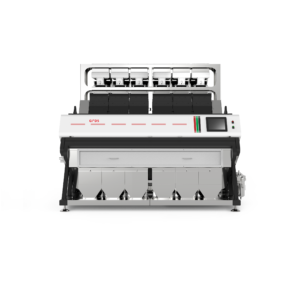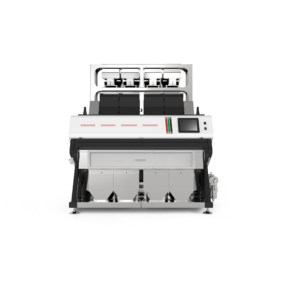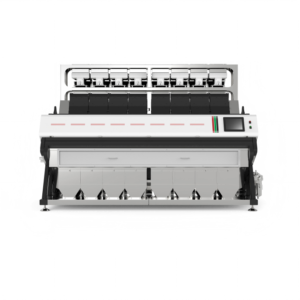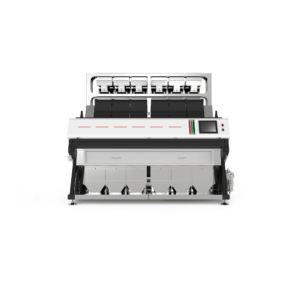
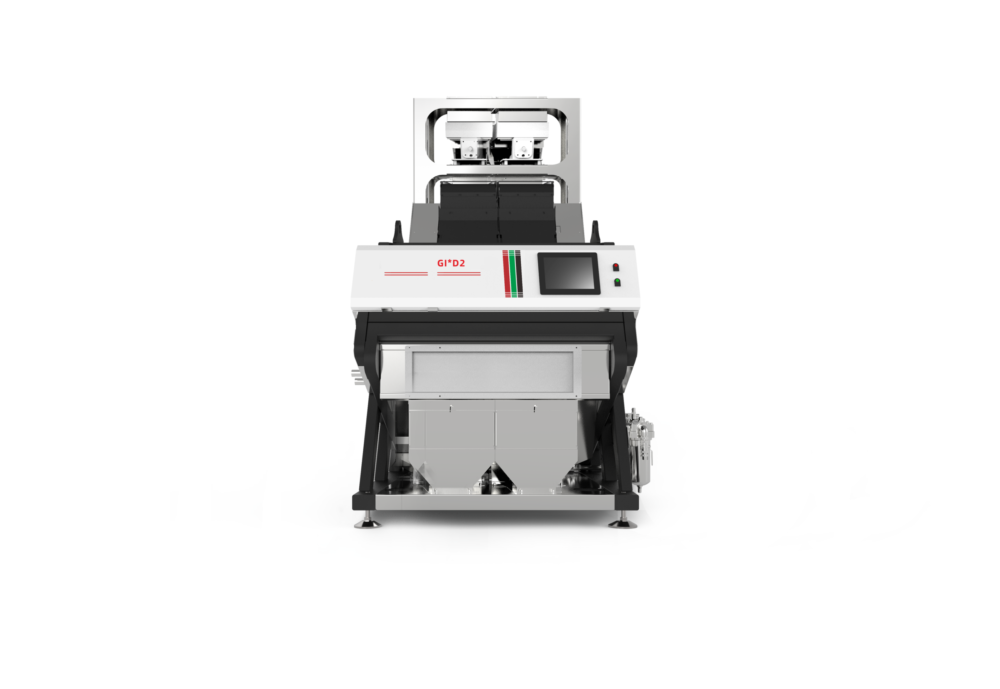
| Product Name | GI*D Pet Flake Polymer & Color Sorter |
| Model | GI*D2 |
| SENSOR TECHNOLOGY | 2D NIR (Near-Infrared) and color sensor technology |
| Throughput(T/h) | 0.4-1.5 |
| Air Consumption (m3/min) | <2 |
| Voltage (V/hz) | 220/50 |
| Power (kW) | 2.2 |
| Weight (kg) | 900 |
| Dimension (mm) | 1475*1928*2385 |
| APPLICATION | Effectively detects and removes non-PET materials from PET flakes Optional HD version available for enhanced purification of PET powder The GI*D sorter combines near-infrared and color sensor to accurately separate flakes by polymer and color. |
The GI*D2 Plastic Sorting Machine is a compact PET flake purification system that combines NIR polymer identification with optical color sorting. It helps recycling plants remove targeted non-PET materials while improving the color consistency of the accepted PET stream.
Washed PET flakes may still contain PVC, HDPE, PP, PC, PMMA, ABS-FR, and other unwanted materials. Colored PET flakes can also remain in a clear PET stream. These contaminants may affect downstream processing and reduce the consistency of the recycled output.
With a two-chute configuration and a processing capacity of approximately 0.4–1.5 T/H, the GI*D2 is well suited to controlled-capacity recycling lines and dedicated purification stages. It also offers a practical solution for facilities that need professional polymer and color sorting within a compact installation area.
A conventional plastic color sorter evaluates visible characteristics. It works well when acceptable and rejected flakes have obvious color differences. However, appearance alone cannot always reveal the polymer type.
For example, a transparent non-PET flake may look similar to clear PET. A color-only system may struggle to distinguish between them because both materials appear visually acceptable.
The GI*D2 addresses this challenge by combining two complementary sensing functions:
The system compares these signals with the selected sorting criteria. When it detects a targeted contaminant, high-speed ejectors remove the flake from the accepted material flow.
As a result, one machine can perform two important purification tasks. It can remove configured non-PET materials and improve the color consistency of the remaining PET flakes.
This integrated design gives recycling plants more complete quality control than a standard color-only sorter.
Non-PET contamination can create problems during recycled PET production. Even a small amount of an incompatible polymer may affect melting behavior, filtration, appearance, or downstream manufacturing stability.
The GI*D2 uses near-infrared sensor technology to identify differences in polymer characteristics. Unlike a visible-light camera, the NIR system does not rely only on how a flake looks. Instead, it analyzes how the material responds to near-infrared light.
The system can be configured to target several non-PET materials commonly found in PET flake streams, including:
As flakes pass through the detection area, the sensor analyzes the material flow. The control system then determines the position of each targeted contaminant. A precise burst of compressed air separates the unwanted material from the accepted PET fraction.
This process helps recyclers address contaminants that remain after washing and preliminary separation. It is especially useful when different polymers have similar colors or visual appearances.
By adding NIR polymer recognition to the recycling line, the GI*D2 provides a more focused way to control residual non-PET contamination before pelletizing or further processing.
Polymer identification controls material type, but it does not replace color sorting. PET flakes can share the same polymer composition while having very different colors.
A typical PET flake stream may contain:
The optical system of the GI*D2 evaluates these visible differences. Operators can configure the sorting program according to the desired accepted and rejected fractions.
For example, a recycler producing clear PET flakes may retain the clear fraction while removing green, blue, yellow, and other unwanted colors. Another facility may configure the machine to recover a selected colored PET fraction.
This flexibility allows the GI*D2 to support different production batches and recycled PET grades. It also reduces reliance on manual inspection, which can become inconsistent during continuous operation.
By combining color detection with NIR polymer recognition, the machine helps create a cleaner and more uniform PET flake stream.
If your recycling line needs to control both polymer contamination and color variation, PolySorter can help define a sorting strategy around your target PET grade.
The GI*D2 is designed for more than general PET sorting. Its two-chute configuration gives it a clear role in dedicated purification processes.
It can support a complete PET recycling line with a controlled material flow. It can also operate as a secondary sorter within a larger facility. In this position, the GI*D2 can handle a selected PET grade, a specific contaminant, or a final refinement step.
Suitable production scenarios include:
The compact structure also provides greater flexibility during line planning. It can fit into facilities where the available production area does not justify a wider multi-chute machine.
At the same time, the GI*D2 should be matched to the actual material flow. A plant that regularly exceeds its capacity range may benefit from a larger model. Correct equipment sizing helps maintain stable feeding and leaves room for future production requirements.
The GI*D2 is designed for prepared PET flakes. It is not intended to receive complete bottles, large plastic objects, or heavily contaminated unsorted waste.
A typical PET recycling process may follow this sequence:
Bottle Sorting → Crushing → Washing → Drying → Preliminary Separation → GI*D2 Polymer and Color Sorting → Pelletizing or Further Processing
Upstream equipment should remove labels, caps, metal, dirt, and large foreign materials before the flakes reach the GI*D2. Washing and drying also create more stable conditions for sensor-based sorting.
At this stage, the GI*D2 focuses on the residual polymer and color defects left in the cleaned flake stream.
Stable feeding remains important. The flakes should spread evenly across the chutes so the sensors can inspect individual pieces. Proper material distribution also helps the ejection system remove targeted contaminants accurately.
When integrated at the correct point, the GI*D2 becomes a focused quality-control stage rather than a replacement for washing or primary separation equipment.
The GI*D2 is suitable for recyclers that need both polymer identification and color control at a targeted production scale.
Its main value comes from combining two sensing technologies within one machine. NIR detection targets polymer contamination, while optical detection controls visible color variation.
Practical benefits include:
The GI*D2 can also complement an existing sorting system. A recycling plant may use its main line for bulk processing and assign the GI*D2 to a particular product grade or final purification task.
This flexibility makes it suitable for specialized recyclers, modular production lines, and established plants adding a dedicated PET refinement stage.
The GI*D2 Plastic Sorting Machine is primarily intended for washed PET flakes that require further polymer and color purification.
Typical applications include:
The machine is particularly effective when the production objective is clearly defined. A recycler may use it to improve clear PET consistency, recover a selected colored fraction, or control a specific group of polymer contaminants.
Its two-chute configuration allows facilities to add sensor-based purification at a scale that matches the actual material flow.
Yes. The GI*D2 combines NIR polymer identification with optical color detection. It can remove configured non-PET materials while separating PET flakes according to visible color differences.
The stated throughput range is approximately 0.4–1.5 T/H. The effective capacity depends on the flake size, feed distribution, contamination level, sorting objective, and required output quality.
The NIR system can identify differences between PET and targeted non-PET polymers, including PVC under suitable sorting conditions. Actual performance depends on the material composition, surface condition, flake size, contamination ratio, and required separation standard.
The optical system can distinguish visible color differences among clear, green, blue, yellow, white, light-blue, and other PET fractions. The sorting program can be configured according to the color that should be accepted or rejected.
No. The GI*D2 is designed primarily for prepared PET flakes. Complete bottles require equipment and feeding systems intended for larger material forms.
It is generally installed after crushing, washing, drying, and preliminary separation. At this stage, it can focus on residual polymer contaminants and unwanted colors before pelletizing or other downstream processes.
Useful project information includes the PET flake size, main contaminants, approximate contamination ratio, desired accepted material, target colors, required output purity, and hourly processing capacity.
PET flake quality depends on both polymer purity and color consistency. A color-only sorter can remove visible defects, but it cannot fully address contaminants that look similar to acceptable PET.
The GI*D2 Plastic Sorting Machine combines NIR polymer identification with optical color sorting in a compact two-chute platform. It is a practical choice for controlled-capacity recycling lines, dedicated PET batches, and specialized refinement stages.
Contact PolySorter with your PET flake type, main contaminants, flake size, required capacity, and target output quality. Our team can evaluate representative samples and recommend a suitable sorting configuration for your recycling line.