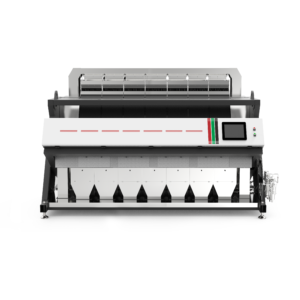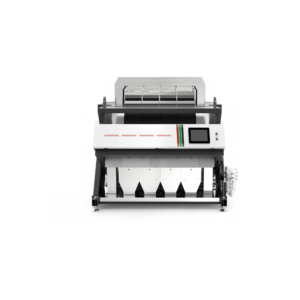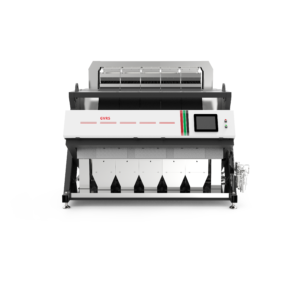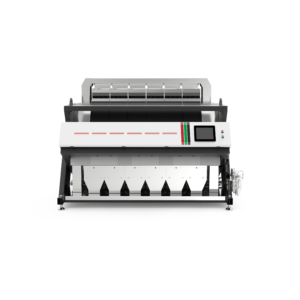
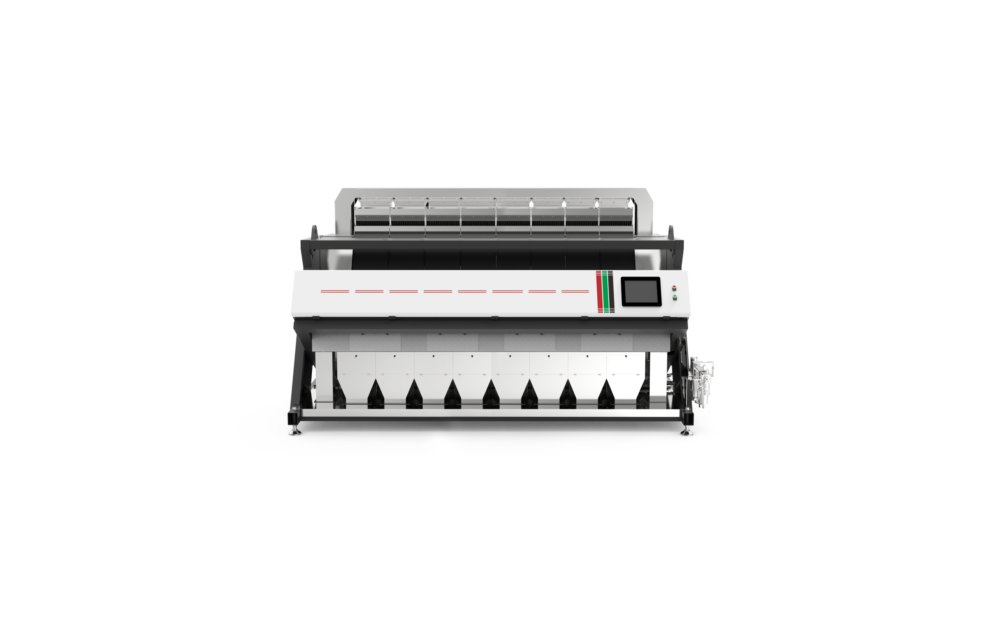
| Product Name | GVR SERIES FLAKE COLOR SORTER |
| Model | GVR8 |
| SENSOR TECHNOLOGY | Dual full-color camera, Long-life LED light |
| Throughput(T/h) | 3-6 |
| Air Consumption (m3/min) | <4 |
| Voltage (V/hz) | 220/50 |
| Power (kW) | 5.9 |
| Weight (kg) | 1700 |
| Dimension (mm) | 3293*1829*1887 |
| APPLICATION | Color sorting of PET flakes Color sorting of PE flakes with customizable sorting solutions Color sorting for other plastic flakes, such as PP, PE, PVC, PC, PA. PS. etc. Effective removal of impurities such as springs and wood chips |
The GVR8 Plastic Color Sorter Machine is an industrial optical sorting solution designed for recycling plants that need to improve the color consistency and commercial quality of processed plastic flakes. With an eight-channel sorting configuration and a processing capacity of approximately 3–6 T/H, the GVR8 is suitable for medium- to high-volume plastic recycling lines where stable throughput and accurate color separation are both important.
Designed for materials such as PET, PC, PP, PE and other plastic flakes, the machine identifies visible differences between acceptable material and unwanted flakes as material passes through the sorting zone. It can separate clear, white, blue, green and other colored flakes while removing unwanted black, opaque or off-color pieces according to the selected sorting program.
This makes the GVR8 particularly useful for recyclers producing higher-quality plastic flakes for downstream washing, extrusion, pelletizing or recycled-material production.
Rather than relying on manual inspection to control final color quality, recycling facilities can use the GVR8 as an automated purification stage to create a more consistent output from continuously changing feed material.
Color contamination is one of the most visible quality problems in recycled plastic.
A batch of predominantly clear PET flakes, for example, may still contain blue, green, yellow, black or opaque pieces after crushing and washing. Even when these contaminants represent only a relatively small portion of the total feed, they can affect the appearance and value of the finished recycled material.
The GVR8 provides an automated way to control these visible differences.
As plastic flakes move through the optical detection area, the system analyzes their visible characteristics and compares them with the selected sorting criteria. Material that matches the accepted specification continues through the normal product stream, while unwanted flakes are separated through precisely controlled air ejection.
Depending on the incoming material and production target, the GVR8 can be configured for applications such as:
This flexibility allows recycling plants to use the same machine for different color specifications instead of limiting the equipment to one fixed sorting task.
The effectiveness of a plastic color sorter depends on more than simply detecting whether one flake is lighter or darker than another. Industrial recycling streams can contain flakes with irregular shapes, different surface conditions and subtle color variations.
The GVR8 uses an optical detection and pneumatic rejection process to turn these differences into an automated sorting decision.
Prepared plastic flakes are introduced into the machine and distributed across the feeding system.
Consistent feeding is important because overlapping or excessively concentrated material can make individual flakes more difficult to inspect. The machine therefore needs to work together with a properly prepared upstream material flow.
As the flakes enter the detection zone, the optical system captures their visible characteristics.
The sorting program determines which colors or visible defects should be accepted and which should be rejected. This allows the system to distinguish target flakes from unwanted colored, black or opaque material.
The collected information is processed rapidly so that individual flakes can be classified while moving through the machine.
Instead of applying one universal sorting standard, operators can adjust the sorting criteria according to the incoming material and desired final product.
Once an unwanted flake has been identified, the corresponding high-speed ejector activates at the correct moment.
A short burst of compressed air changes the trajectory of the rejected flake, separating it from the accepted product stream.
The entire detection, classification and rejection process happens continuously, allowing the GVR8 to combine optical quality control with industrial processing capacity.
Different recycling materials create different sorting challenges. For this reason, selecting a plastic color sorter should begin with the actual feedstock and required output rather than machine capacity alone.
PET bottle recycling is one of the most important applications for optical color sorting.
After bottles are crushed and washed, the resulting flakes may contain a mixture of clear, light blue, green, colored, opaque and dark pieces. Depending on the required recycled PET grade, some of these colors may need to be separated before further processing.
The GVR8 can be configured to recover the desired color fraction while removing visible contaminants from the product stream.
For example, a recycling plant producing clear or blue-white PET flakes can use optical sorting to reduce unwanted colored, black and opaque flakes before the material moves to downstream processing.
Post-consumer and post-industrial PP and PE streams can also contain substantial color variation.
The GVR8 can classify these materials according to visible color differences, helping recyclers produce more uniform color fractions for subsequent processing.
It is important, however, to distinguish color sorting from polymer identification.
The GVR8 is primarily designed to identify visible color and appearance differences. When two flakes look similar but are made from different polymers, a polymer-recognition technology such as NIR sorting may be required.
For recycling plants that need both polymer separation and final color purification, the GVR8 can therefore be integrated as one stage within a multi-step sensor-based sorting line.
Not every recycling operation has the same definition of an acceptable flake.
One plant may want to recover clear PET from a mixed-color stream. Another may already have relatively clean material but need to remove a small amount of black and opaque contamination before pelletizing.
For this reason, the GVR8 supports flexible sorting strategies rather than one fixed separation mode.
Depending on the application, the machine can be incorporated into normal sorting, reverse sorting, single-pass sorting or re-sorting configurations. Multiple sorting stages can also be considered when higher output purity is more important than maximizing recovery in a single pass.
This flexibility becomes especially valuable when feedstock quality changes.
Instead of relying entirely on manual workers to identify increasingly small color differences, operators can adjust the sorting criteria according to the incoming batch and required final specification.
The practical objective is not simply to make material pass through the machine faster. It is to produce a more stable and commercially useful recycled fraction.
The GVR8 is positioned for recycling facilities that need more processing capacity than smaller plastic color sorting systems can provide.
Its approximate 3–6 T/H throughput range makes it suitable for integration into commercial plastic recycling lines handling continuous volumes of prepared flakes.
Actual processing capacity can vary according to factors such as:
For this reason, throughput should always be evaluated together with the required sorting result.
Running material through a sorter at maximum feed rate is rarely the only objective. A more useful production setting balances throughput, purity and recovery rate according to the value of the finished recycled material.
The GVR8 can be positioned after crushing, washing and drying, or used as a final optical purification stage before extrusion, pelletizing or other downstream processing, depending on the recycling line configuration.
For recycling companies, the value of optical sorting is measured by what happens to the final product—not simply by how quickly material passes through the machine.
The GVR8 is designed around this requirement.
Its eight-channel configuration provides the capacity required by larger recycling operations, while adjustable optical sorting criteria allow the same equipment to work with different colors and plastic flake streams.
For processors upgrading from manual sorting or lower-capacity equipment, this can help:
Improve output consistency.
Automated optical inspection provides a repeatable sorting standard across continuous production.
Reduce visible color contamination.
Off-color, black and opaque flakes can be identified and separated according to the selected sorting program.
Reduce dependence on manual inspection.
Manual sorting becomes increasingly difficult as production volume increases and contaminants become smaller.
Adapt to changing raw materials.
Sorting settings can be adjusted when the feedstock or required finished-product color changes.
Support downstream processing.
Cleaner and more consistent flake fractions provide a better-controlled feedstock for subsequent recycling stages.
Most importantly, the machine can become part of a broader recycling process rather than operating as an isolated piece of equipment.
The right configuration should therefore be selected according to your material, flake size, incoming contamination, required output purity and production capacity.
The GVR8 is designed for optical color sorting of plastic flakes, including PET, PC, PP and PE materials. The appropriate sorting configuration depends on the physical condition, color distribution and required final product.
Yes. Black and other visibly contrasting flakes are typical targets for optical color sorting. The machine can also be configured to remove colored and opaque flakes from predominantly clear or selected-color material.
The GVR8 should primarily be considered a color sorter, not a polymer identification machine. If PET and PVC flakes have similar visible appearances and must be separated according to material composition, a suitable sensor-based polymer sorting solution may be required.
The reference processing range for the GVR8 is approximately 3–6 T/H. Actual throughput depends on the material, flake size, contamination level, feeding conditions and required sorting performance.
The exact position depends on the recycling process. In many applications, optical color sorting takes place after the material has been crushed, washed and sufficiently prepared for stable feeding. It may also serve as a final purification stage before pelletizing or other downstream processing.
Yes. The sorting criteria can be configured according to the desired product and reject fractions, making the machine suitable for different color-separation requirements.
Machine selection should be based on more than nominal throughput. Feed material, average flake size, target colors, contamination, required purity, recovery expectations and line capacity should all be evaluated before selecting a configuration.
When recycled plastic quality depends on controlling visible color contamination, optical sorting provides a practical way to move beyond inconsistent manual inspection.
The GVR8 Plastic Color Sorter Machine combines high-capacity plastic flake processing with configurable color recognition and pneumatic rejection, making it suitable for PET, PP, PE and other plastic recycling applications where consistent output quality matters.
PolySorter can help evaluate your material and recommend a sorting configuration based on your actual production requirements.