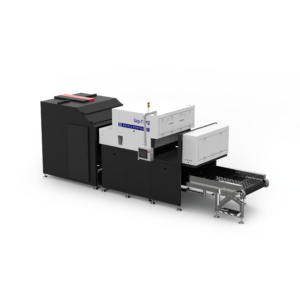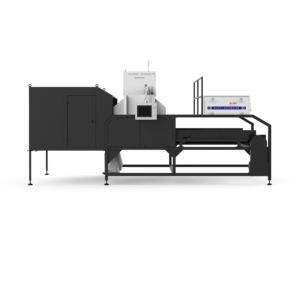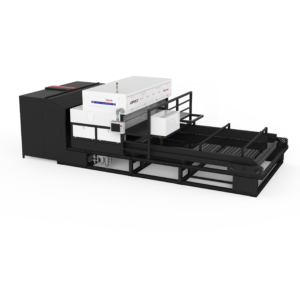
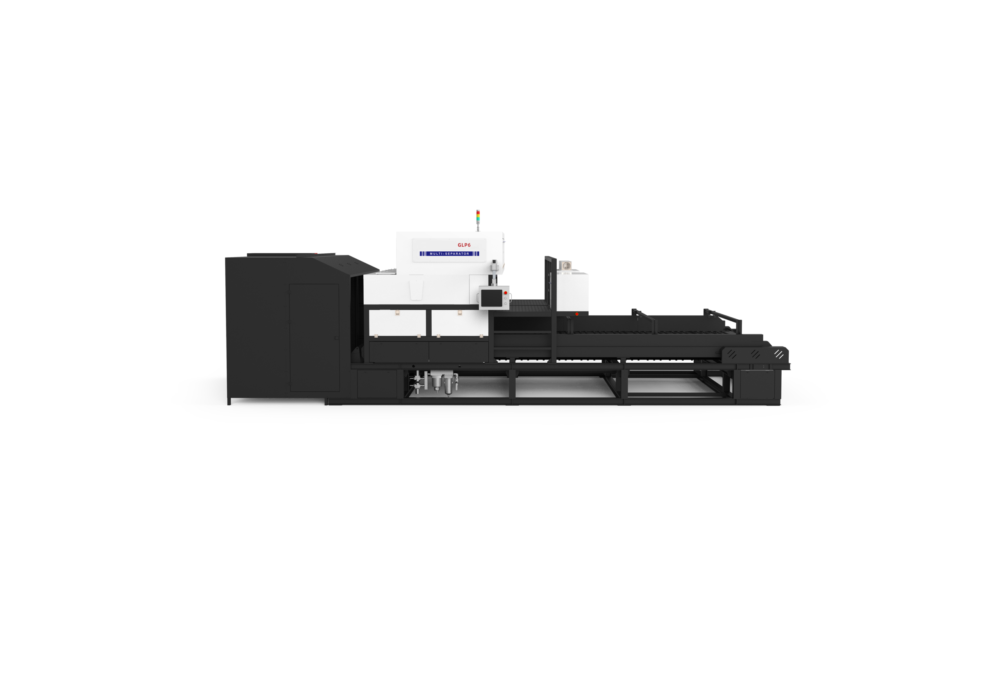
| Product Name | GLP6 Plastic Bottle Sorting Machine |
| Sorting Material | Whole plastic bottles and rigid packaging |
| Reference Throughput | 8–10 T/H |
| Air Consumption | <9.0 m³/min |
| Voltage / Frequency | 380 V / 50 Hz |
| Rated Power | 12 kW |
| Approximate Weight | 6150 kg |
| Machine Dimensions | 8600 × 3720 × 2720 mm |
| Standard Sorting Focus | Color, shape, surface, and visible-feature recognition |
| Optional Detection | Infrared or advanced spectral configurations |
| Control Options | PLC interface and data connectivity available |
The GLP6 Plastic Bottle Sorting Machine is a high-capacity sorting solution developed for plastic recycling plants that process mixed bottle streams. With a reference throughput of 8–10 T/H, it helps separate plastic bottles according to color, shape, surface features, and detectable material characteristics.
Post-consumer bottle bales rarely contain one clean and uniform material. They may include clear and colored PET bottles, HDPE containers, labeled packaging, aged bottles, barrier bottles, loose labels, and other unwanted materials. As production volume increases, manual sorting alone may struggle to deliver stable quality.
The GLP6 uses optical detection, AI-assisted recognition, and high-speed air ejection to automate key bottle-sorting tasks. Its wide conveyor structure supports large-volume material flow, making it suitable for medium- and large-scale recycling lines.
The detection system can also be configured according to the sorting objective. Visible-light and AI-assisted recognition support color and appearance-based classification, while infrared or more advanced spectral configurations are available for applications that require additional material identification.
The GLP6 is designed for recycling facilities that need to process large quantities of whole plastic bottles before crushing and washing. It can work with labeled or unlabeled bottles and can handle washed, unwashed, round, flattened, baled, or irregular bottle shapes.
As bottles pass through the detection area, the system analyzes their visible and detectable characteristics. The sorting software compares this information with the selected recipe. High-frequency ejector valves then remove the identified target or contaminant from the material flow.
Typical sorting tasks include:
The system can perform positive or negative sorting. It can recover a selected bottle category from mixed material or remove unwanted bottles while allowing the main product to continue through the line.
This flexibility allows the GLP6 Plastic Bottle Sorting Machine to support different recycling objectives without limiting the plant to one fixed sorting recipe.
Whole-bottle sorting presents challenges that do not occur with clean and evenly sized plastic flakes. Labels may cover most of the bottle body. Bottles can be dirty, compressed, damaged, or overlapping. Containers made from different polymers may also look similar under ordinary visible light.
The GLP6 platform addresses these challenges through configurable detection technologies.
The visible-light system analyzes bottle color, brightness, shape, and surface appearance. It is suitable for separating clear bottles from green, light-blue, dark-blue, amber, and other colored bottles.
This technology can also identify selected foreign objects that have a visibly different appearance from the accepted material. However, color detection alone cannot reliably distinguish every plastic polymer.
AI-assisted image recognition evaluates a combination of visible characteristics instead of relying on only one color value. It can analyze bottle shape, label patterns, surface features, and other visual differences.
This helps the system classify irregular, compressed, or partially labeled bottles more consistently. Sorting recipes can be adjusted using representative customer samples and the actual composition of the incoming material.
When the application requires PET and non-PET separation, the platform can be supplied with an appropriate infrared detection configuration. Infrared sensors analyze differences in the spectral response of plastic materials.
This can support the identification of selected PET, HDPE, PP, PE, PVC, and other plastic packaging. Actual recognition capability depends on the sensor configuration, bottle condition, label coverage, material composition, and target contaminants.
For more complex recycling streams, advanced spectral configurations are available. They may be used to support the identification of selected barrier bottles, aged materials, thermoformed packaging, or difficult contaminants.
Every GLP6 installation features project-specific configurations rather than off-the-shelf standard options. Material testing allows our engineering team to precisely match the detection system to your exact sorting targets.
The GLP6 can be integrated into different bottle-recycling processes. Its final position depends on the incoming material, plant layout, and required output quality.
The machine can separate clear or blue-clear PET bottles from green, amber, dark-blue, and other colored bottles. This helps create more consistent feedstock for recycled PET production.
With a suitable material-recognition configuration, the system can remove selected non-PET bottles from a PET stream. This reduces the contaminant load before downstream crushing, washing, and flake sorting.
Selected barrier bottles, fluorescent-aged bottles, and other difficult packaging may affect the quality of recycled material. Appropriate optical or spectral configurations can be used to identify these bottles according to the results of sample testing.
The GLP6 can also support the recovery of selected bottles or rigid containers from mixed post-consumer packaging. The sorting program can be developed around the customer’s target product and major contaminants.
The machine can be installed as an early purification stage in a high-quality PET recycling line. It helps reduce unwanted bottles before materials enter washing, crushing, and flake purification.
The GLP6 does not independently guarantee food-grade output. Final product quality depends on the complete recycling process, downstream purification, quality controls, and applicable regulatory requirements.
Reliable bottle sorting depends on more than the detection system. Bottles must enter the inspection area in a stable and reasonably separated layer. Heavy overlap can hide material features and may cause multiple bottles to be ejected together.
A typical bottle recycling process may include:
The upstream feeding system should spread the bottles evenly across the conveyor. To ensure peak sorting accuracy, upstream preparation should actively minimize excessive dirt, residual liquids, loose labels, and uneven material infeed.
The GLP6 can be supplied with PLC integration and data-connectivity options. These functions help coordinate the sorter with upstream conveyors and downstream processing equipment.
Installation planning should consider:
PolySorter can evaluate the plant layout and recommend a suitable arrangement for a new recycling line or an upgrade to an existing system.
The GLP6 is designed for recycling companies that need both industrial processing capacity and flexible sorting capability.
Its main advantages include:
Choosing the right sorting system requires looking beyond nominal throughput. Optimal machine sizing depends on several critical variables: bottle type, target material concentration, primary contaminants, label coverage, upstream preparation, and required recovery targets.
Representative sample testing validates the exact sorting recipe and sensor configuration before we finalize your equipment proposal.
The GLP6 is primarily designed for whole plastic bottles and rigid packaging containers. It can process PET bottles, HDPE containers, and other selected plastic packaging, depending on the detection configuration and sorting program.
Yes. The visible-light system can be configured to separate clear, light-blue, green, amber, dark-blue, and other colored PET bottles. The final color categories depend on the incoming material and the required product.
The appropriate infrared configuration can support PET and non-PET separation. Because labels, coatings, multilayer structures, and surface contamination directly impact optical detection, testing representative samples ensures we engineer the exact configuration for your application.
Yes. The GLP6 can process labeled and unlabeled bottles. AI-assisted recognition helps evaluate shape and visible surface features. However, labels that cover most of the bottle may affect color or material identification.
Actual capacity depends on bottle size, bulk density, material composition, contamination level, belt loading, overlap, label coverage, ejection frequency, and the required output quality. The stated 8–10 T/H is a reference range rather than a guaranteed capacity for every material stream.
No fixed purity or recovery rate should be promised without testing the actual material. Sorting performance depends on the feed, target contaminant, selected sensors, feeding conditions, sorting recipe, and number of sorting stages.
Yes. Customers can provide representative bottle samples and identify the desired accepted and rejected materials. PolySorter can use the test results to recommend the detection configuration, sorting process, and equipment layout.
The GLP6 Plastic Bottle Sorting Machine combines high processing capacity with configurable optical detection and AI-assisted recognition. It helps recycling plants control bottle color, reduce unwanted materials, and prepare a more consistent feed stream for downstream processing.
Every recycling project has a different combination of bottles, labels, contaminants, and quality requirements. The most suitable solution should therefore be based on actual materials rather than a standard machine description alone.
Contact PolySorter to discuss your incoming bottle stream, target throughput, and separation requirements. Our team can arrange sample testing and recommend a suitable GLP6 configuration for your plastic bottle recycling line.